Investigate. Innovate. Transform.
Civil and environmental engineering is a people-serving field. As civilization becomes more complex, civil and environmental engineering becomes more interdisciplinary and practitioners need to know about more than just fundamental design and construction principles.
Strategic Areas of Research
-
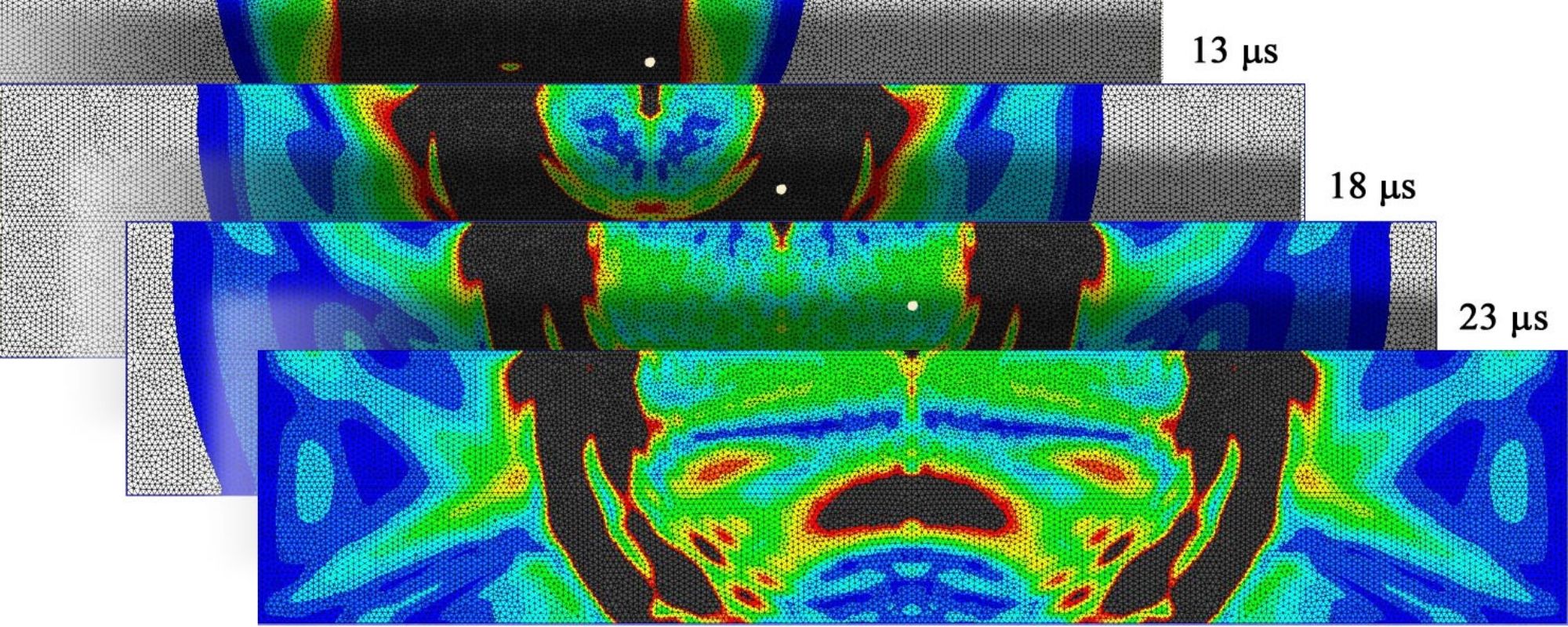
![cross section of the waves propagating through a 50 mm thick steel plate in response to the impact of a 1.58 mm steel ball at five different times.]()
Civil Infrastructure
Innovate new technologies for natural disaster detection and preparedness, and discover new methods for building technologies that are more sustainable and have greater longevity.
-
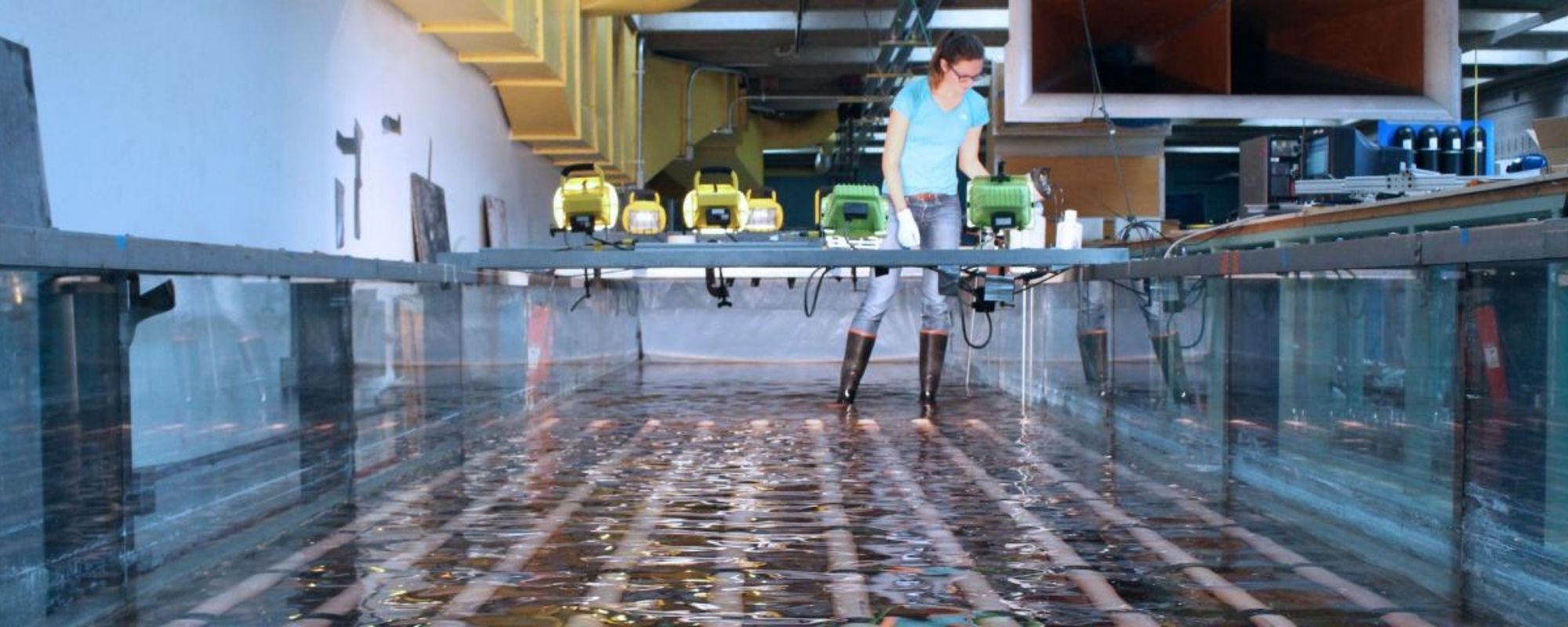
![DeFrees Hydraulics Lab]()
Environmental Engineering
Environmental engineering aims, in part, to obtain an improved understanding of physical, chemical and biological processes occurring in the natural and built environment.
-
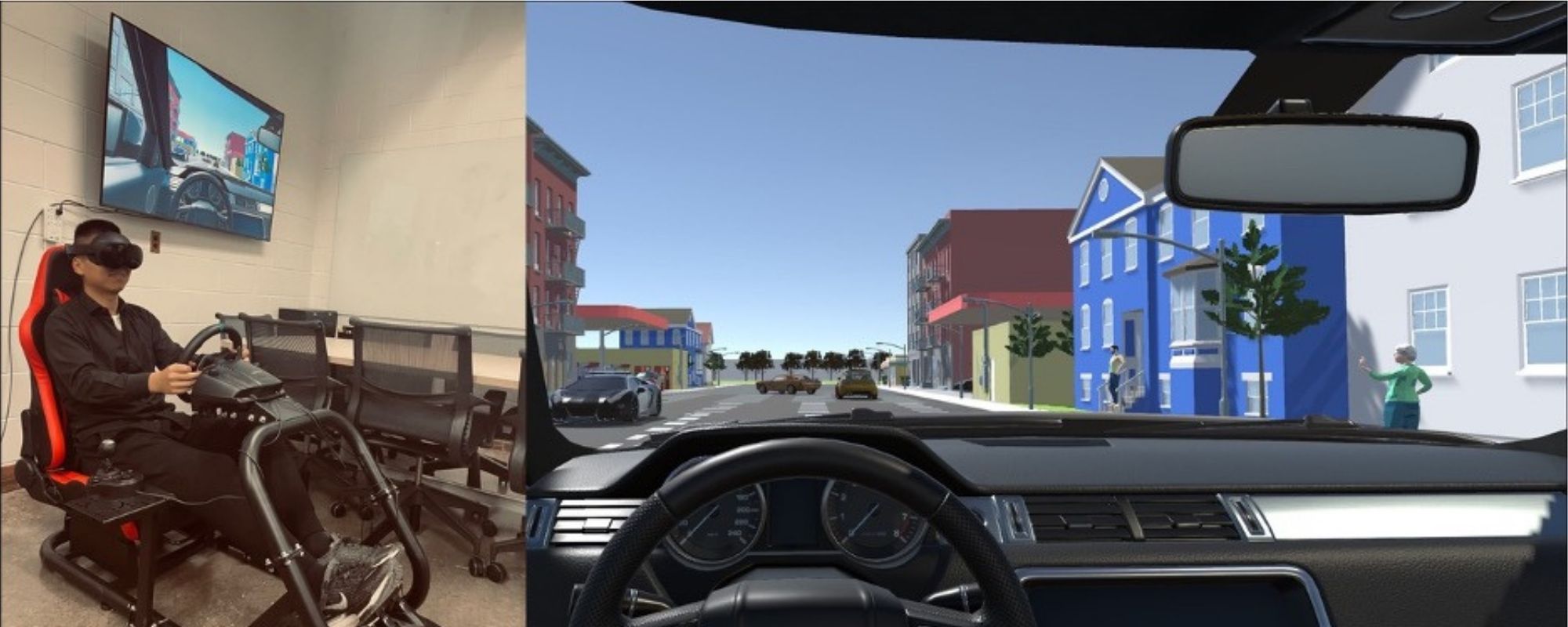
![A student using virtual reality equipment in the Information and Decision Systems lab run by Andreas Malikopoulos.]()
Engineering Systems and Management
Engineering Systems and Management applies mathematical and scientific principles to the definition, design, development, and operational evaluation of total solutions to a wide variety of engineering problems, including water resources management and transportation systems.
Our Programs
-
Civil Engineering
Involves designing, constructing, and maintaining infrastructure like buildings, roads, and bridges. Perfect for those interested in shaping cities and improving the built environment for society.
-
Environmental Engineering
Focuses on solving environmental challenges like pollution and water quality. Perfect for those passionate about sustainability and protecting natural resources.
-
Smart Cities
Focuses on using technology to enhance urban life through efficient, sustainable solutions. Ideal for those interested in urban planning, technology, and improving quality of life.
-
Engineering Management
Combines engineering knowledge with business and leadership skills to manage projects and teams. Ideal for those looking to lead technical teams, optimize processes, and drive innovation in engineering.
-
Civil and Environmental Engineering
Designs and builds infrastructure while solving environmental issues. Ideal for those passionate about sustainability, urban planning, and creating resilient communities.
News Highlights
-
![]()
Global EV transition hinges on policy adoption, cost reductions
A new study finds that the global shift to electric vehicles could significantly reduce energy use and carbon emissions, but only if governments act aggressively to lower costs and align policies across regions.
-
A 1972 trip to Guatemala ended with life-long commitment to water projects
Bruce Clemens ’72, a co-founder of Aqua del Pueblo, is the guest for the March Startup Cornell podcast.
-
Rep. Tonko talks ‘forever chemical’ alternatives with students
New York Congressman Paul Tonko (D-20th Dist.) brought his perspective as both an engineer and longtime Capital District policymaker to conversations with students and faculty in a visit to Cornell on March 20.
-
Scientists engineer E. coli to monitor arsenic
Cornell scientists have engineered E. coli to act as a sensitive biosensor for monitoring environmental arsenic, a toxic pollutant.
-
Global atlas will track human and climate impact on river systems
A new Cornell-led project will create a global record that shows how river systems around the world have changed under human influence over the last 75 years.

Upcoming Events
-
![]()
Engineering Undergraduate Research Poster Session
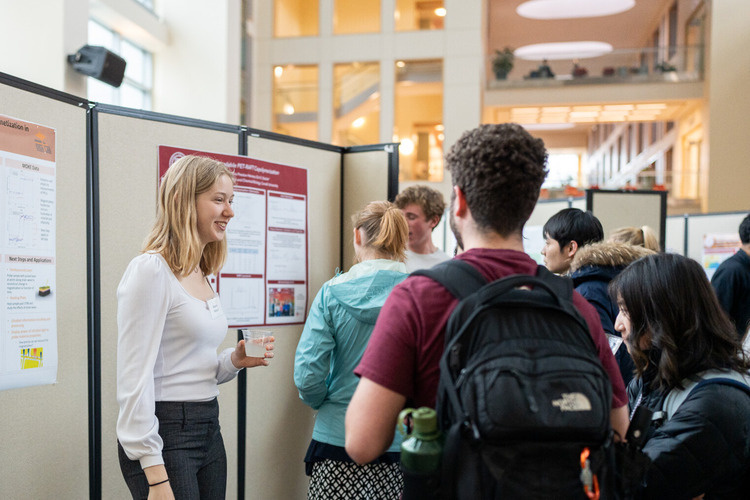
The Office of Inclusive Excellence and the Engineering Communications Program invite the Cornell Duffield Engineering community to celebrate undergraduate research at the annual Duffield Engineering U…
-
![]()
Data-driven Learning and Control Seminar: Alexandre Bayen (UC Berkeley)
Data Driven Learning and Control seminar series is organized by the Information and Decision Science Lab at Cornell University and aims to explore the latest advancements and interdisciplinary approac…
-
![]()
Data-driven Learning and Control Seminar: Yannis Paschalidis (Boston U)
Data Driven Learning and Control seminar series is organized by the Information and Decision Science Lab at Cornell University and aims to explore the latest advancements and interdisciplinary approac…