Two doctoral students in Cornell University’s Department of Earth and Atmospheric Sciences are using prestigious Smithsonian Institution fellowships to investigate fundamental questions about the evolution of Earth and Mars, from the origins of continental crust to the amount of water hidden deep within the Red Planet.
Odalys Callejas and Francesca Riley, both doctoral students working with Megan Holycross, assistant professor of earth and atmospheric sciences, were awarded Smithsonian Institution Predoctoral Fellowships to conduct research in the Department of Mineral Sciences at the National Museum of Natural History in Washington, D.C.
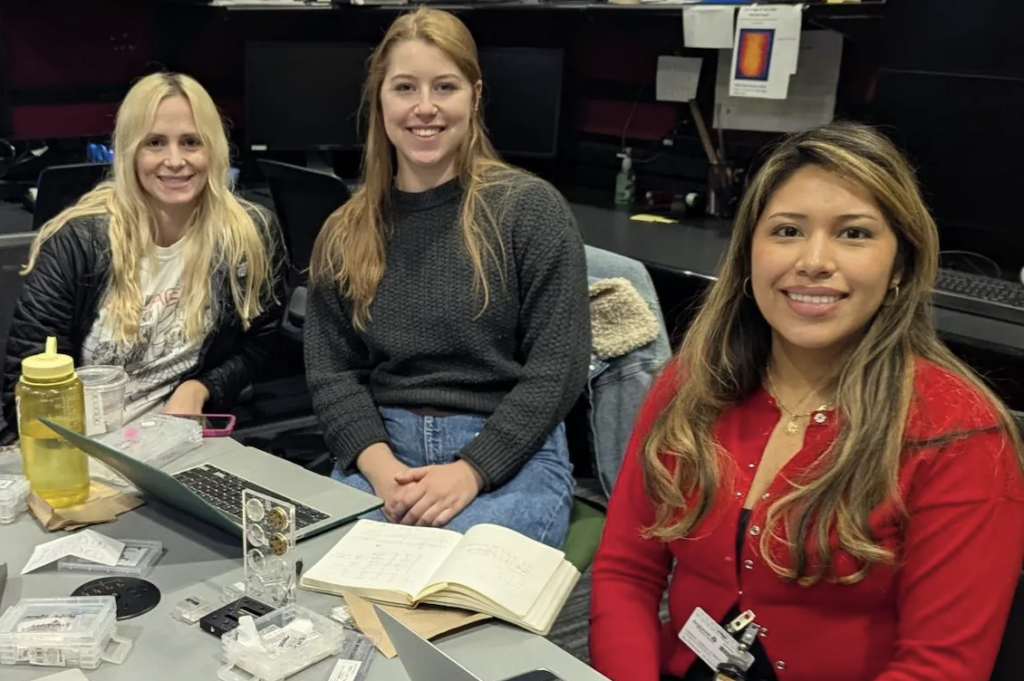
The fellowships support doctoral candidates conducting dissertation research using the Smithsonian’s collections, laboratories and scientific expertise. Appointments range from three to 12 months, giving students opportunities to work alongside Smithsonian researchers while advancing their own projects.
Although Callejas and Riley are investigating different planets, their research shares a common approach: recreating the extreme conditions under which rocks form to better understand processes that cannot be observed directly.
Both students worked with Smithsonian research geologist Elizabeth Cottrell, a longtime collaborator of Holycross.
Callejas, a fifth-year doctoral student, completed her fellowship during summer 2026. Her research focuses on a longstanding question in planetary science: How much water exists within the Martian mantle, the thick layer of rock beneath the planet’s crust?
Scientists have reached conflicting conclusions using Martian meteorites, which can undergo chemical changes and contamination before reaching Earth. Callejas is investigating whether lithium, an element found in rocks, could provide a more reliable way to estimate water content.
Her approach involves growing crystals under controlled laboratory conditions and studying how lithium moves between minerals and molten rock. Some preliminary observations have challenged expectations, and additional measurements are needed before the researchers can draw conclusions.
Understanding Mars’ water content could provide important clues about the planet’s formation, geological history and potential habitability.
“Understanding how much water there is gives us important information about planetary habitability,” Callejas said.
Riley, a fourth-year doctoral student conducting her fellowship during the fall semester of 2026, is investigating processes much closer to home.
Her research examines garnet, a mineral that forms deep within Earth, and how its crystallization or melting might influence the chemical composition of magma rising toward volcanoes.
The work builds on a 2023 study by Holycross and Cottrell that challenged prevailing explanations for the distinctive chemistry of volcanic rocks associated with subduction zones, where one tectonic plate descends beneath another. That earlier research primarily investigated temperature. Riley is expanding the investigation to examine how pressure and differences in garnet’s chemical composition affect the distribution of elements between crystals and molten rock.
Using laboratory experiments that reproduce the intense pressures and temperatures beneath volcanoes, she hopes to clarify processes that helped shape Earth’s continental crust. “We want to learn which elements are going into the garnet crystal at depth, and which ones are not, and then use that information to build a broader understand of the evolution of the Earth,” Riley said.
For both students, the fellowships offer benefits beyond access to specialized laboratory equipment. For instance, joining a concentrated community of mineral scientists allowed them to quickly troubleshoot experiments, learn new laboratory practices and exchange ideas from different perspectives.
Holycross, herself a former Smithsonian postdoctoral fellow, encouraged Callejas and Riley to apply. Callejas said her advisor’s familiarity with opportunities outside Cornell has been particularly valuable.
Callejas, who is considering research careers in industry or federal institutions, said the experience strengthened her interest in those possibilities while expanding her professional network.
Riley, who hopes to pursue an academic career, said the fellowship has introduced her to research opportunities she had not previously considered, particularly the scientific work conducted within museums.
For Riley, the opportunity has demonstrated how a change in research environment can broaden a scientist’s perspective without changing the fundamental questions driving their work.
“It’s a great experience to do something that is similar yet very different,” she said. “It’s a way to experience research in a different way.”
Callejas encouraged students in Earth science and other disciplines to explore Smithsonian fellowships, which extend beyond the physical sciences to fields including history, anthropology and art.
More information about the fellowships is available through the Smithsonian Institution Fellowship Program.
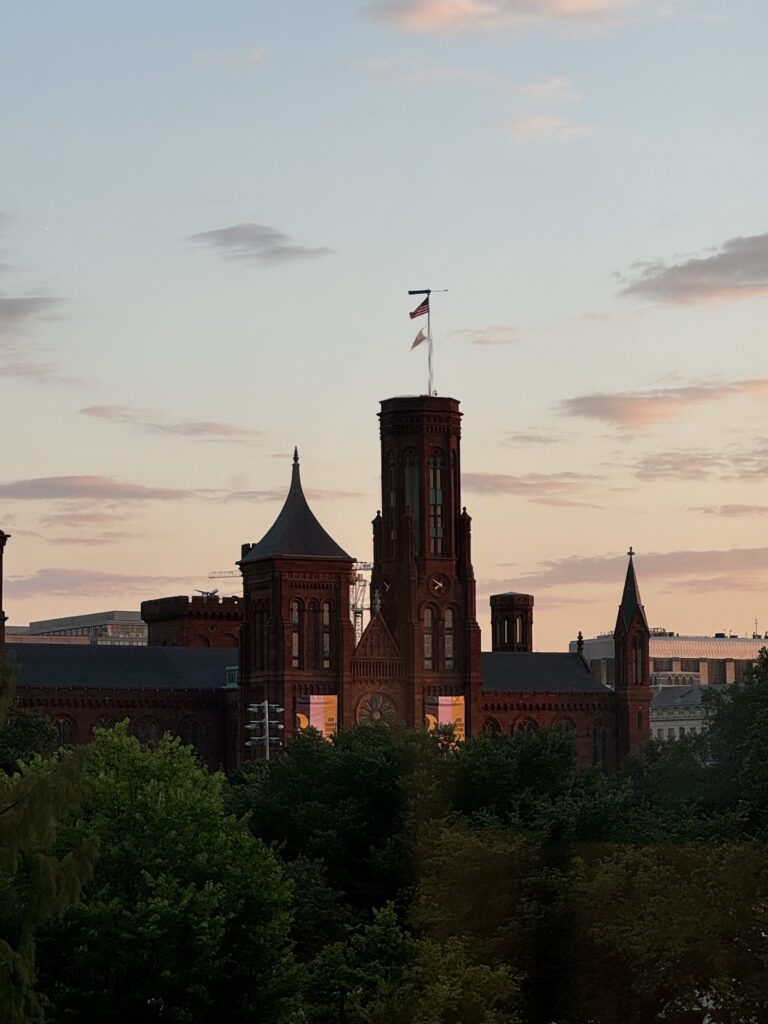
(Photo provided by Odalys Callejas)