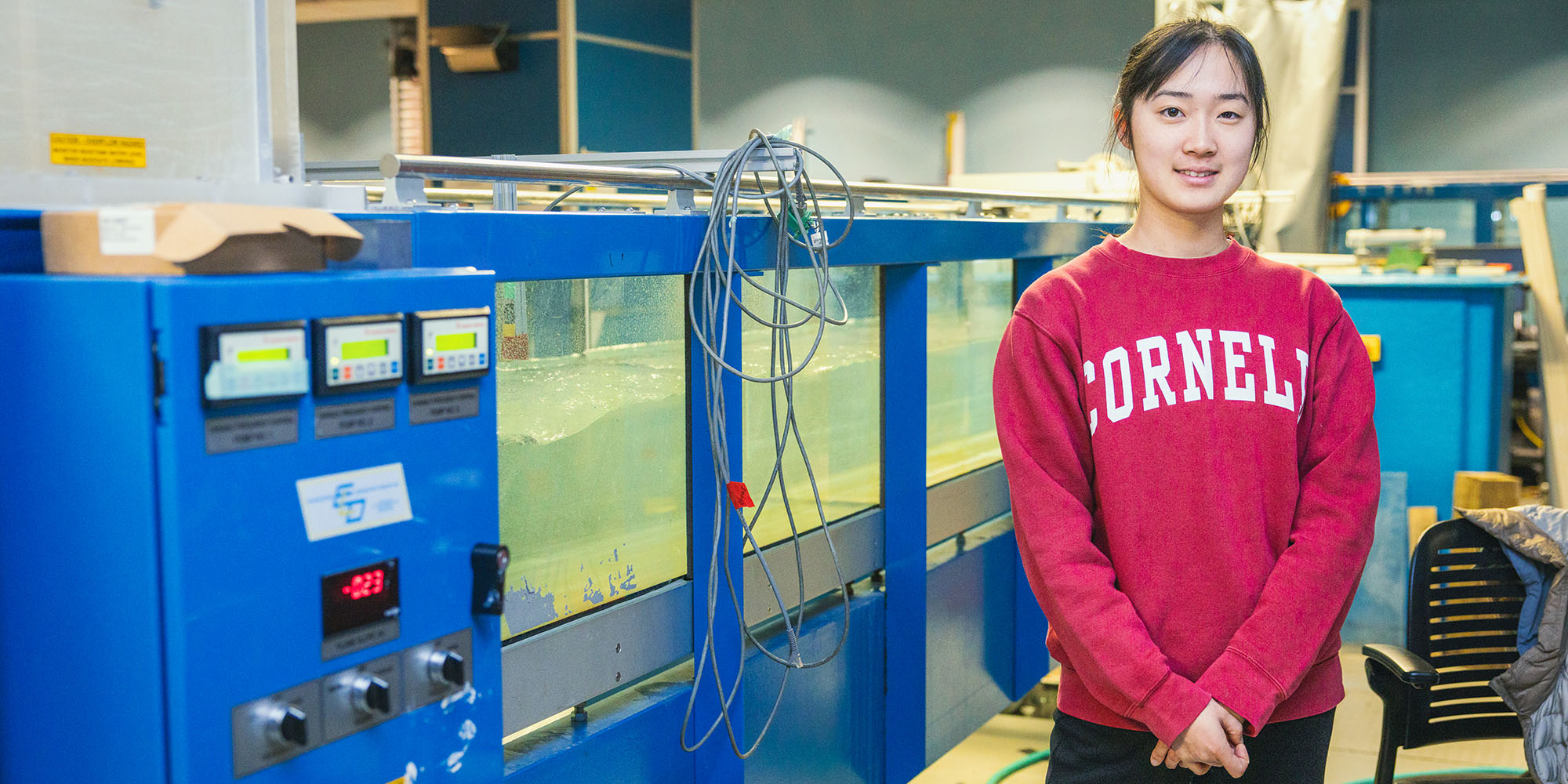
Why Get Involved?
-
Apply what you learn
Put classroom knowledge into practice through real research projects.
-
Develop skills
Practice and develop skills in teamwork, communication, problem-solving, and creativity.
-
Build a network
Build a mentoring network and close relationships with world-renowned professors and researchers.
-
Prepare for industry
Gain technical skills that prepare you for careers in industry.
-
Get ready for graduate school
Learn the scientific process and become a competitive applicant for graduate school.
-
Explore careers
Find out whether research is a good fit for your interests and career goals.
Navigating Undergraduate Research
Research opportunities at Cornell rarely follow a single application process. Explore our roadmap with resources to understand how undergraduate research works ,and step through finding the right fit and making the most out of the experience.
-
Prepare for Undergraduate Research
Explore how undergraduate research works and what to expect before you begin, including:
-
Find Research Opportunities
Research positions are rarely advertised. Browse resources to find opportunities, including:
-
Connect with Research Mentors
Learn how to contact faculty members, prepare for meetings, and identify a research environment that’s right for you, including:
-
Apply for Credit, or Find Funding
Once you’ve found a research opportunity, you will work with your faculty mentor to decide how your research experience will be structured.
Undergraduate Research Frequently Asked Questions
Undergraduate Research Frequently Asked Questions
-
How do I get started with undergraduate research?
Check out our roadmap to undergraduate research for guidance, tips, and the steps to follow in order to succeed.
-
How do I find a research mentor?
While this may seem like the first step in your Undergraduate Research endeavors, getting started with research is a more nuanced process than just finding a mentor. Most importantly you should begin with self exploration, then find opportunities and take action contacting or applying for positions or programs.
If you would like a one-on-one conversation about getting started in undergraduate research, we encourage you to meet with an academic advisor in your college after reviewing the resources available here.
-
How can research experience help me if I am looking for a career in industry?
The skills you develop as an undergraduate researcher are applicable to work in industry, whether or not your role is directly related to research. Undergraduate researchers can work on teams, problem-solve, practice creativity, develop their communication skills, and more. Consider what skills you would like to work on and work with your research mentors to find ways to practice them in your role as a researcher. In addition, your research mentors can serve as references or write letters of recommendation when you apply for jobs.
-
Can research for credit count towards my graduation requirements?
In Duffield Engineering, this varies by major. You may be able to use research credits towards your Advisor-approved or Major-approved Electives. Check with your major to learn more – the Undergraduate Coordinator, Director of Undergraduate Studies, and your Faculty Advisor are fantastic resources.
-
Do undergraduate research credits count towards full time student status and the semester credit limit?
Yes. Enrolled research credits count toward the full-time standing at Cornell and towards the Duffield Engineering credit limit. Research credits may not, however, count toward good standing, depending on your major or whether or not you are unaffiliated with a major. You can petition to take over the 20 credit limit.
-
How should I be compensated for research? Should I volunteer, receive credit, or be paid?
The decision to conduct research as a volunteer, for credit, or for pay is a personal decision, and the benefits of each depend on your needs. Read more about research for credit, pay, or volunteering and decide what is best for you.
-
Can I use Federal Work Study (FWS) to be paid for undergraduate research?
Yes. Students that are eligible for FWS and are being paid to conduct research can apply FWS funding to their research position during the academic year or the summer. Contact the financial aid office to learn more.
-
Can I get feedback on a draft email to a potential faculty mentor?
Yes. Duffield Engineering student services offices, undergraduate coordinators within your major, faculty advisors, professors, TAs, and current undergraduate researchers are great sources of feedback. You can schedule an appointment with an Engineering Academic Advisor or the Engineering Career Center on Chatter.
-
What do I do if I have a conflict or other challenge during my research experience?
If you are comfortable, it can be best to talk to the person with whom you are experiencing the conflict and work together to come to an understanding or solution. If you would like support in working through a research-related conflict, the following are excellent resources:
- Duffield Engineering Advising
- Cornell Office of the Ombuds
- Your faculty advisor or another trusted faculty member
- The undergraduate coordinator within your major
Undergraduate Research Advisors
Interested in getting started in research, applying to a research-based graduate program, or pursuing a summer research program? Our graduate student research advisors are here to help.
Schedule a one-on-one meeting with one of our advisors below to get personalized guidance as you navigate your research journey — whether you’re looking for advice on finding a research group, crafting a strong application, or figuring out your next steps.
-
Kaylin Borders
Kaylin Borders is a Ph.D. candidate in Aerospace Engineering at Cornell University. Her research focuses on plasma-surface interactions, power deposition, and thermal management in Hall effect thrusters, with an emphasis on developing analytical and semi-empirical models for high-power electric propulsion systems and advanced cooling strategies.
Kaylin is passionate about supporting students interested in research and graduate education, particularly those exploring opportunities in engineering research and outreach. She enjoys helping students identify opportunities, develop meaningful connections, and feel more prepared to pursue the next steps in their academic and professional careers.
-
Anna Hazelwood
Anna Hazelwood is a biomedical engineering Ph.D. student studying skeletal muscle disease in Dr. Jan Lammerding’s lab. Her research focuses on how cells sense and respond to mechanical forces, and how the cell nucleus plays a role in genetic muscle diseases. She is also building high throughput organ models to study the disease mechanisms of musculoskeletal diseases.
Anna is passionate about supporting undergraduate researchers. She remembers how confusing it can be to navigate research for the first time and enjoys sharing her enthusiasm for research through teaching and mentoring.
-
Tannaz Karimi
Tannaz Karimi is a Ph.D. student in Civil and Environmental Engineering at Cornell University. Her research combines numerical modeling, experimental data, and image analysis techniques to understand how mineral-specific morphology and mechanical properties influence fracture behavior in polymineralic aggregates.
Tannaz is passionate about supporting undergraduate researchers and aspiring graduate students because research can initially feel unfamiliar or intimidating. She hopes to help students build confidence, ask questions, and find accessible pathways into research and graduate education.
-
Ayana Richelle Monroe
Ayana Richelle Monroe is co-advised by Gili Vidan and Mor Naaman. Her PhD is supported by the National GEM Consortium, NSF Graduate Research Fellowship Program (GRFP), and the Hopper-Dean / Bowers CIS Dean’s Excellence Fellowship.
Her work aims to imbue information ecosystems, particularly Knowledge Work domains such as journalism, data storytelling, and academic research, with usable signals of trustworthiness and credibility. She draws from HCI literature, STS scholarship, and human-centric design approaches to study how this diverse array of Knowledge Workers interpret and value signals such as provenance or author-provided contextual information for evaluating information and AI-generated content. She then investigates optimal ways to display these signals to support their decision-making contexts.
Every accolade listed above would have been impossible without the mentorship and guidance she received from graduate student mentors and professors. She aims to help students interested in research end up in careers that matter to them in the same way her mentors intentionally supported her.
“As an undergraduate researcher I studied how breast cancer cell growth is regulated in bone by investigating how bone mineral content and tumor-secreted factors influence the growth of mesenchymal stem cells. Beyond the lab, speaking with cancer survivors has grounded my work in a broader context and reminded me why this research matters. It’s reinforced my commitment to pursuing a Ph.D. in biomedical sciences, with the ultimate goal of translating discoveries into improved patient care.”
Yiwei Yan ’25
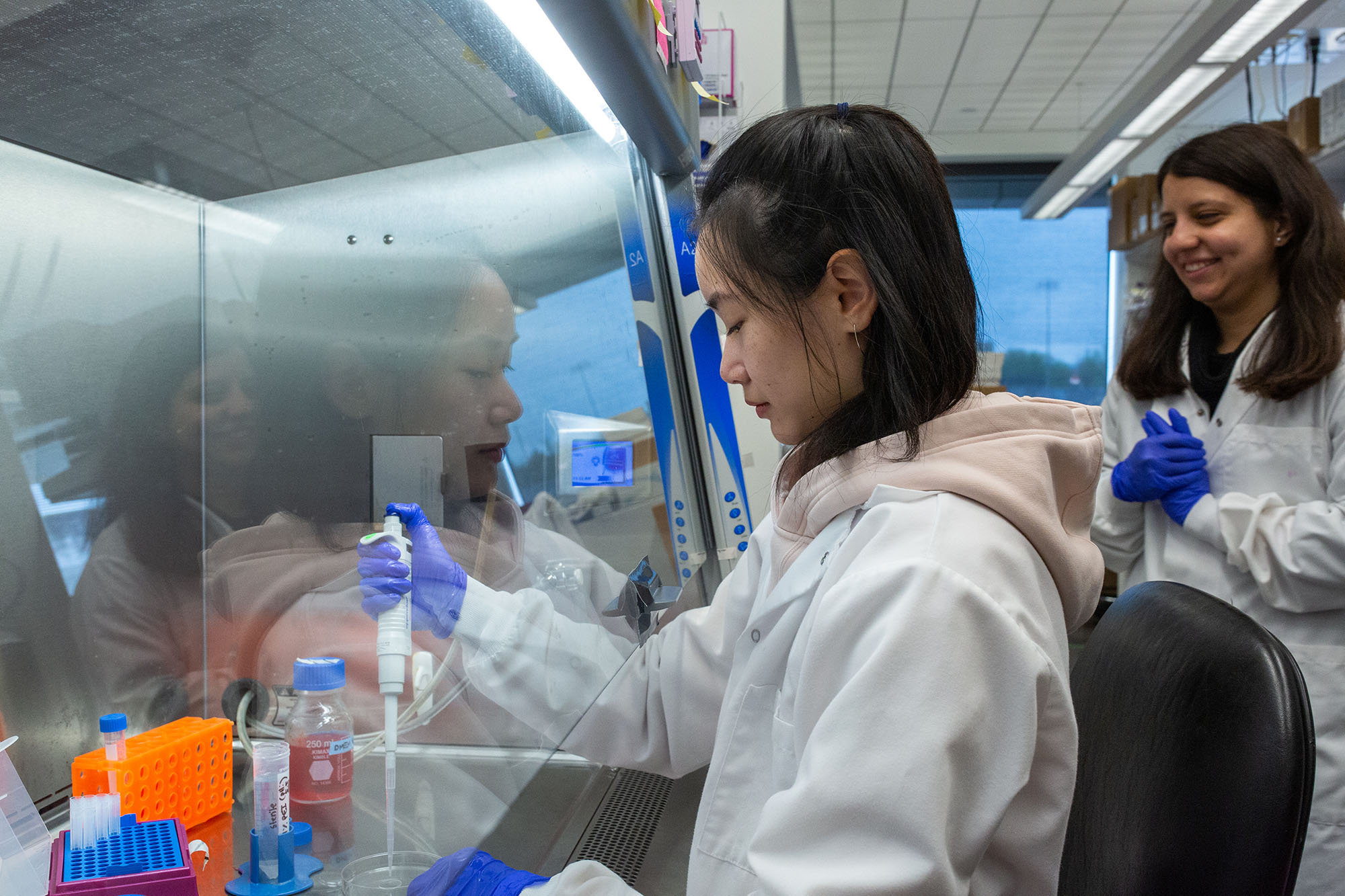
Additional Resources
-
Career Development Toolkit: Research Module
If you are an enrolled student, be sure to visit the Research Module within the Career Development Toolkit as well. To access the Toolkit, you can self-enroll. If you are already enrolled and want to dive in, jump to the course. In Canvas you can also go to Courses > All Courses > Browse More Courses to search for the Toolkit.
-
Cornell Undergraduate Research Board
The Cornell Undergraduate Research Board (CURB) seeks to enhance the Cornell undergraduate experience by promoting and enriching undergraduate research on campus.
-
Council on Undergraduate Research
The mission of the Council on Undergraduate Research is to support and promote high-quality mentored undergraduate research, scholarship, and creative inquiry.
-
Cornell University Undergraduate Research
We recommend visiting Cornell University Office of Undergraduate Research for an overview of undergraduate research at Cornell and guidance on how to get started.
Get in Touch
Questions about undergraduate research? We’re here to help.
-
Email