(Machine) Learning Preferences from Complex Choice Sets: An Application to Service Networks
Hidden complexity pervades commonplace choices. For example, customers at everyday venues such as supermarkets, shopping centers, and amusement parks routinely choose from the combinatorially many available paths through all or some of the venues’ stations (e.g., sections, stores, rides). Rich data now capture such customer choices, but the complexity, e.g., a factorial rate of growth of paths in venue size, remains a challenge for empirical or empirically grounded modeling research. Firstly, it is unclear how customers assess such complex decisions. Secondly, choice estimation methods exhibit fundamental issues ranging from intractability to inconsistency when estimating consumer preferences from such data. Under commonplace conditions, we show that a hidden but provably low-dimensional fraction of relevant choice comparisons suffices to capture all customer preference information from data and can be automatically learned and exploited by machine learning (ML). The same low dimensionality further justifies simple shopping heuristics for customers. We develop a neural network-based estimator of customer preferences and demonstrate it on data tracking shoppers at a hypermarket serving over 1M customers annually. Such estimation uncovers the hypermarket’s network demand structure, and modest capacity reallocations counterfactually raise equilibrium service throughput by 5-25% through. Addressing a long-standing challenge in marketing and operations, we identify complementary stations from congestion levels at one or more stations producing cross-station demand effects at others.
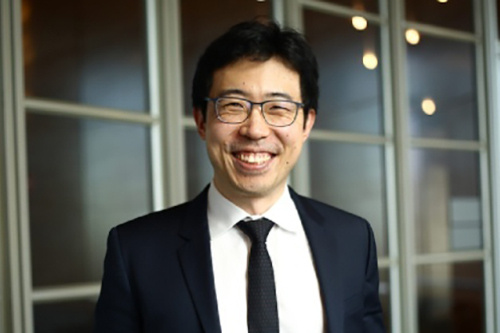
Bio: Ken Moon is an associate professor of operations, technology and information management at the Cornell SC Johnson College of Business. He uses large datasets to study and optimize the organization of workers and of markets. His work applies mathematical modeling, causal analysis, and algorithms to improve the performance and treatment of workforces, operations of online markets, and design of policies and regulations for complex networks. His recent interest is in utilizing machine learning methods in advanced inference. He received his Ph.D. from the Stanford Graduate School of Business, a J.D. from Harvard Law School, and an undergraduate degree from Stanford University.