Joint colloquium with Operations, Technology & Information Management, Cornell SC Johnson College of Business
Recommendations in the NYC High School Match (and other high-stakes settings)
Recommendation and search systems are now used in high-stakes settings, including to help find jobs, schools, and partners. Building public interest recommender systems in such settings bring both individual-level (enabling exploration, diversity, data quality) and societal (fairness, capacity constraints, monoculture) challenges. I will talk about an ongoing collaboration with the NYC Public Schools, in which we designed and deployed an informational intervention to help students from underserved middle schools discover high-performing, nearby high schools where they have a strong individual admissions likelihood. However, recommending specific programs brings a methodological challenge, congestion: if many applicants are recommended the same program, affecting admissions likelihoods, then the recommendations may be self-defeating. Time permitting, I’ll also overview other directions in tackling such challenges, including (a) algorithmic monoculture and LLM homogeneity, (b) a platform to help discharge patients to long-term care facilities, (c) feed ranking algorithms on Bluesky for research paper recommendations.
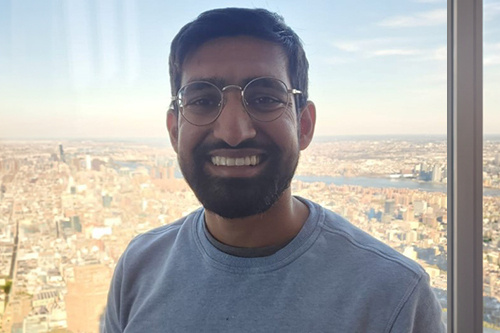
Bio: Nikhil Garg is an assistant professor of operations research and information engineering at Cornell Tech as part of the Jacobs Institute. He uses algorithms, data science, and economics approaches to study democracy, markets, and societal systems at large. Nikhil has received the NSF CAREER, INFORMS George Dantzig Dissertation Award, an honorable mention for the ACM SIGecom dissertation award, and paper awards including Computer-Supported Cooperative Work (CSCW), Equity and Access in Algorithms, Mechanisms, and Optimization (EAAMO), and Conference on Health, Inference, and Learning (CHIL). He received his Ph.D. from Stanford University and has spent considerable time collaborating with government agencies and non-profits. His work has been supported by the NSF, NASA, Sloan Foundation, and other organizations.