Cornell University’s Department of Earth and Atmospheric Sciences has renamed one of its undergraduate majors from “earth and atmospheric sciences” to “earth and climate sciences.” The change highlights both the growing importance of climate research and the department’s continuing evolution toward a more integrated understanding of the planet and its interconnected systems.
Though the name of the major has changed, it will continue to offer concentrations in geological sciences, oceanography and environmental sciences.
The new name more accurately describes the major’s curriculum, distinguishes it from the department’s separate atmospheric sciences major, and makes the study of climate more visible to prospective students, according to Natalie Mahowald, chair of the Department of Earth and Atmospheric Sciences and the Irving Porter Church Professor in Engineering.
“We’ve changed the name for several reasons,” Mahowald said. “Most importantly, to better reflect the coursework: the major has a climate sciences concentration, not an atmospheric sciences concentration, and we thought the name of the major should reflect that.”
The distinction is important, Mahowald said. While atmospheric science focuses primarily on the atmosphere and weather forecasting, climate science encompasses a broader range of disciplines, including oceanography and the study of glaciers and ice sheets.
“There are a lot of students interested in climate sciences, and we want to make sure they know where they can go to study the physical science of climate change,” Mahowald said. “At the same time, we continue to serve students interested in geology, geophysics, environmental sciences or oceanography: those parts of the major are not going away.”
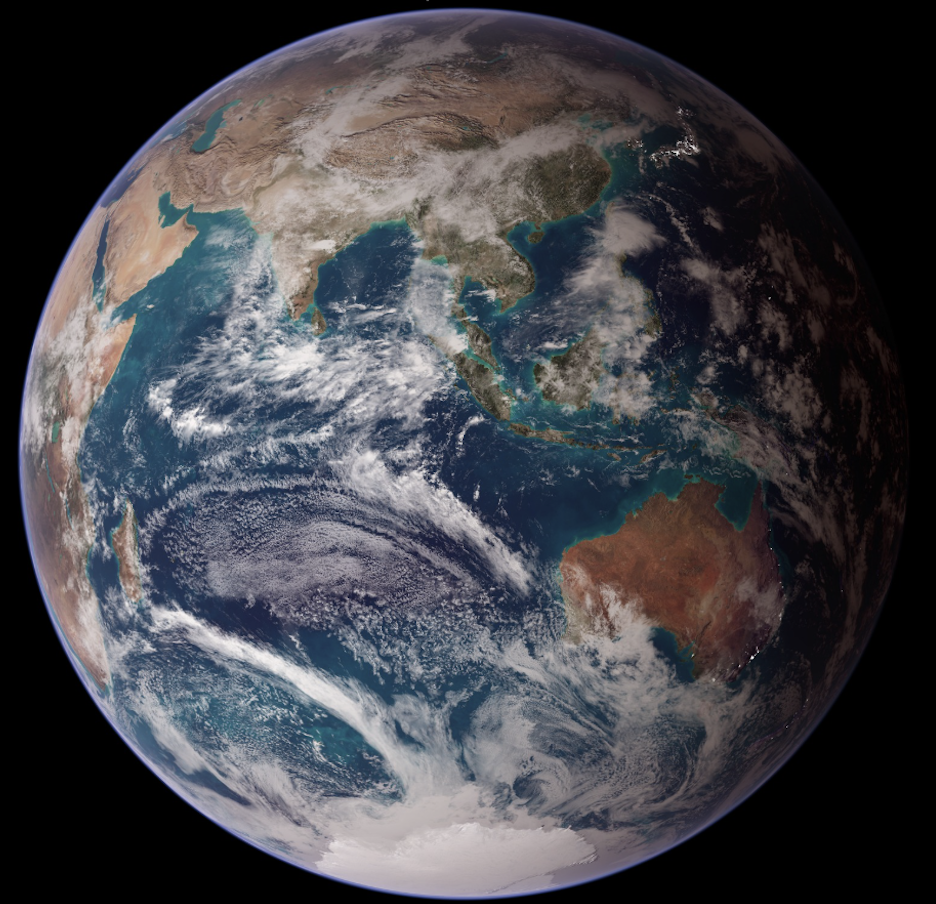
The department is currently updating its curriculum to include topics such as AI and still provide an education in the classical earth and climate science topics. For example, Cornell geologists increasingly emphasize geophysics, geochemistry and tectonics, studying the forces that shape continents and the processes occurring deep within the planet.
The name change is the latest chapter in a departmental history stretching back to Cornell’s opening in 1868. In the ensuing 158 years changing scientific understanding has repeatedly reshaped how the university organizes and teaches the earth sciences.
Geology was part of Cornell’s curriculum from the beginning. Although engineering students studied the subject, the Department of Geology was originally housed in the College of Arts and Sciences. Its faculty taught mineralogy, paleontology, structural geology and the history of the Earth.
In 1971, amid a significant reorganization and expansion of the field, the department was renamed Geological Sciences and moved administratively to the College of Engineering. The field continued to serve students in both Engineering and Arts and Sciences.
The following decades brought major changes in the scientific understanding of the Earth, particularly through the development of plate tectonics. Cornell geologists increasingly emphasized geophysics, geochemistry and tectonics, studying the forces that shape continents and the processes occurring deep within the planet.
Faculty members including Jack Oliver and Bryan Isacks helped establish Cornell as a leading center for continental research. Oliver was instrumental in founding the Institute for the Study of the Continents in 1980, while Cornell researchers pioneered seismic-reflection techniques through the Consortium for Continental Reflection Profiling, known as COCORP.
The department’s physical home changed along with its scientific ambitions. After leaving McGraw Hall in 1971 and spending more than a decade in temporary quarters in Kimball Hall, Geological Sciences moved into the newly constructed Snee Hall in 1984. Named for benefactor William E. Snee and his family, the building provided laboratories, teaching facilities and space for geological collections.
Meanwhile, atmospheric sciences at Cornell had followed a separate path.
Meteorology interested Cornell engineers as early as the late 19th century, particularly civil engineering professor Estévan Fuertes. But the field gained a more substantial institutional foundation with the establishment of the New York State College of Agriculture in 1904.
Initially, meteorology was closely connected to agriculture, with weather observation and forecasting serving the practical needs of farmers. Over time, however, the program expanded beyond forecasting to encompass atmospheric processes and climatology. Cornell became home to the Northeast Regional Climate Center in 1983.
By the end of the 20th century, scientists increasingly recognized that traditional disciplinary boundaries could limit their understanding of the Earth. Studying climate, for example, required examining interactions among the atmosphere, oceans, rocks, ice and living organisms.
Cornell responded by developing the interdisciplinary science of Earth systems undergraduate program, which emphasized relationships among the planet’s physical and biological systems rather than focusing on geology alone.
That intellectual shift eventually produced an institutional one. In the early 2000s, geological sciences and atmospheric sciences were combined to create the Department of Earth and Atmospheric Sciences. Isacks, who chaired geological sciences from 1994 to 2003, played an important role in bringing the disciplines together.
The new department initially housed three undergraduate programs: geological sciences, atmospheric sciences and science of Earth systems.
Over time, science of Earth systems evolved into the broader earth and atmospheric sciences major, while atmospheric sciences remained a separate undergraduate program and geological sciences continued as a graduate field.
Today, the department is shared by Duffield Engineering and the College of Agriculture and Life Sciences and offers undergraduate programs to students in those colleges and the College of Arts and Sciences. Its organization reflects the diverse academic traditions that shaped it, from geology and agricultural meteorology to modern climate research and earth-system science.
The latest name change continues that tradition of adapting academic programs to reflect advances in scientific understanding.
For Mahowald, whose own research crosses traditional boundaries between earth and climate science, the new name recognizes that understanding climate requires expertise extending well beyond the atmosphere.
“I love the elevation of the study of climate science, which by itself is very integrative across the department, including atmospheric, oceanography and cryosphere scientists,” she said. “I think it also well articulates what a lot of our courses cover.”
The change from earth and atmospheric sciences to earth and climate sciences represents more than a simple name change for the degree. It reflects the same evolution that has shaped the department for more than a century and a half: as scientists discover more about the connections among the Earth’s systems, the department’s programs evolve to reflect that understandin