Arturo Carrillo ’96, M.Eng. ’97 has been elected by his fellow Cornell alumni to the Cornell University Board of Trustees.
Before his election to the Board, Carrillo had spent decades strengthening his connection to Cornell through volunteer leadership and alumni service. What began as a simple desire to help high school students discover the opportunities he found in Ithaca gradually evolved into one of the most significant alumni leadership roles the university offers.
Having a seat on the Board of Trustees was definitely not on Carillo’s mind when he first arrived at Cornell from Mexico City in the early 1990s. He did know he wanted to have an impact, and that is why he was drawn to operations research and industrial engineering. It seemed like the perfect discipline for a changing world.
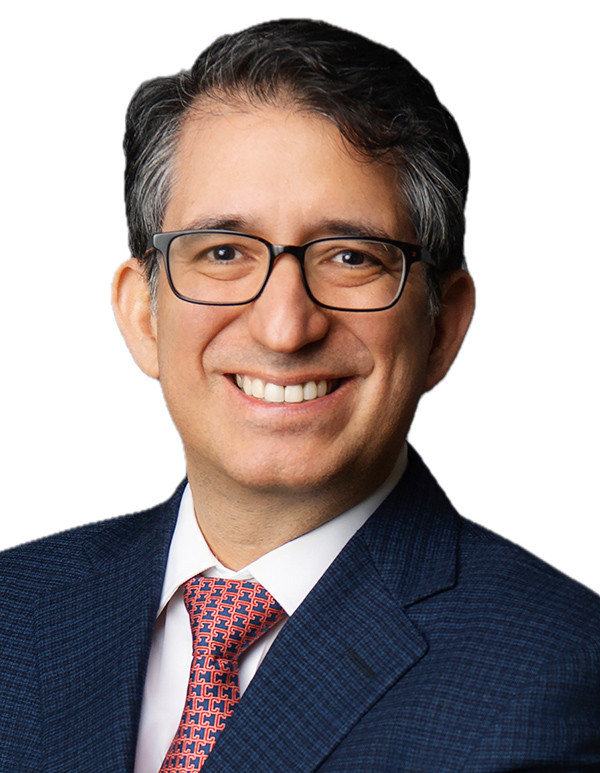
The early 1990s were the years leading up to the North American Free Trade Agreement (NAFTA), and Carrillo could already see how manufacturing, supply chains and finance were becoming deeply interconnected across borders. Growing up in Mexico, he had always excelled at mathematics and naturally gravitated toward engineering. But once he arrived in Ithaca, he quickly discovered that operations research (OR) appealed to him even more.
“Back then, if you were good at math in Mexico, you were going to be an engineer,” Carrillo said. “I liked the OR part more and more once I got to Cornell. Numbers were numbers, and because English wasn’t my strongest skill at the time, math became kind of a universal language for me.”
Carrillo entered Cornell at a moment when globalization and manufacturing integration were accelerating. He became fascinated by how operations research could help companies manage increasingly complex systems of production, logistics and finance.
“It was all about coupling economies and supply chains back then,” he said. “The idea that manufacturing and trade across North America were going to become more integrated was a huge deal, and the School of Operations Research and Information Engineering (ORIE) felt like the perfect place to study that.”
At Cornell, Carrillo found himself drawn not only to engineering and optimization, but also to economics, organizational behavior, and finance. Like many Cornell students, he took advantage of the university’s ability to move across colleges and disciplines. He studied economics courses focused on markets and finance while also taking organizational behavior classes at Cornell’s New York State School of Industrial and Labor Relations(ILR).
“I loved that Cornell let you explore so broadly,” he said. “I was learning about manufacturing systems and throughput on one hand, but also labor, organizations and finance on the other.” Professor Robert Bland as his faculty advisor encouraged him to explore the vast opportunities that Cornell offered.
One professor in particular left a lasting impression. Carrillo recalls Professor Peter Jackson teaching students how to think about manufacturing systems, equipment investments, and the time value of money simultaneously.
“He was teaching us about throughput in factories, but also how to evaluate investments and value assets,” Carrillo said. “At the time it was framed around machines and industrial systems, but later I realized those same concepts apply almost everywhere in business.”
Carrillo also had practical reasons to think carefully about his future. As part of his financial aid package, he needed to secure meaningful summer employment. Each year he returned to Mexico and pursued internships that would help support his education while also building professional experience.
He sent resumes to nearly every company in Mexico connected to Cornell alumni. One Cornell graduate working in human resources at JP Morgan gave him an opportunity on the bank’s foreign exchange trading desk in Mexico City.
“That experience opened my eyes to the financial markets,” Carrillo said. “I learned about currencies, trading and how global markets functioned.”
Another summer, he worked for a large Mexican bank in its stock research division, analyzing industrial companies and manufacturing facilities. The role took him inside factories and breweries, where he saw firsthand how large-scale production systems operated.
“I kept seeing these intersections between finance, manufacturing, and optimization,” he said. “I realized I really enjoyed understanding both the engineering side and the business side.”
Meanwhile, New York City was beginning to exert a pull on Carrillo. Each trip back to Cornell involved flying into New York City and taking a bus up to Ithaca. Sometimes he and his friends would spend a few extra days in the city before returning to campus.
“I remember thinking, ‘One day I would love to live here,’” he said. “It just felt vibrant and exciting.”
By the time he completed his undergraduate degree, staying at Cornell for an M.Eng. felt like a natural next step. At the time, Carrillo said, it was very common for ORIE students to continue directly into the one-year professional master’s program.
“A lot of us did it,” he said. “We all had little offices in Thurston Hall and worked together. It was a really close-knit experience.”
Carrillo enrolled in the financial engineering option within the M.Eng. program, which was then relatively new. Professors David Heath and Robert Jarrow were helping shape the curriculum during the rapid growth of quantitative finance. “We were at the beginning of financial engineering becoming a major field,” Carrillo said. “It was exciting because we were applying OR techniques to markets and investments in ways that felt very new.”
For his M.Eng. work, Carrillo and his teammates partnered with a Syracuse-area money management firm on an emerging markets project. That experience, combined with his internships and bilingual background, positioned him perfectly for a career in finance.
After graduation, Carrillo moved to New York City and joined Salomon Brothers in its Latin America investment banking group.
“I honestly thought I was going into more of a trading role because of my previous experience,” he said with a laugh. “Instead, I ended up deep in investment banking.”
The work involved mergers and acquisitions, financial modeling and extensive travel throughout Latin America. Carrillo worked on projects in Argentina, Venezuela, Colombia and Mexico, gaining firsthand experience in international finance during a period of enormous economic change in the region.
After several years in banking, Carrillo pursued an MBA at Harvard Business School. The degree helped expand his strategic and managerial skills while complementing the analytical foundation he had developed at Cornell.
Following business school, Carrillo joined a major Mexican manufacturing company in a strategic planning and finance role. There, he discovered how valuable his ORIE background remained even outside traditional engineering roles.
“I was evaluating investments in equipment, supply chains, and manufacturing systems,” he said. “I could speak the language of the engineers while also understanding the financial side. A lot of that came directly from Cornell.”
His ability to bridge operations and finance soon opened additional leadership opportunities. After working in Mexico, Carrillo was transferred to the company’s U.S. subsidiary in Memphis, Tennessee. Within six months, he became chief financial officer of the company’s U.S. operations.
“It was a little random because I had never been to Memphis before,” he said. “But it turned out to be a fantastic experience.”
Over time, Carrillo continued building a career that blended finance, operations and strategy. He eventually settled in the Dallas area, where he now works in senior financial leadership.
Along the way, Cornell remained a constant thread running through Carillo’s life. His wife is also a Cornell graduate from the Class of 1996, although the two surprisingly never met while they were students in Ithaca. “She was in ILR and I was in engineering, and somehow our paths never crossed,” Carrillo said. “We met later in New York.”
His first volunteer experiences in service to Cornell came while living in Memphis, where he participated in Cornell Alumni Admissions Ambassador Network activities, meeting with prospective students and introducing them to Cornell. Later, after moving to Dallas, he became increasingly involved with Cornell alumni programming and leadership. Over the years, he helped organize events, build alumni engagement, and strengthen Cornell’s presence in the region, motivated by a desire to give back to the institution that had shaped his career.
That commitment eventually led to broader university leadership roles, including eight years of service on Cornell’s Alumni Council, where he served as chair and worked closely with university leaders on alumni engagement initiatives. When fellow alumni encouraged him to seek a seat on the Board of Trustees, Carrillo was initially hesitant. But after agreeing to run, he was elected by Cornell alumni in 2026. For Carrillo, the election represented not only a personal milestone but also the culmination of decades of volunteer service dedicated to helping future generations of Cornell students benefit from the same opportunities that transformed his own life.
Looking back, he sees Cornell not simply as the place where he earned degrees, but as the institution that taught him how to connect disciplines and move comfortably between technical and business worlds.
“That’s really what the school gave me,” Carrillo said. “It taught me how to think analytically, but also how to apply that thinking to real business problems. I’ve used those skills my entire career.”
He also believes the breadth of Cornell’s academic environment played a major role in shaping his trajectory.
“You could take engineering classes, economics classes, ILR classes, even business-related classes at the hotel school,” he said. “That interdisciplinary exposure ended up being incredibly valuable because my career has always lived at the intersection of those different worlds.”
For current students, Carrillo encourages openness and intellectual curiosity.
“Don’t box yourself in too early,” he said. “The analytical foundation you get through ORIE can take you in so many directions — finance, operations, manufacturing, strategy, technology. The important thing is learning how to connect ideas and solve problems.”