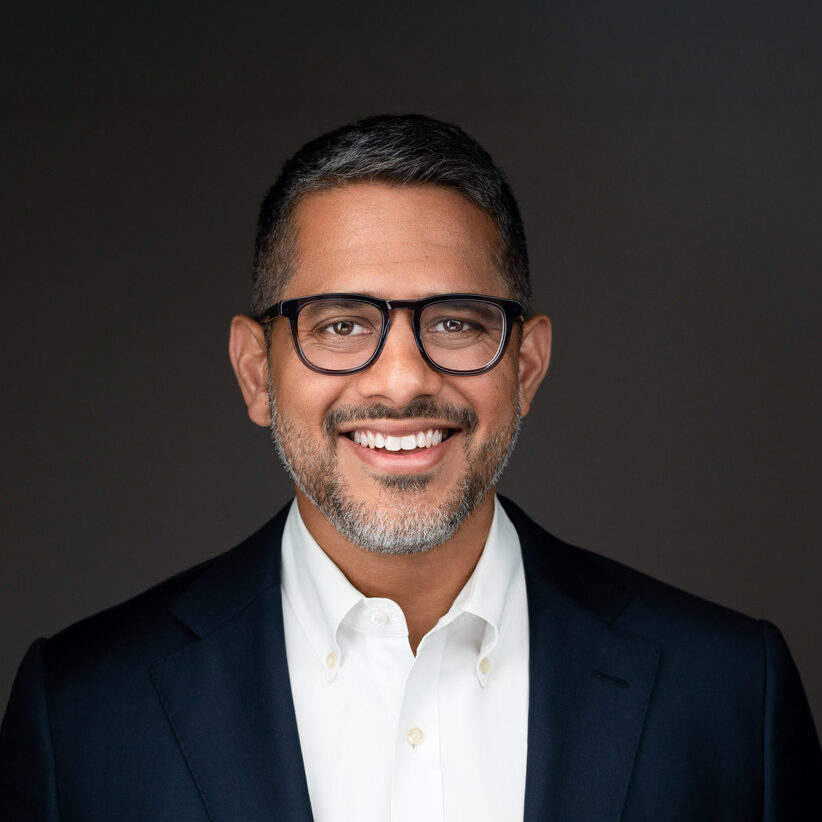
Biography
Abir Ray is a technology executive, engineer, and academic whose work bridges national security, artificial intelligence, and systems engineering. He serves as CEO and CTO of Expression, a Washington, D.C.-based firm specializing in AI/ML engineering, electromagnetic spectrum operations (EMSO), and cybersecurity for the Department of Defense and Intelligence Community and as Visiting Assistant Professor of Practice in the Systems Engineering Program. With 25 years of experience at the intersection of defense technology and emerging AI, Abir leads research and development in multi-agent reinforcement learning, trustworthy AI, and spectrum-aware systems. He holds two pending U.S. patents for Trustworthy AI frameworks designed for national security applications, and is the author of “Spectrum Aware Systems Engineering: AI, Digital Twins & MBSE for Electromagnetic Operations” (2025), a comprehensive technical reference integrating AI, digital twin architectures, and model-based systems engineering (MBSE) for electromagnetic operations. Abir currently serves on the Federal Communications Commission’s Communications Security, Reliability, and Interoperability Council (CSRIC IX), co-leading the AI/ML Working Group developing national policy recommendations for responsible AI deployment in communications networks. He also serves on the Executive Committee of the National Spectrum Consortium, shaping the strategic priorities that bridge commercial spectrum innovation with Department of Defense requirements. His academic work draws directly from operational practice. Doctoral research at the University of Tennessee focuses on AI-enabled systems engineering frameworks for dynamic spectrum allocation; prior doctoral work at George Washington University produced the CareCERT cybersecurity resilience framework for healthcare systems. Abir earned his M.Eng. in Systems Engineering from Cornell University, and holds additional graduate degrees from Harvard University and undergraduate work at the University of Virginia..
Research Interests
My research centers on the application of artificial intelligence and systems engineering to complex, contested operational environments with a particular focus on electromagnetic spectrum operations, trustworthy AI, and cyber-physical systems. Active research areas include: Multi-Agent Reinforcement Learning (MARL) for Dynamic Spectrum Allocation; developing autonomous, adaptive systems capable of real-time spectrum access decisions in congested and contested radio frequency environments. This is the focus of my doctoral dissertation at the University of Tennessee. Trustworthy and Explainable AI for National Security; designing AI architectures that are transparent, auditable, and robust against adversarial manipulation. Two U.S. patent applications are pending in this area. AI-Enabled Cybersecurity; integrating machine learning and behavioral analytics into zero-trust security architectures for government networks; prior work includes the CareCERT framework for healthcare cybersecurity resilience. Digital Twin Methodologies for MBSE; applying digital twin simulation and model-based systems engineering to the design, validation, and operational management of complex electromagnetic and cyber-physical systems. This research is practiced, not merely theoretical. Findings inform real-world systems deployed for DoD and IC clients through Expression Networks LLC and contribute to national policy through my roles with the FCC and National Spectrum Consortium.
Teaching Interests
My teaching philosophy is grounded in practitioner-to-engineer knowledge transfer, connecting advanced theoretical frameworks with the real-world systems challenges that engineers will encounter in industry, government, and defense. At Cornell, I currently teach Digital Twins and Model-Based Systems Engineering (MBSE), a graduate-level course introducing students to creating and deploying digital representations of physical systems. Students learn to model complex system behaviors, run simulation-based validation, and apply MBSE toolchains across domains including aerospace, defense, manufacturing, and smart infrastructure; and Cybersecurity and AI Systems Engineering, covering zero-trust architectures, AI/ML-driven threat detection, secure system design principles, and cybersecurity case studies drawn from DoD and healthcare environments. My courses emphasize hands-on application: students work with Python, multi-agent simulation environments, MBSE modeling tools, and AI coding assistants to tackle engineering problems with real operational relevance. I am particularly focused on helping students develop the dual fluency, in both engineering systems and AI, that defines the next generation of systems engineers and technical leaders.
Select Publications
-
Ray, A. (2026). Spectrum Aware Systems Engineering: AI, Digital Twins & MBSE for Electromagnetic Operations. John Wiley & Sons. — Comprehensive technical reference on AI/ML integration with MBSE and digital twin methodologies for electromagnetic spectrum operations.
-
Ray, A. (2024–2025). Trustworthy AI Framework for National Security Applications. U.S. Patent Application (pending). — Method and system for deploying explainable, auditable AI agents in contested intelligence environments.
-
Ray, A. (2024–2025). Trustworthy AI Architecture for Adversarial Robustness. U.S. Patent Application (pending). — System and method for detecting and mitigating adversarial attacks on AI-driven analytics pipelines.
-
Yu, L., & Ray, A. (2024). An LLM Maturity Model for Reliable and Transparent Text-to-Query. arXiv preprint arXiv:2402.14855.
-
Ray, A. (2024). AI-Enabled Systems Engineering for Dynamic Spectrum Allocation: A Multi-Agent Reinforcement Learning Approach. [IEEE journal submission in preparation — doctoral dissertation research, University of Tennessee].
Education
- Doctor of Philosophy in Industrial and Systems Engineering – University of Tennessee, Knoxville, TN 2026
- Doctor of Engineering in Cybersecurity Analytics – George Washington University, Washington, DC
- Master of Liberal Arts in Software Engineering – Harvard University, Cambridge, MA
- Master of Engineering in Systems Engineering – Cornell University, Ithaca, NY
- Bachelor of Arts in Interdisciplinary Studies – University of Virginia, Charlottesville, VA