Page Contents
Quick Links
Speakers and Presenters
-
![Ricardo A. Daziano]()
Ricardo A. Daziano
Professor of Civil and Environmental Engineering, Cornell University
Daziano is a choice modeler working on deriving Bayesian and semiparametric estimators for microeconometric models of customer decisions in engineering contexts. His technical goal is to derive and apply preference estimators that are econometrically, behaviorally, and computationally superior to extant tools. His empirical goal is to better understand the interaction of consumer behavior and engineering, investment, and policy choices for energy-efficient technologies and sustainability, especially in transportation. In his transdisciplinary career, Daziano has been particularly interested in modeling the socio-technical transition to electric vehicles, and has used non-market valuation techniques to ascertain preferences for EV features, as well as preferences for EV charging and electricity contracts.
-
![Corey Ryan Earle]()
Corey Earle
Chief Administrator to the Office of the Provost
Earle specializes in the history of Cornell University and Tompkins County, serving as a resource for departments and organizations across campus while working in the Office of the Provost. Since 2011, he has taught AMST 2001: The First American University on the history of Cornell. His research interests include the impact of history and traditions in building community and sense of belonging, as well as how higher education institutions communicate their story and engage with their past. Earle previously served as board president of The History Center in Tompkins County.
-
![HIlary Soohoo Gambardella]()
Hilary Soohoo Gambardella
Systems Engineer Lead, Hologic, Inc.
Gambardella is a Systems Engineer in the medtech industry where she has spent nine years helping to build medical devices for use in outpatient, emergency room, and surgical settings. She attended Cornell University as an undergraduate nutrition major, and received a M.Eng. degree in the Systems Engineering program. During her time as a systems engineer, she has worked for Cleerly, a medical device startup developing post-processing CT software for coronary plaque analysis, where she and her team received two FDA clearances: Beckman Coulter Diagnostics, developing risk score software for major adverse cardiac events and sepsis; and Hologic, working on a breast surgery device.
-
![Emmanuel P. Giannelis]()
Emmanuel P. Giannelis
Walter R. Read Professor of Engineering and Associate Dean for Innovation, Duffield Engineering
Giannelis’s research interests include nanomaterials for energy, biomedical, and environmental applications, and his group has been recognized for their seminal work in nanocomposites. He is a Fellow of the American Chemical Society and of the Polymer Materials Science and Engineering Division of the American Chemical Society. He has won the 2014 Cooperative Research Award from the American Chemical Society, and he is a member of the European Academy of Sciences.
-
![Paul Heremans]()
Paul Heremans
Corporate CTO and Senior Fellow at imec, and professor in the Electrical Engineering department at KU Leuven
Heremans joined the optoelectronics group at imec, where he contributed to advancements in optical interchip interconnects and high-efficiency III-V thin-film surface-textured light-emitting diodes. From 2013 to 2016, he was technology director at the Holst center, Eindhoven, specializing in organic and IGZO TFT, OLED and display technologies. Since 2024, he served as senior vice president of the sector Industry & Consumer at imec. Since October 2025, Paul has been the corporate CTO. He is responsible for overseeing imec’s technology strategy in semiconductor technology, devices, and sensors. He drives innovation across research and development, fosters collaboration between industry and academia, and ensures that technological initiatives align with the organization’s long-term vision. Paul is recognized for his scientific excellence and impactful contributions and holds the distinguished title of Senior Fellow at imec.
-
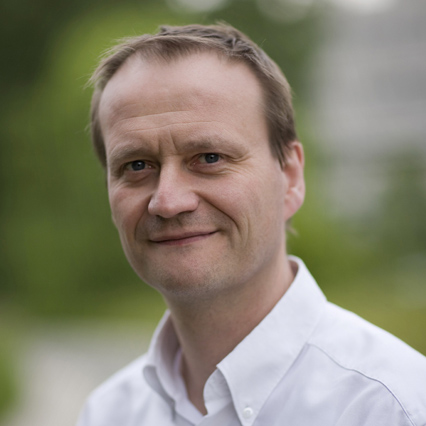
![Fei Wang]()
Fei Wang
Frances and John Loeb Professor of Medical Informatics, Cornell University
Wang is a professor in the Department of Population Health Sciences and the Department of Emergency Medicine at Weill Cornell Medicine. He is also the Associate Dean for Artificial Intelligence, Chief of the Division of Health Informatics and Artificial Intelligence in his department, the Founding Director of the Institute of AI for Digital Health and the Founding Co-Director of the Data Coordination Center. He is a Senior Technical Advisor at New York Presbyterian hospital, a Senior Faculty Fellow of Clinical Artificial Intelligence at Cornell Tech, and an Adjunct Scientist at Hospital for Special Surgery. Wang has published over 400 papers on the major venues of AI and biomedicine. He is an elected fellow of the American Medical Informatics Association, the American College of Medical Informatics, and the International Academy of Health Sciences and Informatics, and a distinguished member of the Association for Computing Machinery..


Moderators
-
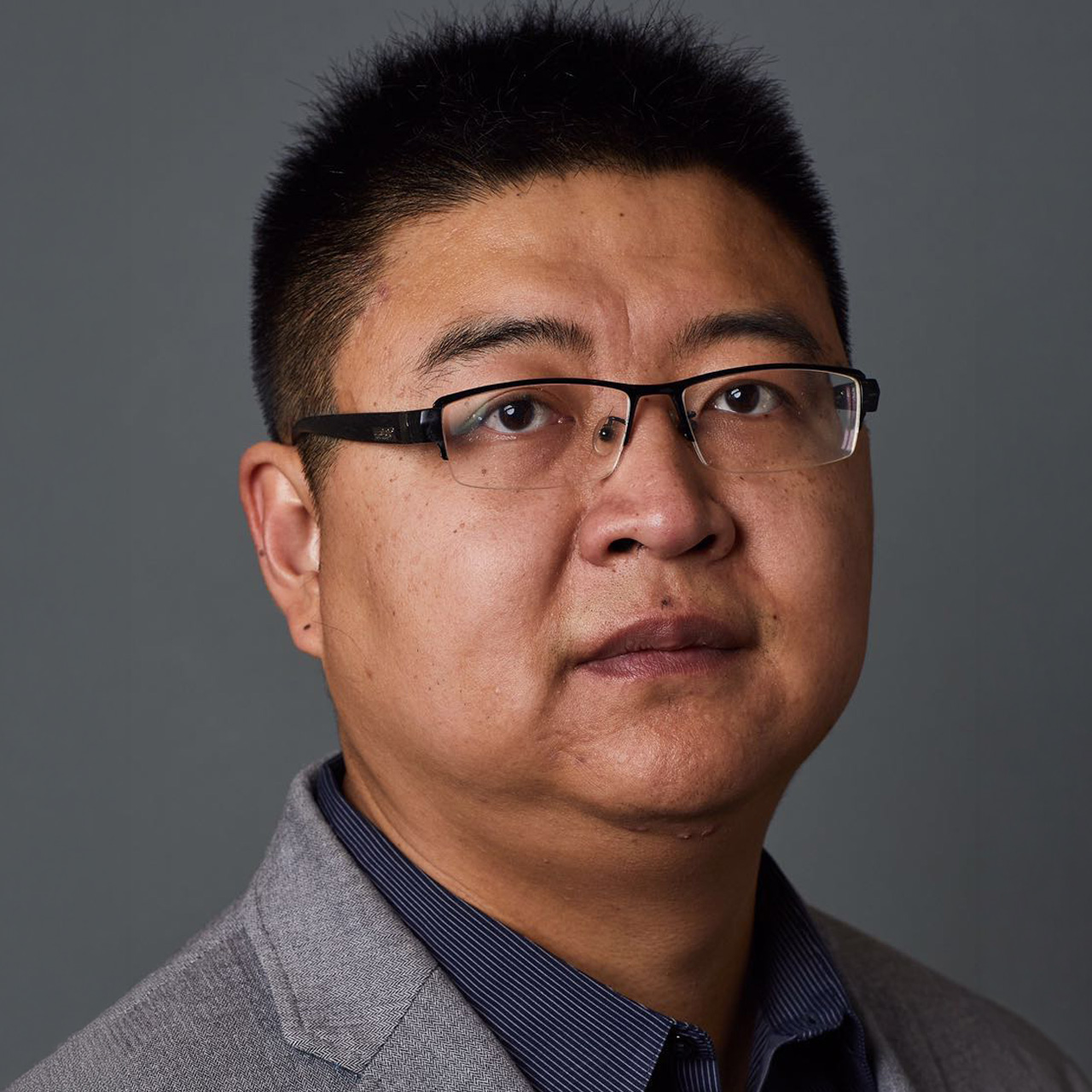
![Kurt Kuhn]()
Kurt Kuhn
Boeing Technical Fellow
Kuhn is a Certified Systems Engineering Professional with over 32 years of experience leading technical innovation and systems engineering transformation at Boeing. As a Boeing Technical Fellow, he has driven enterprise-wide initiatives in model-based systems engineering, structural analysis, and special mission aircraft certification, consistently delivering improvements in program efficiency, quality, and compliance. He is passionate about engineering workforce development and culture, mentoring over a dozen engineers globally, teaching special topics on systems engineering, and fostering an inclusive environment that elevates the perception of systems engineering as a critical, value-driving discipline. Kurt holds a M.Eng. degree in Systems Engineering from Cornell University and a Bachelor’s degree in Mechanical Engineering from the University of Delaware.
-
![Jessica Rush Leeker]()
Jessica Rush Leeker
Professor of Practice, Systems Engineering and Office of Inclusive Excellence, Cornell University
Jessica Rush Leeker’s work bridges industry practice, engineering education, systems thinking, and workforce development, focusing on preparing engineers to address complex societal and technological challenges. Before entering academia, Rush Leeker built a career in global supply chain management, operations, procurement, and sustainability, working with organizations including Schneider Electric, Unilever, Georgia-Pacific, and DocuSign. Her research explores engineering mindset development, experiential and project-based learning, and equitable pathways into engineering and STEM. She leads and collaborates on federally funded research initiatives that connect engineering education with families, communities, and real-world applications. Her current work also examines how artificial intelligence, industry partnerships, and emerging workforce demands are reshaping engineering education and professional preparation.
-
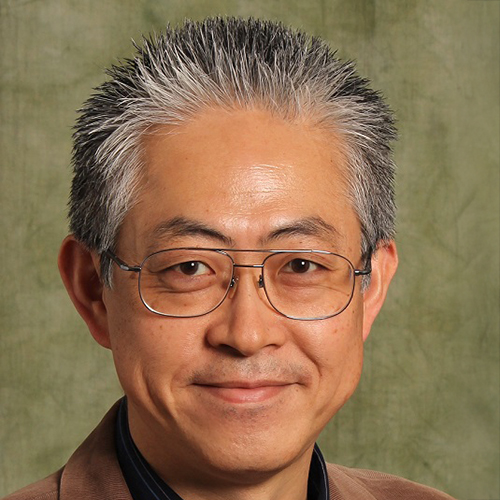
![Hirocki Sayama]()
Hiroki Sayama
SUNY Distinguished Professor of Systems Science and Industrial Engineering at Binghamton University and the Mary Shepard B. Upson Visiting Professor in Engineering at Cornell University
Sayama’s research interests include complex dynamical networks, human and social dynamics, collective behaviors, artificial life/chemistry, interactive systems, and complex systems education, among others. He is an expert on mathematical and computational modeling and analysis of various complex systems. He has published more than 260 peer-reviewed journal articles and conference proceedings papers and has written or edited 17 books and conference proceedings about complex systems related topics. He is a Senior Member of IEEE and currently serves as the Vice Chair of the IEEE Computational Intelligence Society’s Task Force on Artificial Life and Complex Adaptive Systems. He is an Elected Council / Executive Committee / CCS Steering Committee Member of the Complex Systems Society, the Vice President and a Board member of the Network Science Society, the Founding Co-Editor-in-Chief of Northeast Journal of Complex Systems, an associate editor of “Artificial Life” (MIT Press), and as an editorial board member for several other journals.


Panelists
-
![Juan Amenabar]()
Juan Amenabar
Chief Systems Engineer and Master Solution Architect with Leidos
Amenabar leads a variety of digital engineering efforts and supports various programs in digital transformation as well as enterprise level training in systems and digital engineering. He is a contributing author of INCOSE Competency Framework and INCOSE Competency Assessment Guide, and contributing author of the INCOSE Systems Engineering Handbook v5. He holds B.S. and M.S. degrees in aerospace engineering and has more than 40 years of experience in system development and integration, modeling and simulation, testing, and operation across space, missiles, software, and sensor systems. He is the Subject Matter Expert with Leidos MBSE Center of Excellence, INCOSE ESEP, Leidos Corporate Advisory Board (CAB) representative, and Associate Director of INCOSE Education and Training.
-
![Edward Bauer]()
Edward W. Bauer
Senior Scientific Technical Manager for Systems Engineering at the U.S. Army Combat Capabilities Development Command Armaments Center
Early in his 23-year career at Picatinny Arsenal, Bauer served in a multitude of system engineering practitioner and leadership roles, focusing on requirements, decision analysis, and risk management in support of Army programs across the Armaments domain. He was a recognized figure in NATO AC/327 Lifecycle Management Group and previously served as the alternate U.S. Head of Delegation and Chair of Working Group 1. He then served in multiple leadership roles in the AC’s Munition Engineering Technology Center focused on improving performance and reliability of munition systems through computational modeling, materials analysis, and prototyping. In his current role, he is the Armaments Center’s authority for systems engineering, responsible for the strategic planning of systems engineering and management of full lifecycle support across the Armaments and Ammunition portfolio.
-
![Charlie Chen]()
Charlie Chen
Senior Fellow at L3Harris Technologies for the Space & Missions Segment
Chen is a highly experienced professional with a notable career in the defense industry, currently serving as a Senior Fellow at L3Harris Technologies for the Space & Missions Segment. His expertise lies within the intelligence, surveillance, and reconnaissance sensors and systems domain for both airborne and space applications. Prior to L3Harris, he was a Principal Fellow at Raytheon and began his aerospace career at Northrop Grumman within their Advanced Technology group. Chen earned both his Bachelor of Science and Doctor of Philosophy degrees in electrical engineering from Cornell University. He holds a certification in Project Management. He received his business training from the University of Chicago, Booth School of Management.
-
![David Flanigan]()
David Flanigan
Associate Dean, Non-Residential Graduate Education for the Johns Hopkins University
Flanigan is the group supervisor of the APL Education Center, which supports 25 part-time master’s degree programs for the Johns Hopkins Whiting School of Engineering’s Engineering for Professionals program. He serves as the liaison between APL and Johns Hopkins University. Flanigan has been at APL for over 25 years, serving in a variety of line and project management positions. He is currently the vice chair for the systems engineering program and was the primary author for the third edition of the “Systems Engineering Principles and Practices” textbook. His areas of expertise include systems requirements, systems architecture, systems analysis, and operations research.
-
![Tim Fraser]()
Timothy (Tim) Fraser
Assistant Teaching Professor, Systems Engineering Program at Cornell University and Coordinator for the Center for Transportation, Environment, and Community Health
Fraser is a computational social scientist who is developing methods, systems, and software to help communities combat environmental crises. His current research focuses on building AI and cloud computing tools to quantify, visualize, and communicate environmental policy data to the public, to support community action and resilience in socio-technical systems. He has published more than 50 peer-reviewed articles, dashboards, and software on urban resilience, transportation, and environmental systems in the U.S. and Japan. His research has been funded by multiple national grants, including Fulbright, and has been featured in major media outlets, including the New York Times and Bloomberg News. He has advised policy on social infrastructure at the OECD and U.N. Development Programme’s Accelerator Labs.
-
![Steven Jackson]()
Steven J. Jackson
Professor of Information Science and Science & Technology Studies, and Vice-Provost for Academic Innovation at Cornell University
Jackson teaches and conducts research in the areas of maintenance, repair, and sustainability; technology ethics, law, and policy; infrastructure, collaboration, and institutional change (including in higher education); and technology, inequality and global development. His work draws on and contributes to research in human-computer interaction and computer-supported cooperative work along with social science and humanities fields. He also directs the Computing On Earth Lab, an experimental collaboration that brings together social scientists, humanists, artists, and engineers to rethink the material and planetary foundations of computing. During fall 2026, he is serving as the Kluge Chair in Technology and Society at the U.S. Library of Congress.
-
![Thorsten Joachims]()
Thorsten Joachims
Cornell’s inaugural Vice Provost for Artificial Intelligence Strategy, Director of the Cornell AI Initiative, and the Jacob Gould Schurman Professor of Computer Science and Information Science
An internationally recognized leader in artificial intelligence, Joachims is known for his pioneering contributions to machine learning and information access. His research focuses on machine learning methods that enable intelligent systems to learn from their human users in applications ranging from search and recommendation systems to large language models. Under his leadership, the Cornell AI Initiative is working to advance Cornell’s position as a global leader in scholarship on ethical and human-centered AI, and to empower the university to meet the opportunities and challenges of AI across research, education, operations, and public engagement.
-
![Matt Marx]()
Matt Marx
The Bruce F. Failing Sr. Chair in Entrepreneurship and Innovation and a Professor of Management and Organizations in the Cornell S.C. Johnson College of Business
Marx serves as department editor for entrepreneurship and innovation at Management Science, and is a research associate at the National Bureau of Economic Research where he chairs the Innovation Information Initiative. Marx’s research focuses on reducing barriers to the commercialization of science and technology, informed by his decade of experience as an executive and engineer at two speech recognition startups. His research on employee noncompete agreements and job mobility contributed to policy reforms in Hawaii and Massachusetts, and his work has been covered by outlets such as the New York Times and the Washington Post. Marx holds six patents and earned a bachelor’s degree in symbolic systems from Stanford University, a master’s degree from the MIT Media Lab and both MBA and doctoral degrees from Harvard University.
-
![Adam Sawicki]()
Adam Sawicki
Senior Technical Fellow, Boeing Company
Sawacki has worked for more than 36 years in Boeing’s mechanical and structural engineering division. Based at the Vertical Lift division in Philadelphia, his early career focused on rotorcraft products including the V-22 Osprey, RAH-66 Comanche, and H-47 Chinook. Since 2009 he has served as an FAA designee, helping certify aircraft. He co-chairs the Boeing Defense & Space MSE Structural Analysis technical council. He has been a member of ASTM D30 Committee on Composite Materials for over 27 years, serving as committee chairman from 2012-17. He was designated an ASTM Fellow in 2019 and received the committee’s Wayne W. Stinchcomb Award in 2022 for contributions to the advancement of composites technology. He also participates in ASTM D14 (adhesives) and F42 (additive manufacturing) committees. Sawicki graduated with bachelor’s and master’s degrees in aeronautics and astronautics from the Massachusetts Institute of Technology, as well as an M.B.A. from Villanova University, and is currently pursuing a Ph.D. in engineering education at Mississippi State University.
-
![Alice Schwarze]()
Alice Schwarze
Head of Research at the Utah AI Policy Office (OAIP)
Schwarze received a Ph.D. in applied mathematics from the University of Oxford. Prior to joining OAIP, she worked as a researcher and lecturer at UCLA, the University of Washington, and Dartmouth College covering topics from computational neuroscience, data science for public health, and the mathematical foundations of artificial intelligence. In her current role, Schwarze leads OAIP’s research efforts that support their issued guidance letters and policy recommendations on healthcare AI, AI companions, AI in education, AI workforce transformation, and child safety. She is currently spearheading the OAIP’s development of an assessment framework for the clinical safety and public-health benefits of AI-in-healthcare products.