Undergraduate senior Marcus Gamboa is developing innovative surgical training technology that brings real-time feedback and measurable outcomes to improve how future clinicians learn and practice.
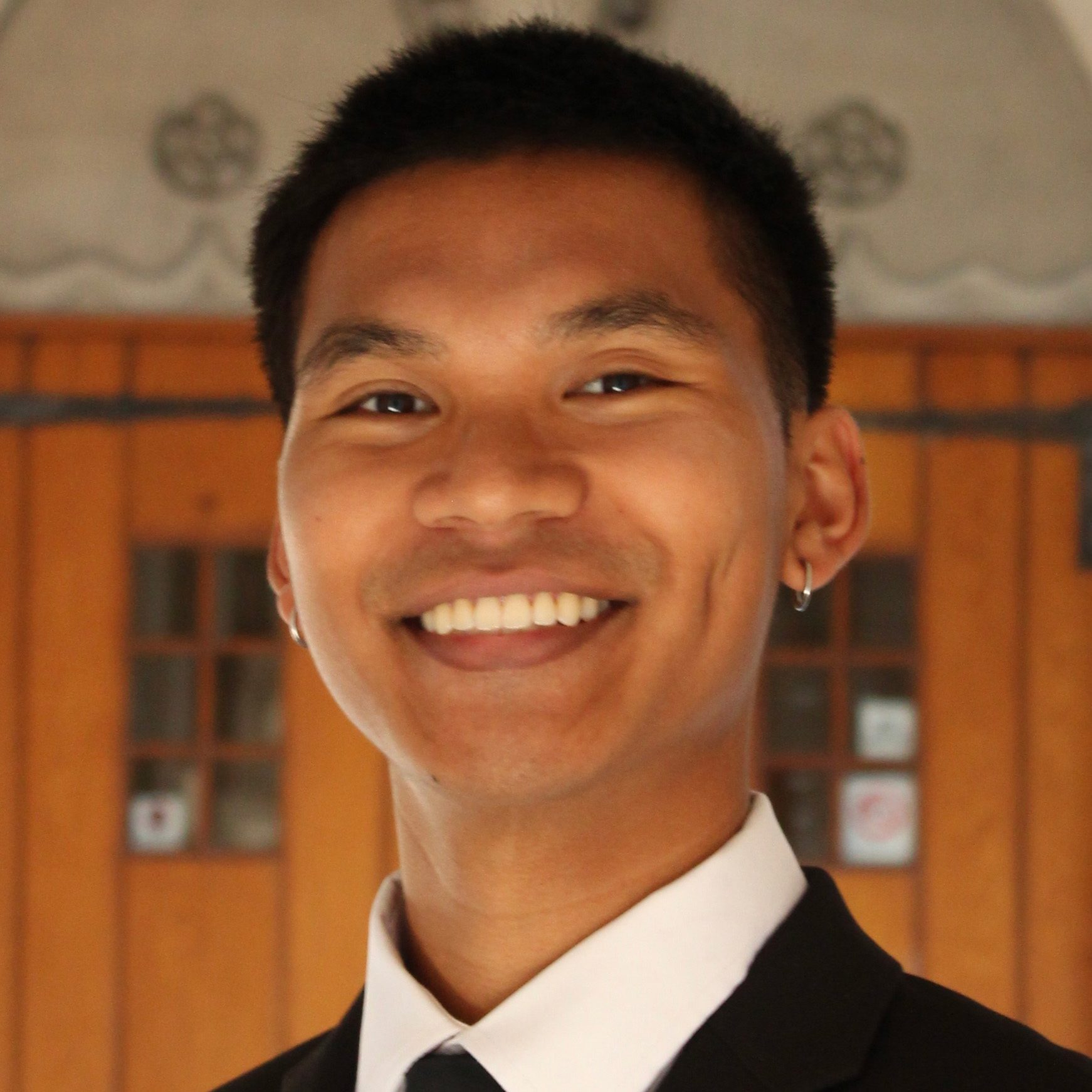
Marcus Gamboa
-
Program
B. S. in biomedical engineering
-
Hometown
Long Island, New York
-
Concentration
Biomaterials and drug delivery
-
Faculty Lab Affiliation
Ando Lab (Xiaokun Pei)
-
Preferred pronouns
he/him
What’s your Cornell story?
When I applied to Cornell, I was drawn to biomedical engineering as an emerging field that could open doors across research and development, business and healthcare fields. It felt like the ideal path to explore my interests in STEM while understanding how science and math translate into real-world impact.
That curiosity became more focused once I arrived on campus. As I took core courses, I found myself especially interested in understanding how biomaterials and drugs interact with the body. This led me to the biomaterials and drug delivery concentration. Through this path, I’ve been able to dive deeper into how biomaterials and drugs are designed, delivered, and integrated within biological systems.
What stands out to you about your Cornell experience so far and why?
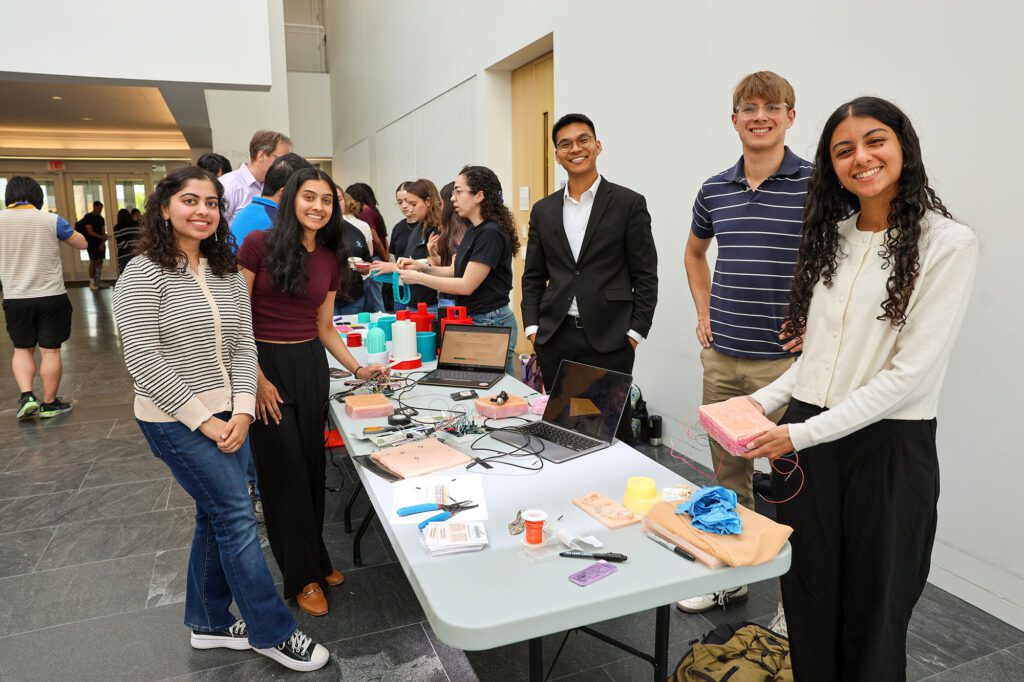
What stands out most to me is how intentionally the curriculum brings together theory and real-world application, particularly through my senior design project, TactTissue, which is a surgical training tissue mimetic that provides real-time, quantitative evaluation for surgical residents. In a field where training still relies heavily on non-interactive cadaver and silicone models, and where advanced tools like the da Vinci Surgical System are largely limited to robotic procedures, our team’s device introduces innovation for standard techniques using traditional instruments such as scalpels and forceps. Designed as a “3D Operations” platform, TactTissue enables surgical residents to receive meaningful, objective feedback even without an evaluator, while also allowing instructors to track progress over time.
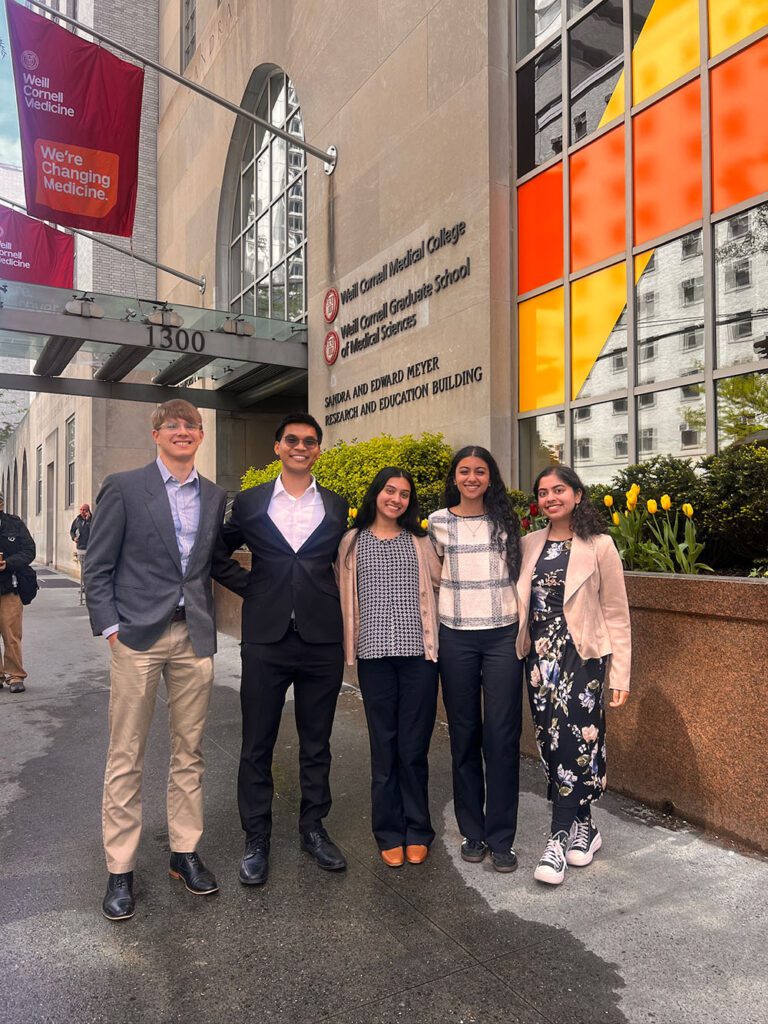
What made this experience especially impactful was the opportunity to test our prototype during a visit to Weill Cornell Medicine in April, where surgeons and resident students provided direct feedback. Hearing from clinicians helped us refine our design, better understand its real-world applicability, and see firsthand how our work could support medical training. Building something alongside my peers and then seeing its potential to directly help healthcare professionals has been a highlight of my experience at Cornell.
This is what truly defines Cornell for me: the expectation that students not only understand core concepts, but can also actively apply them in meaningful, collaborative ways. Through this project, I’ve been pushed to step outside my comfort zone, connecting physiology with engineering constraints, and learning how to communicate ideas effectively within a team and with stakeholders. TactTissue has made clear how the foundation built through my coursework translates into designing impactful medical technologies and working alongside healthcare professionals to improve patient care.
Any interests outside of or in relationship to your scholarship?
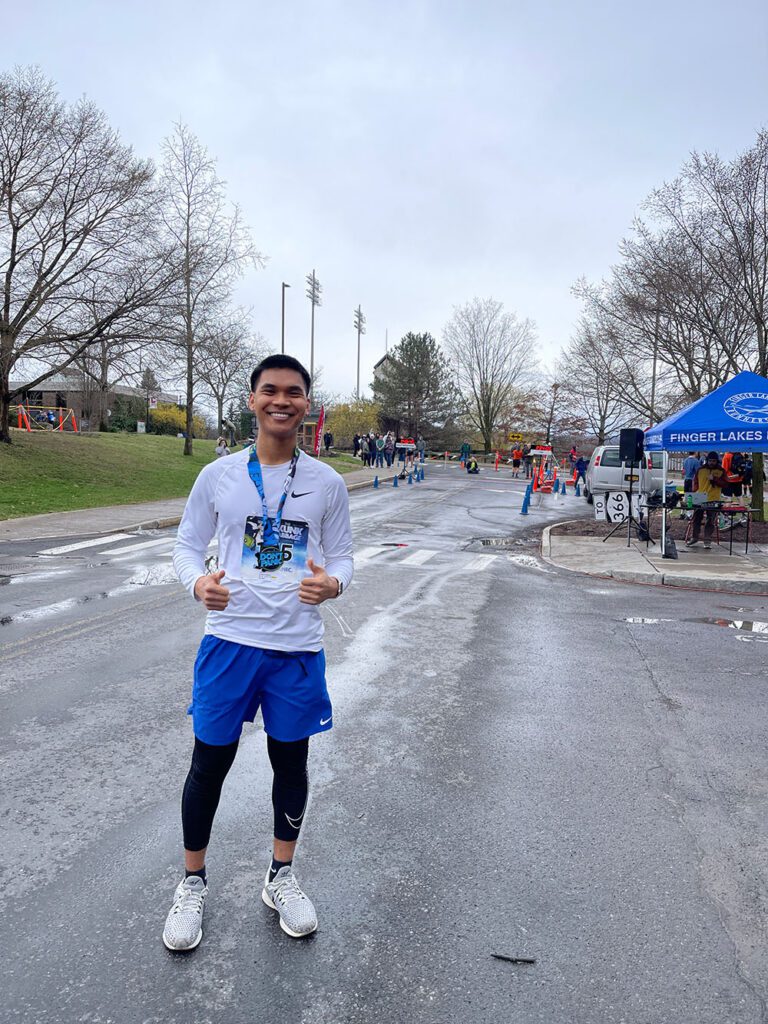
I love to freestyle dance, run, and play the viola. Whenever I have free time, I enjoy playing one of my favorite songs and moving along to the beat. Running provides me an outlet to maintain my physical well-being while learning to improve my discipline through following a consistent routine. I also have played the viola since third grade and occasionally play the viola for my church at Cornell.
What’s next for you after graduation?
After graduation, I plan to work in the healthcare field while gaining deeper clinical insight by shadowing healthcare professionals and identifying unmet needs. Through my senior design project, I’ve had the opportunity to engage with dentists, veterinarians, and other clinicians to explore real-world challenges and generate ideas for future projects. I’m excited to build on this experience by developing a prototype that can ultimately help patients or healthcare professionals in the long-run.
Anything else you want to share?
I am grateful for my friends, peers and teachers I have met throughout my undergraduate experience at Cornell. This program has fueled my desire to help others and equipped me with a mindset to tackle any challenges that I may face with curiosity and resilience.