For students who can spend hours analyzing weather maps, debating the prospects for an approaching snowstorm or marveling at the science behind a thunderstorm, the Cornell Chapter of the American Meteorological Society (CCAMS) offers something valuable: a community of people who share their enthusiasm.
That community has grown increasingly active in recent years, creating new opportunities for students to develop their interests, build professional connections and gain leadership experience. Its most ambitious undertaking, the Cornell Weather Conference, returned for a second year in September 2026, bringing students, scientists and meteorology professionals together for a weekend of presentations, discussions and networking.
The student-organized conference featured keynote presentations by Alan Sealls ’85, president of the American Meteorological Society and a former broadcast meteorologist who has won 16 Emmy Awards; Hank Schyma, the storm chaser, filmmaker and author widely known as Pecos Hank; and broadcast meteorologist and science communicator Elisa Raffa ’15. The program also included career panels and opportunities for students to connect with professionals working across the atmospheric sciences.
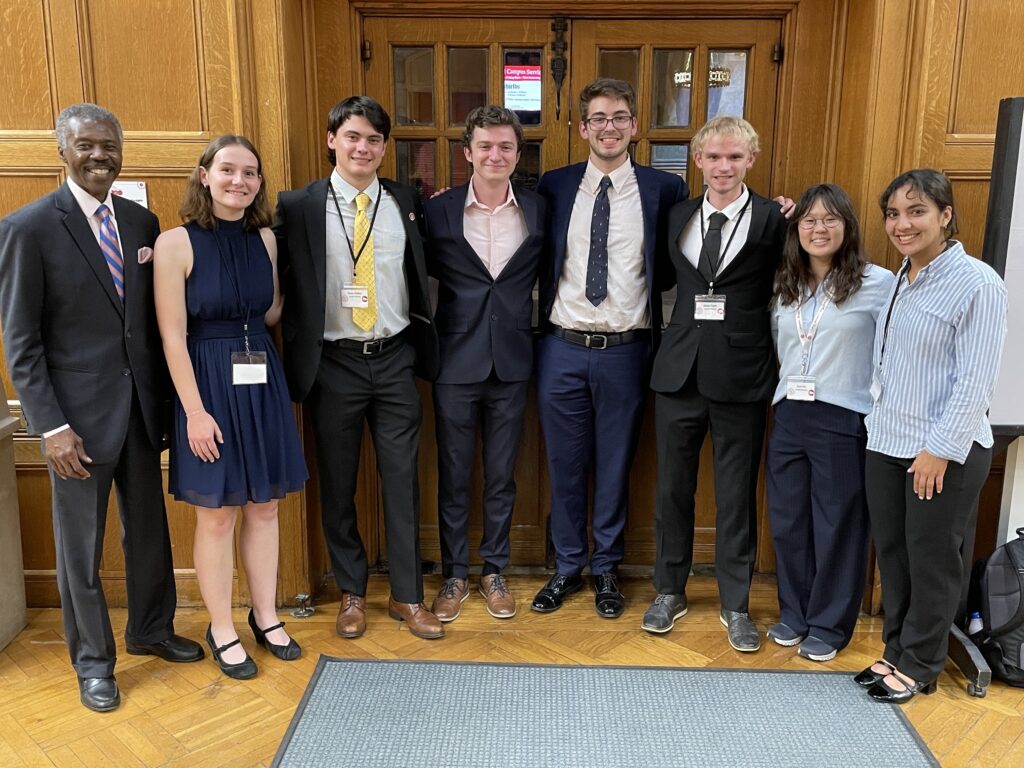
For CCAMS members, the conference represents an extension of what the organization does throughout the academic year: bring together people who love weather and help them turn that interest into academic and professional opportunities.
The chapter, whose origins date to approximately the early 1990s, has about 40 active members, most of them atmospheric science majors. Its activities include forecast nights, guest speakers, social gatherings and opportunities to learn from fellow students.
For Evelyn Keefe ’28, an atmospheric science major, joining CCAMS helped make a large university feel more manageable.
“I joined CCAMS because I was scared at first coming to Cornell,” Keefe said. “It’s such a big school; much bigger than the rest of the colleges I applied to. But CCAMS made it feel small in the best way.”
Keefe, whose interest in weather developed during middle and high school, described atmospheric science as something that once seemed almost magical. Through CCAMS, she has found opportunities to explore that fascination while contributing to the conference and other student activities.
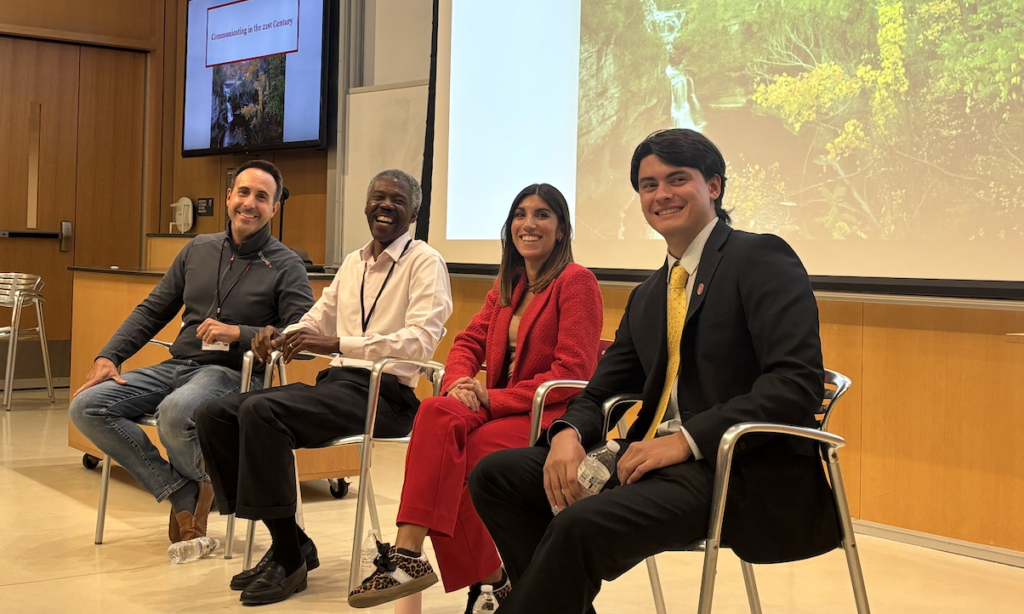
The chapter also provides a welcoming environment for transfer students. Shawn Wallace, who transferred from SUNY Brockport, said CCAMS helped him establish friendships, develop a support network and explore different aspects of meteorology.
“It provided a place to just really geek out about the weather. It helped me learn more about meteorology and make connections,” Wallace said.
Recent student leadership has expanded the chapter’s activities and helped foster related organizations, including the Cornell Storm Chasing Club, which became an official student organization in 2025, and Cornell MetDat, a developing group focused on meteorological data and instrumentation.
CCAMS also helps students attend the American Meteorological Society’s national conference, where they can meet researchers, employers and fellow students. That effort received a significant boost from Cornell alumnus and trustee John Morales ’84, a prominent broadcast meteorologist who established an endowment supporting an annual award that recognizes student involvement and helps fund conference travel.
The weather conference grew out of that same spirit of initiative and collaboration. The original idea came from student Packie Young ’26, and then-CCAMS president Will Cano ’26 recruited a committee of undergraduates to turn the proposal into reality.
Their first conference, held Sept. 26-28, 2025, attracted more than 100 students, alumni, faculty and professionals. Speakers included Morales, meteorologists Danielle Breezy ’09 and Matthew Cappucci, and researchers Karen Kosiba and Josh Wurman. Sessions explored subjects ranging from severe weather research and mobile radar to science communication and career opportunities.
Building on that success, the student committee organized the 2026 gathering, drawing on connections made at professional conferences, internships and other universities. Cornell’s location makes it a convenient meeting point for atmospheric science programs throughout the Northeast and mid-Atlantic states.
Organizing the conferences has required extensive planning, fundraising and outreach. Support has come from Cornell alumni, university funding sources and companies including Kestrel, which donated meteorological instruments for student use.
The success of the two conferences has also raised questions about how to sustain the undertaking. Although organizers initially envisioned an annual event, they are considering alternatives, including holding it every other year or collaborating with another university, to balance the demands of conference planning with students’ academic responsibilities.
Whatever form future conferences take, CCAMS members say the organization’s greatest strength remains the community it creates.
For students who might otherwise have few opportunities to share their fascination with atmospheric science, that sense of belonging can be as important as the professional connections.
As one conference committee member explained, CCAMS is a place where students can enthusiastically discuss the details of a snowstorm or an atmospheric pressure map, knowing that everyone around them understands exactly what they are talking about. And increasingly, it is a place where that shared enthusiasm is creating opportunities far beyond Cornell.