Shaping the Future of Technology
Electrical and computer engineering extends from the nanoscale level of integrated electronics to gigantic power grids; from single-transistor devices to networks comprising a billion nodes. Our students discover and apply new technologies and innovations in our three nationally-ranked academic degree programs.
Our Programs
Strategic Areas of Research
-
![Karan Mehta's Photonics and Quantum Electronics Group lab equipment]()
Bio-Electrical Engineering
Interfaces for sensing and actuation to help understand the physiological and pathological mechanisms of diseases, and enable advanced robotic interfaces in medicine.
-
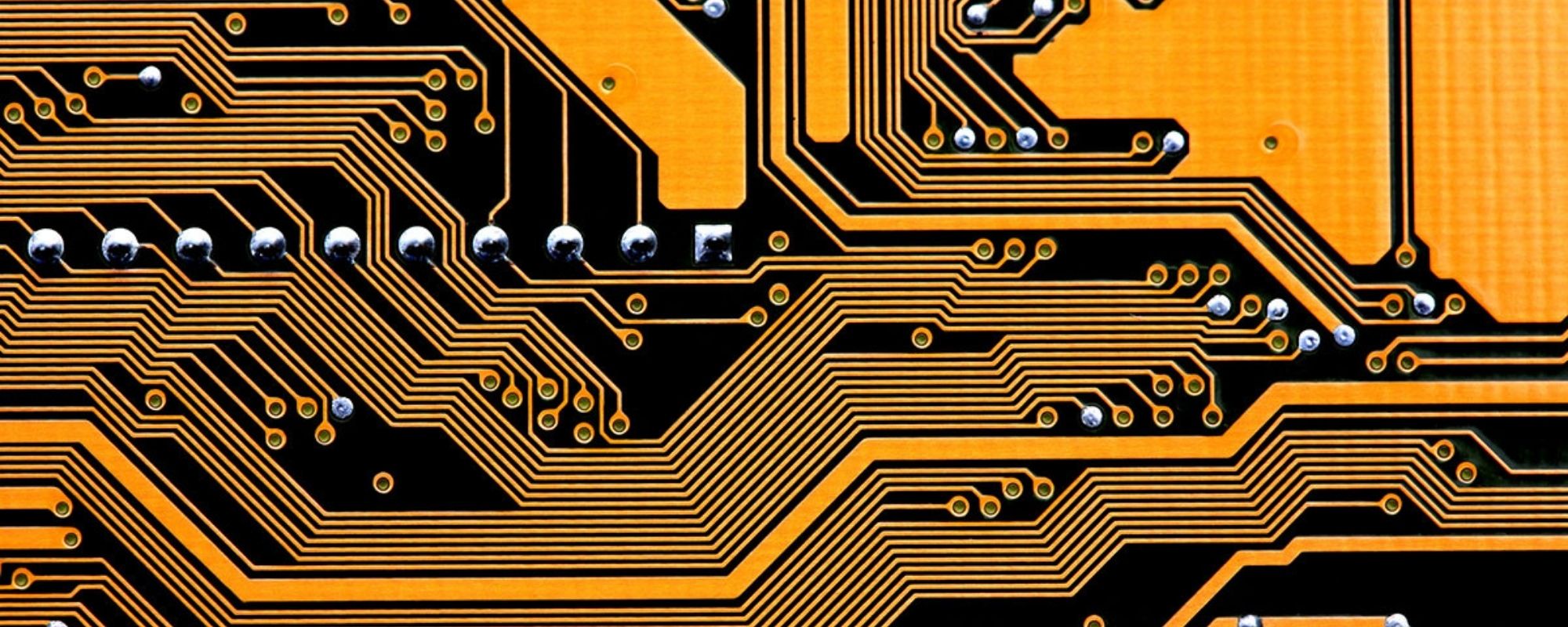
![Circuit board]()
Circuits and Electronic Systems
Analog and mixed signal circuits, RF transceivers, low power interfaces, power electronics and wireless power transfer, and many others.
-
![Blockchain graphic from the Statistical Signal Processing Lab of Vikram Krishnamurthy]()
Computer Engineering
Digital logic and VLSI design, computer architecture and organization, embedded systems and Internet of things, virtualization and operating systems, code generation and optimization, computer networks and data centers, electronic design automation or robotics.
-
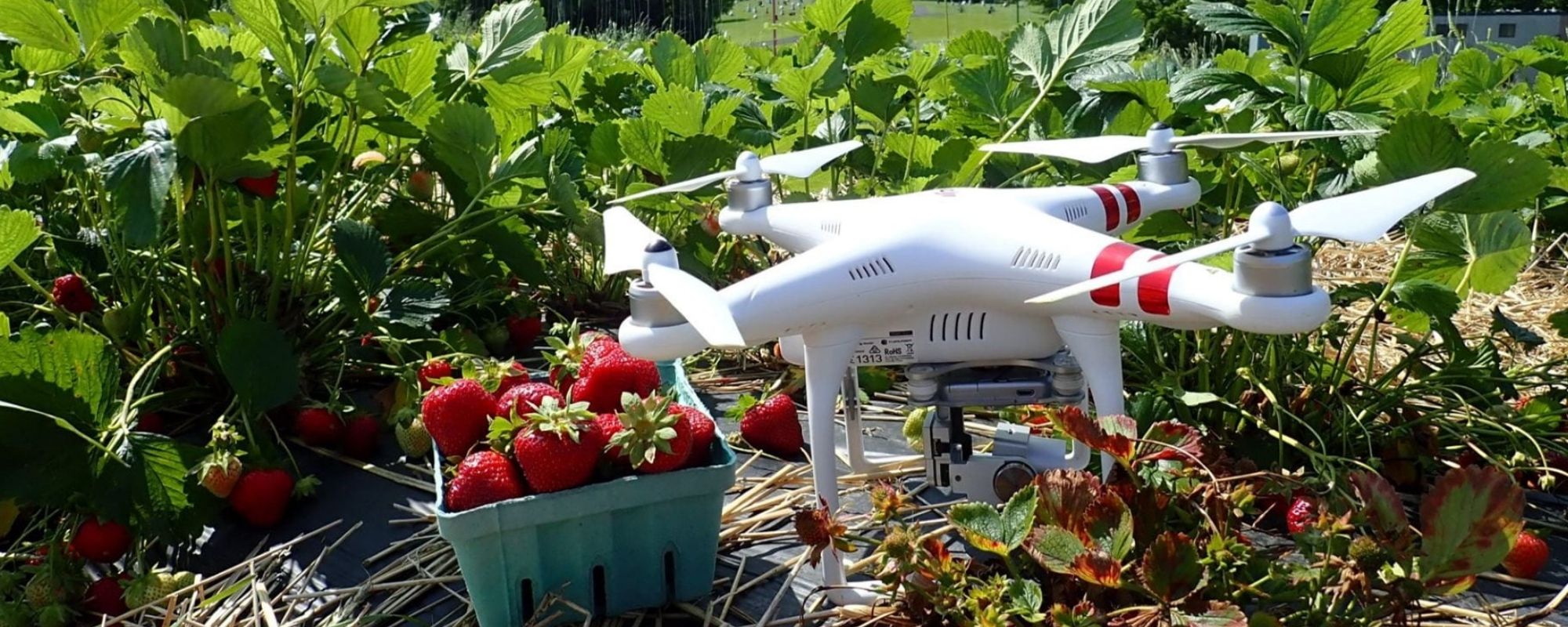
![A drone in a strawberry field working on pollination. in Kirsten Petersen's lab]()
Information, Networks, and Decision Systems
The advancement of research and education in the information, learning, network and decision sciences.
-
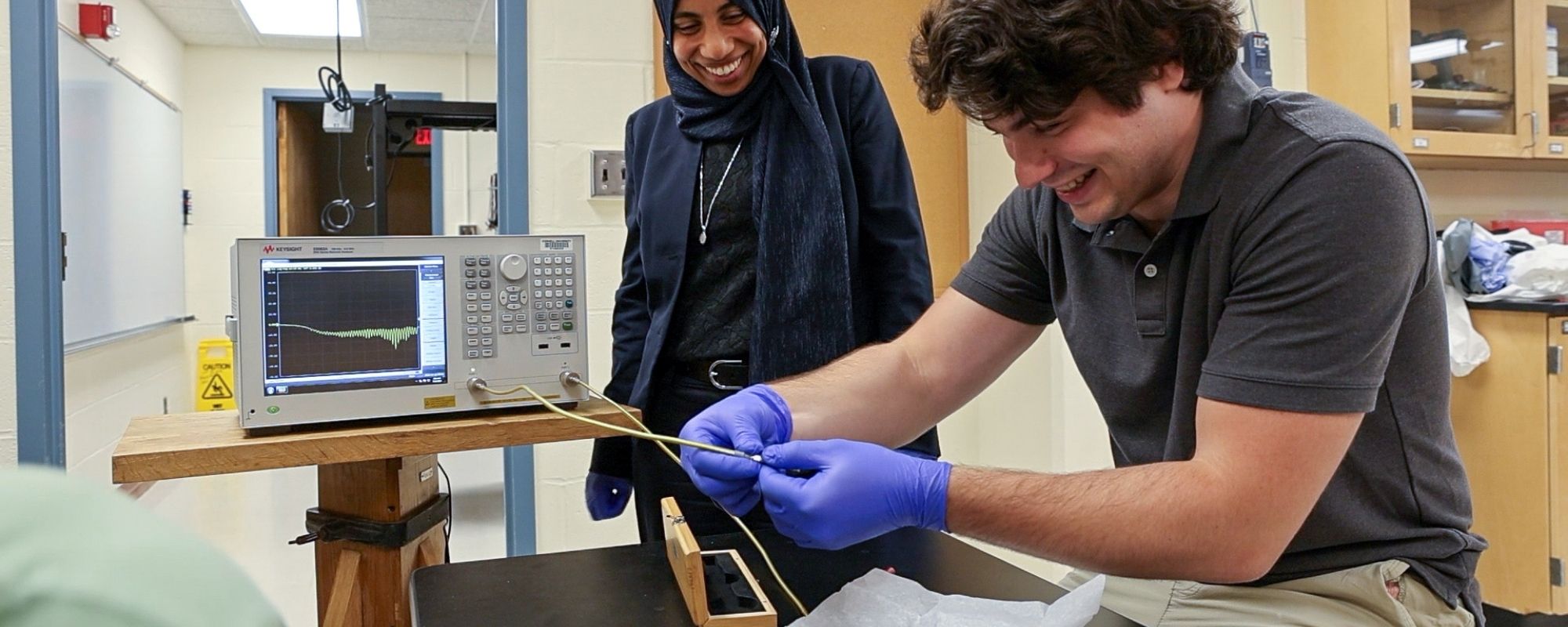
![Amal El-Ghazaly working with a student in her lab on magnetic sensors]()
Physical Electronics, Devices, and Plasma Science
Electronic and optical devices and materials, micro-electromechanical systems, acoustic and optical sensing and imaging, quantum control of individual atoms near absolute zero temperature, and experiments on high-energy plasmas at temperatures close to those at the center of the sun.
-
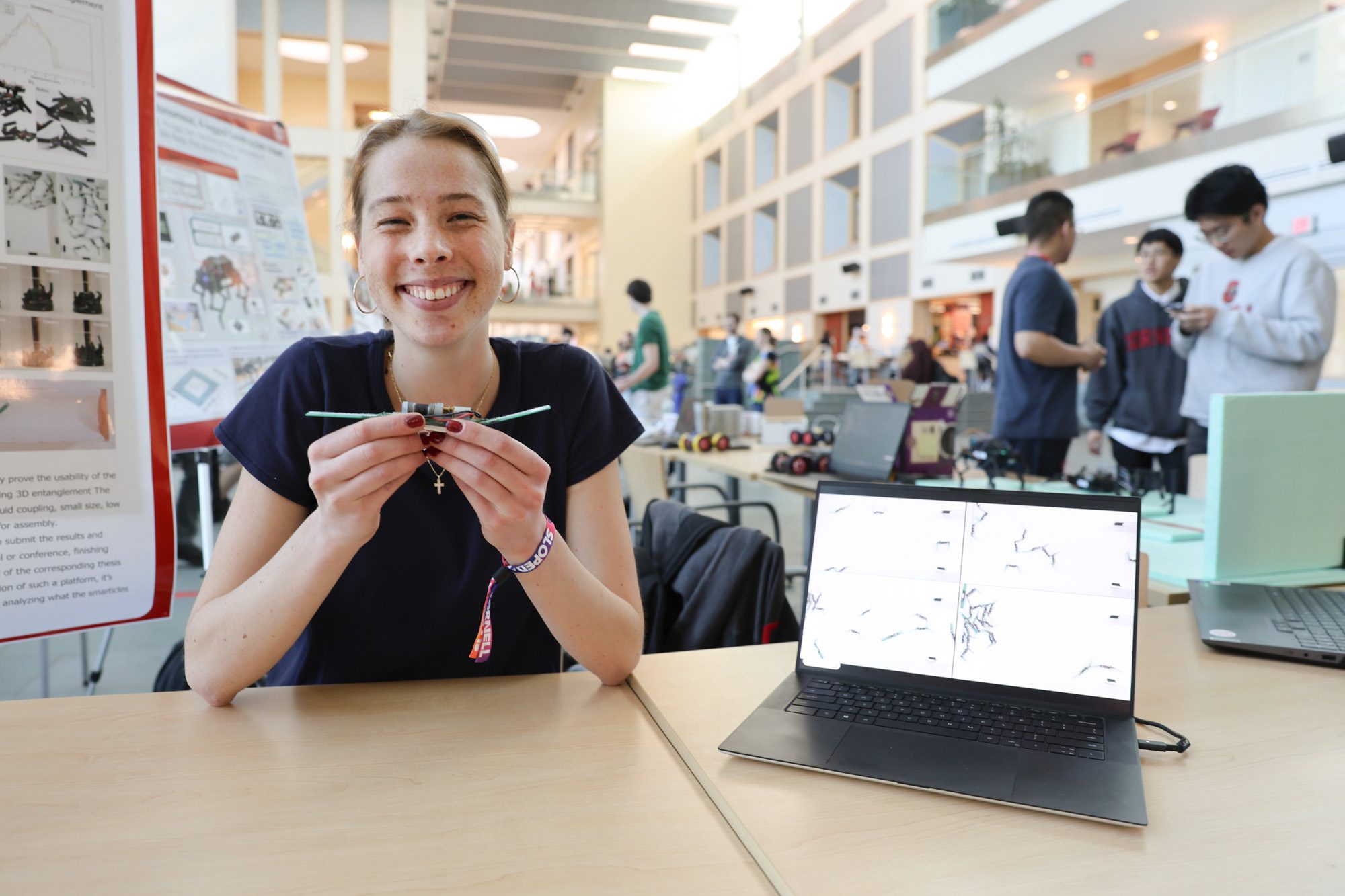
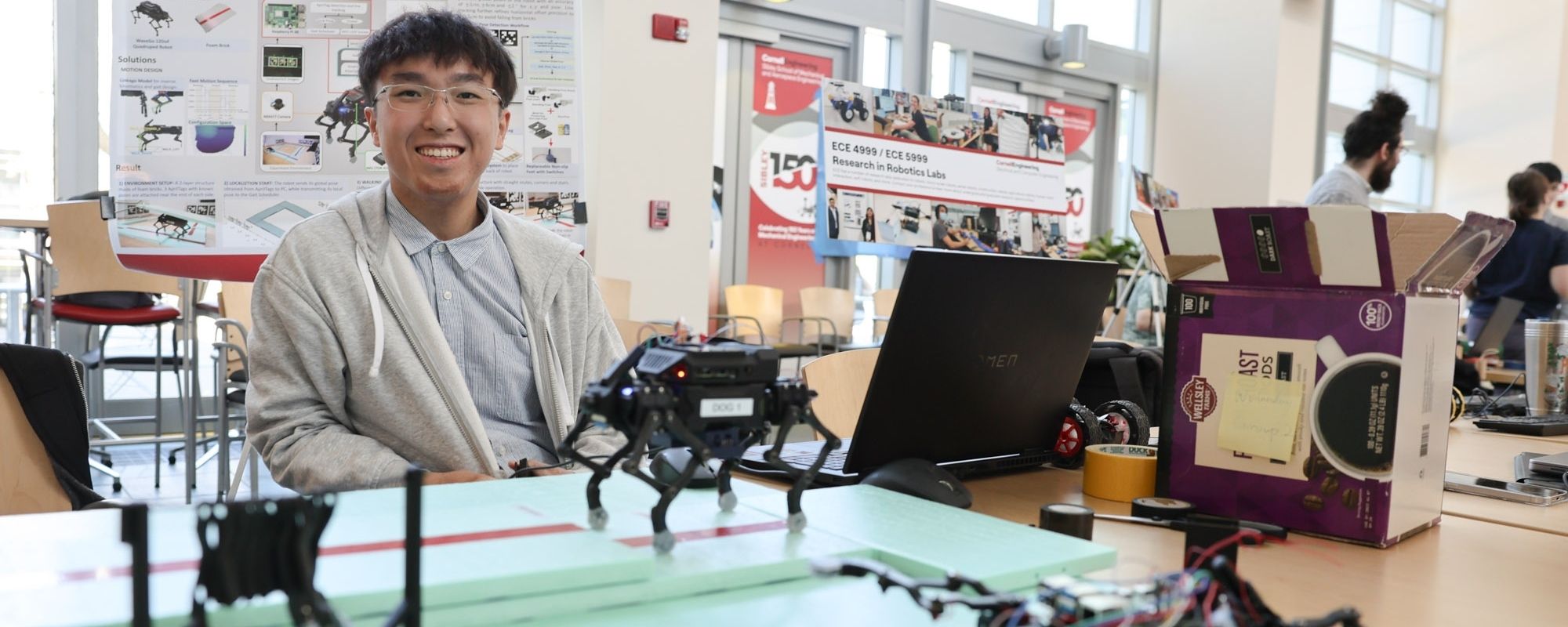
![Student showcasing their robot during the annual Electrical and Computer Engineering Robotics Showcase event]()
Robotics and Autonomy
Topics include swarm intelligence, embodied intelligence, autonomous construction, bio-cyber physical systems, human-swarm interaction, and soft robots.

News Highlights
-
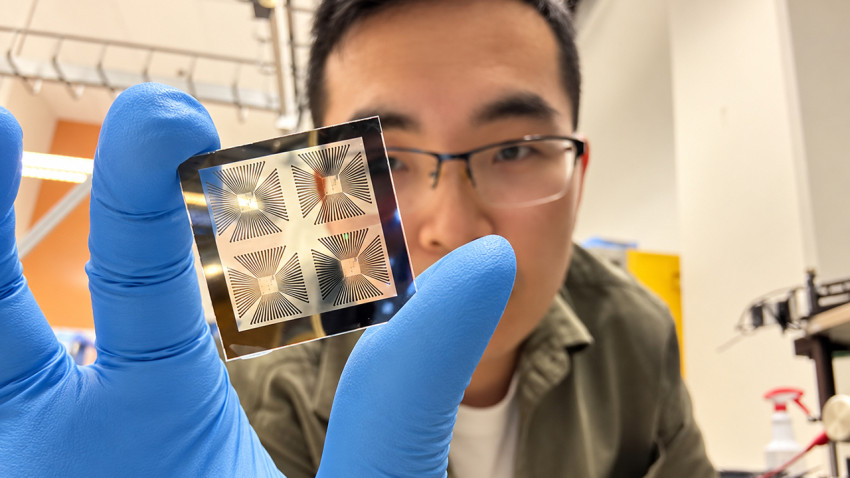
![Cornell physics researcher Zhiyuan Zhang holds a chip containing an array of the devices he developed to create microscopic bubbles on demand, when and where they are needed.]()
Tiny platform creates and directs microbubbles on demand
Set within a 3-millimeter area on a chip, the new device produces hydrogen gas bubbles on a grid of electrodes, then powers the bubbles up with acoustic energy through ultrasound.
-
![]()
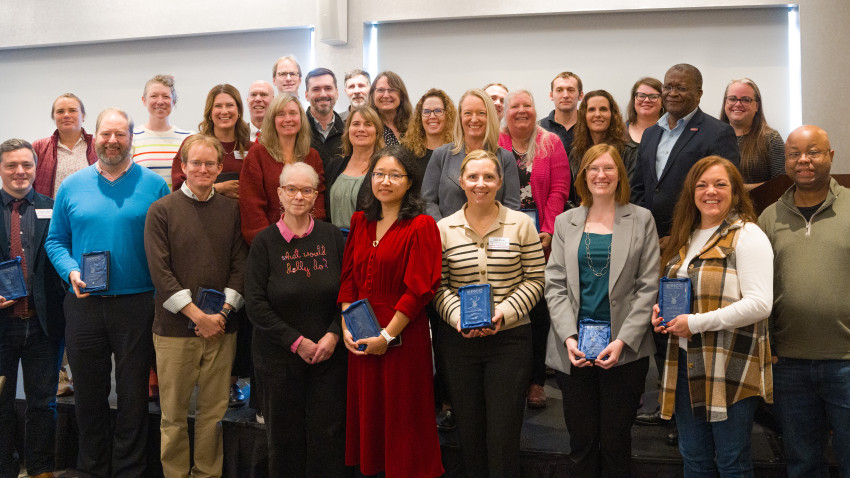
EPICC Awards recognize commitment to Duffield Engineering’s core values
The Cornell Duffield College of Engineering celebrated its fifth annual EPICC Awards on Oct. 8 in Statler Auditorium, recognizing faculty and staff whose work exemplifies the college’s core values of excellence, purpose, innovation, community and collaboration.
-

Seo received mid-career faculty award
-
![]()
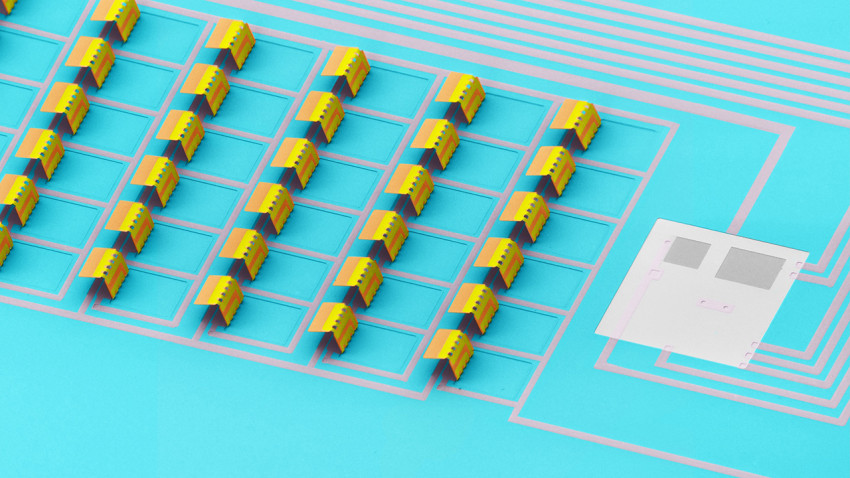
Microscopic robots inspired by fireflies, cilia sync to reshape surroundings
Cornell physics researchers have made robots that for the first time can sense the temperature of their surroundings and react together to change it.