Volumetric Imaging of Intact Tissue by Distributed Molecular Networks
A major challenge in single-cell genomics is to place molecular information within its native three-dimensional context, especially in complex or irregularly shaped biological samples. To address this, we developed volumetric DNA microscopy, a platform that reconstructs tissue architecture directly from DNA sequencing, without relying on imaging, predefined spatial landmarks, or reference genomes. This method converts the specimen into a massive inter-molecular network by chemically encoding the spatial coordinates of molecules directly into their DNA sequences in situ. We then develop and apply a scalable manifold-learning algorithm, geodesic spectral embeddings, to computationally reconstruct the three-dimensional organization of millions of molecules from this sequencing data. Applying our method to whole zebrafish embryos, we generated datasets of approximately 10 million uniquely tagged models per organism. These datasets allowed us to reconstruct anatomical compartments and developmental gene-expression gradients at a median neighbor-conditionalized resolution of ~2 microns. By integrating genome-wide expression profiles with a comprehensive 3D map, volumetric DNA microscopy provides a powerful, sequencing-native platform for large-scale analyses of cellular interactions within intact tissues, offering new opportunities for the analysis of idiosyncratic specimens and non-model organisms.
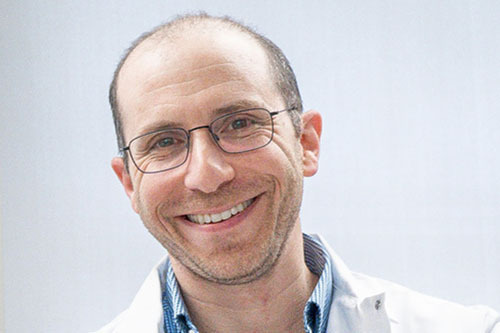
Bio: Joshua Weinstein completed his Ph.D. in biophysics at Stanford University in the labs of Stephen Quake and Daniel Fisher and his postdoc in the labs of Feng Zhang and Aviv Regev at the Broad Institute. His research interests include developing DNA-based technologies for high-throughput encoding and decoding of biological information, as well as statistical models of multicellular systems. He was a 2020 Moore Inventor Fellow and 2021 Damon Runyon-Rachleff Innovator and is currently assistant professor in the Departments of Medicine and Molecular Engineering at the University of Chicago.