Multiscale plasma physics of particle acceleration in collisionless shocks
Shocks in low density plasmas (so-called “collisionless shocks”) are ubiquitous throughout the Universe and are thought to produce nonthermal particles spanning decades of energy (such as cosmic rays). The process of shock acceleration is an intrinsically multi-scale problem, connecting plasma microphysics at the shock to self-generated instabilities driven by accelerated particles far from the shock. I will describe the progress in modeling collisionless shock structure and particle acceleration using ab-initio kinetic simulations, focusing on the current understanding of magnetic field amplification mechanisms and the conditions necessary for particle injection into the acceleration process. Our large-scale simulations are beginning to show the effects of nonlinear cosmic ray feedback on shock structure and on the resulting cosmic ray spectrum in high-Mach-number shocks. These results help to interpret the emission spectra from young supernova remnants and transient sources.
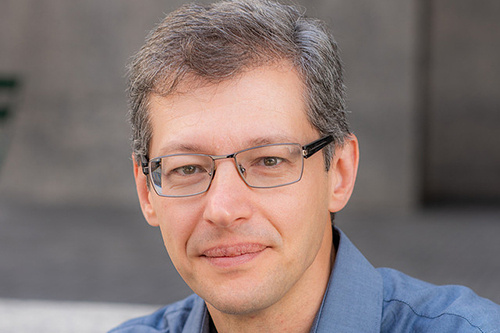
Bio: Anatoly Spitkovsky received his undergraduate degree in physics from Caltech and Ph.D. from the University of California at Berkeley. He was a Chandra postdoctoral fellow at Stanford University before starting on the faculty at Princeton. His research interests are in theoretical high-energy astrophysics, where he uses numerical simulations of astrophysical plasmas to study neutron star magnetospheres and the origin of energetic particles in the cosmos. He is a Fellow of the American Physical Society, a Simons Foundation Investigator in Theoretical Physics, and the recipient of 2023 Bruno Rossi Prize of the American Astronomical Society.