Learn Physics.
Speak Engineering.
The ability to do — not simply understand — physics is an essential skill for scientists and engineers striving to advance their fields. We are leaders in a wide range of fields, including biophysics, materials physics, optics and photonics, quantum sciences, plasma physics and renewable energy.
News Highlights
See all-
![]()
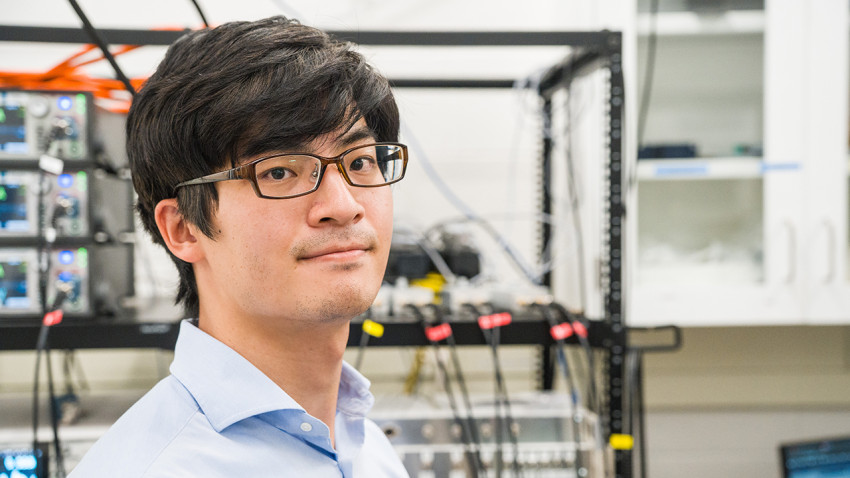
Applied physicist wins Packard Fellowship to advance slidetronics
Kenji Yasuda, assistant professor in the School of Applied and Engineering Physics, was honored for his work with stacks of atomically thin materials that host emergent quantum phenomena.
-
![]()
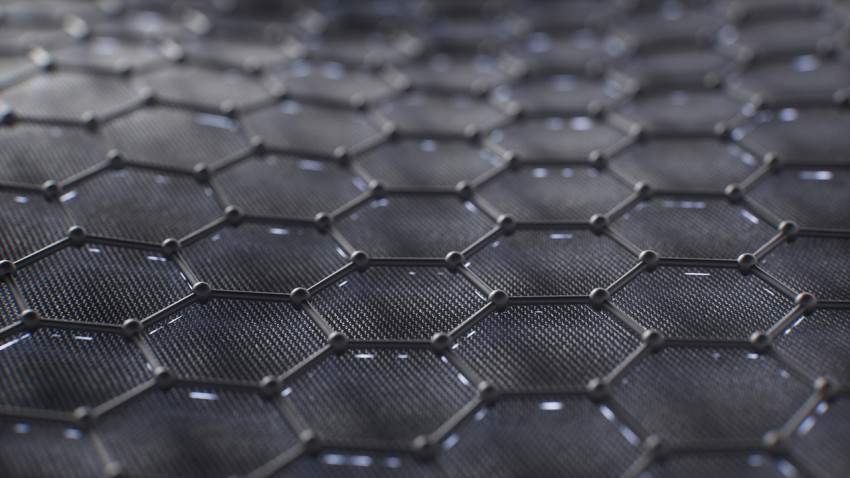
Electrical sliding switches graphene between magnetic states
Researchers at the Cornell Duffield College of Engineering have found that electrically sliding the layers of ultrathin graphene can switch the material between distinct magnetic states that persist even after the voltage is removed.
-
![]()
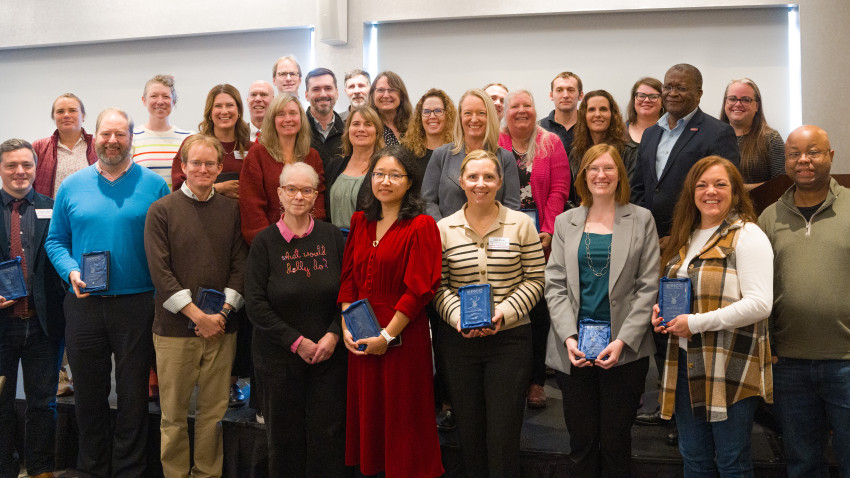
EPICC Awards recognize commitment to Duffield Engineering’s core values
The Cornell Duffield College of Engineering celebrated its fifth annual EPICC Awards on Oct. 8 in Statler Auditorium, recognizing faculty and staff whose work exemplifies the college’s core values of excellence, purpose, innovation, community and collaboration.
-
![]()
McMahon gets Moore Foundation award for programmable photonic chips
A programmable photonic chip that can be reconfigured to perform different tasks could make quantum technologies more flexible – an approach associate professor Peter McMahon will explore as a 2026 Experimental Physics Investigator with the Gordon and Betty Moore Foundation.

Our Programs
-
Engineering Physics
Combines engineering and physics to solve high-tech problems. Ideal for those interested in applying physics principles to developing innovative technologies.
.