Ultrasound-Activated Nanoparticles and Wearable Bioelectronics for Translational Neural Interfaces
The ability to interface with the nervous system non-invasively and with high precision is central to advancing next-generation neurotherapeutics. My laboratory develops ultrasound-based neural interface systems that integrate designer nanomaterials, ultrasound electronics, and biointerface engineering. In the first half of the talk, I will highlight our recent advances in ultrasound-activated nanomaterials, including liposomes and hydrogen-bonded organic frameworks (HOFs), which enable targeted neuromodulation deep in the brain while eliminating the need for craniotomy or implanted hardware. I will also demonstrate the use of ultrasound-activated release of local anesthetic drugs at peripheral nerve for long-term pain management. In the second half of the talk, I will introduce a wearable, miniaturized ultrasound device comparable in size to standard EEG electrodes, integrated with a bioadhesive hydrogel to enable efficient acoustic transmission and long-term wearable somatosensory cortical stimulation and peripheral nerve stimulation for pain management. Furthermore, I will present the development of a focus-adjustable, wearable focused ultrasound patch system for deep brain stimulation, integrated with electrophysiological recording capabilities for sleep staging.
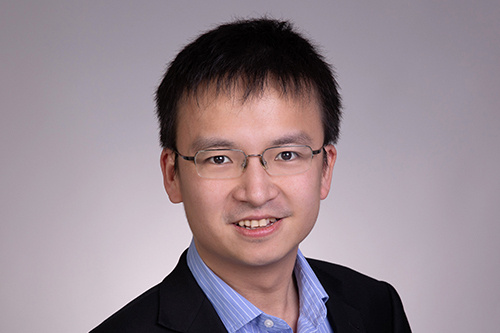
Bio: Huiliang (Evan) Wang is an assistant professor in the biomedical engineering department at University of Texas at Austin, where he leads his research team in the design of functional nanomaterials, electronic devices, and genetic technology in neural interface engineering. His lab focuses on the development of new tools to modulate and record neural activity using minimally invasive methods. Wang completed his Ph.D. in materials science and engineering with Zhenan Bao at Stanford University and his postdoctoral research with Karl Deisseroth in the Stanford bioengineering department. He has won several awards including NSF CAREER Award, NIH R35 Maximizing Investigators’ Research Award (MIRA), the Runner-up of Science & PINS Prize for Neuromodulation, National Academy of Medicine Healthy Longevity Catalyst Award and American Society for Engineering Education (ASEE) Biomedical Engineering Teaching Award.