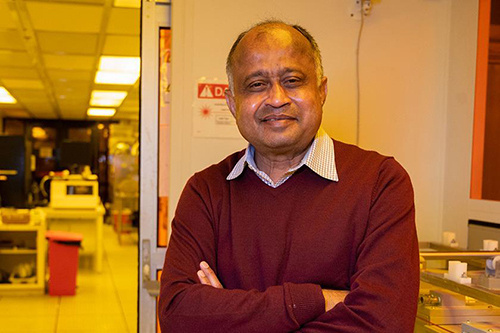
Everything is made of something.
Making a more sustainable and healthier world starts with imagining new materials. Everything from renewable energy to medical devices to consumer electronics can be advanced by improving the materials they are made from.
Our Programs
Studying the properties of materials and their applications is ideal for those who are excited to work at the forefront of industries like electronics, energy, and healthcare.
-
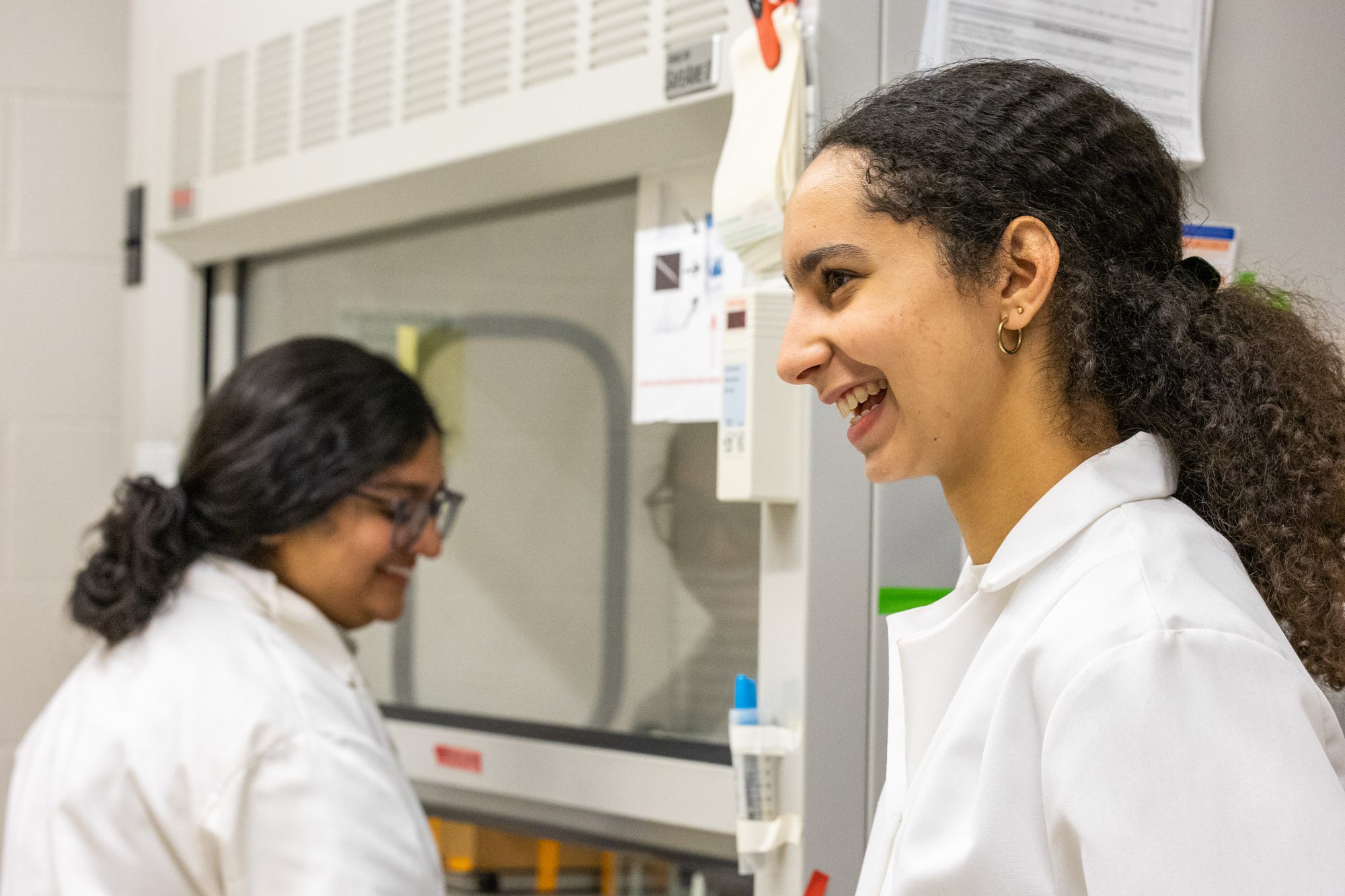
![Asher and Zaina smile while working in the lab]()
Bachelor of Science (B.S.)
Build a strong foundation through hands-on labs, modern facilities, and a senior research or design experience.
-
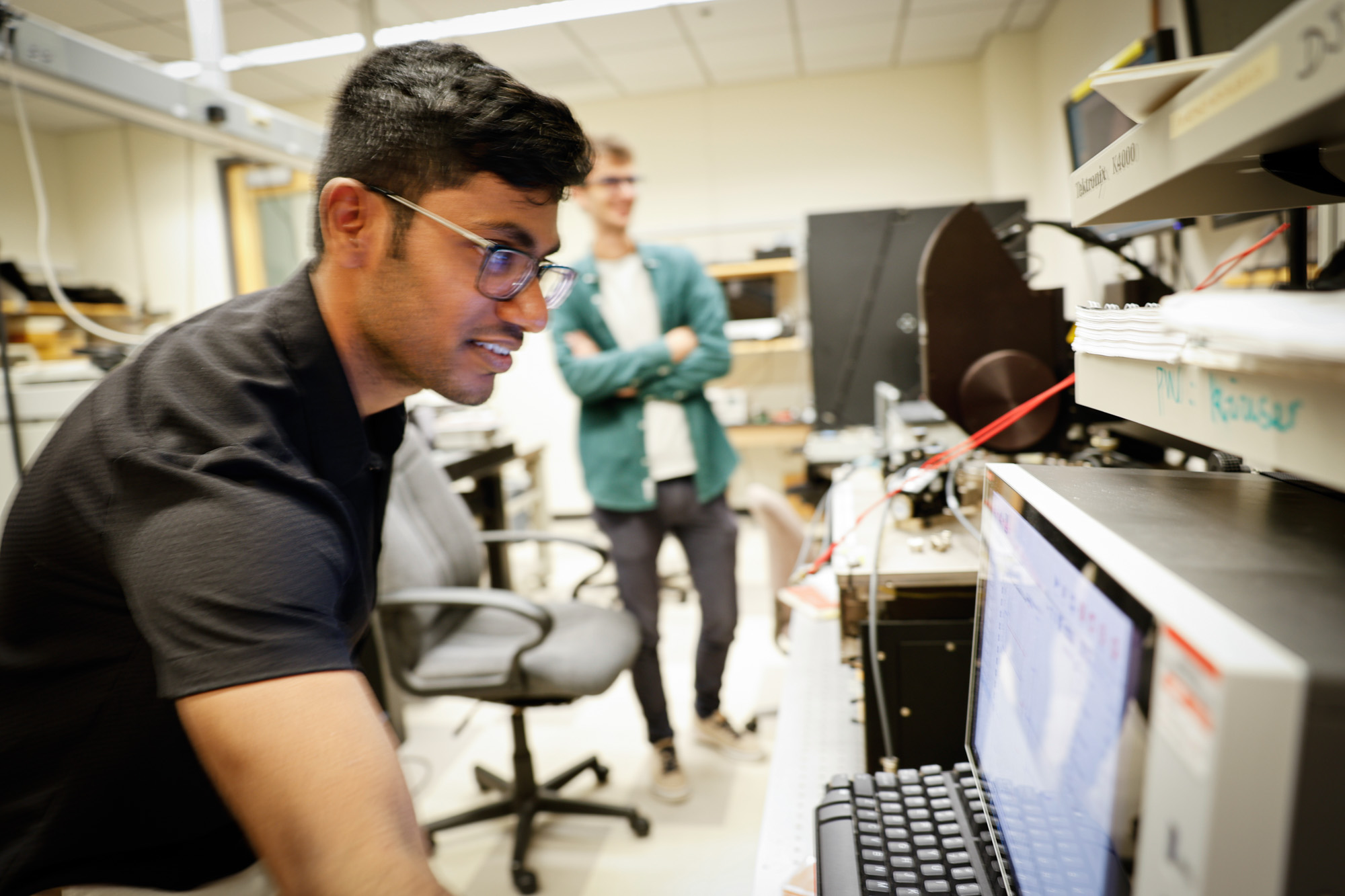
![ELI undergraduate research in the Richard Robinson Lab with students]()
Master of Engineering (M.Eng.)
A one-year, non-thesis degree focused on industry-ready skills and applied learning.
-
![Two students working in Professor Grace Xing's lab]()
Master of Science (M.S.)
A two-year, thesis-based program centered on research, specialization, and academic rigor.
-
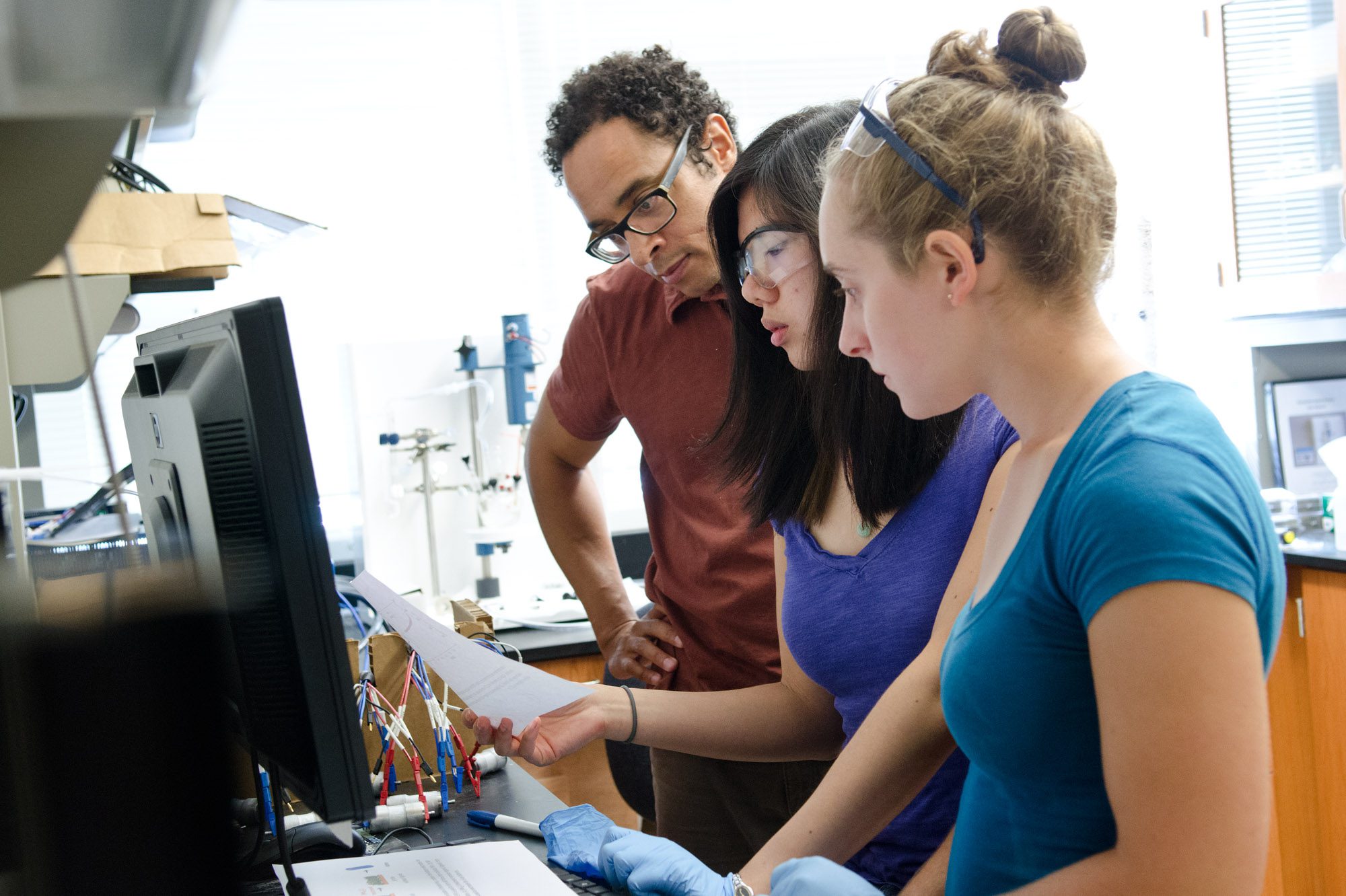
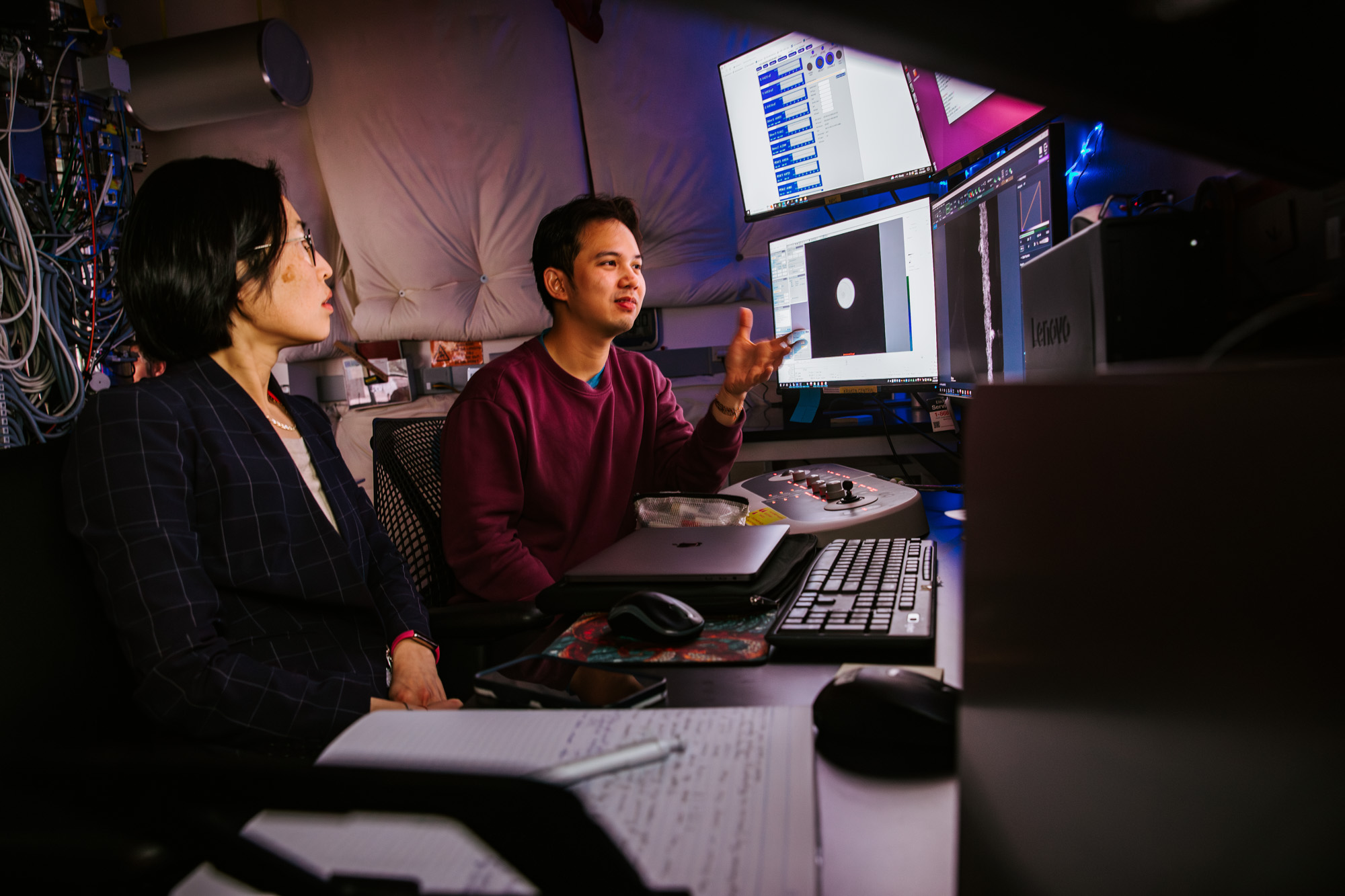
![Professor Judy Cha working with a student in front of 4 display monitors in her research lab]()
Doctor of Philosophy (Ph.D.)
Advanced, interdisciplinary research training for students pursuing original contributions to the field.
Strategic Areas of Research
-
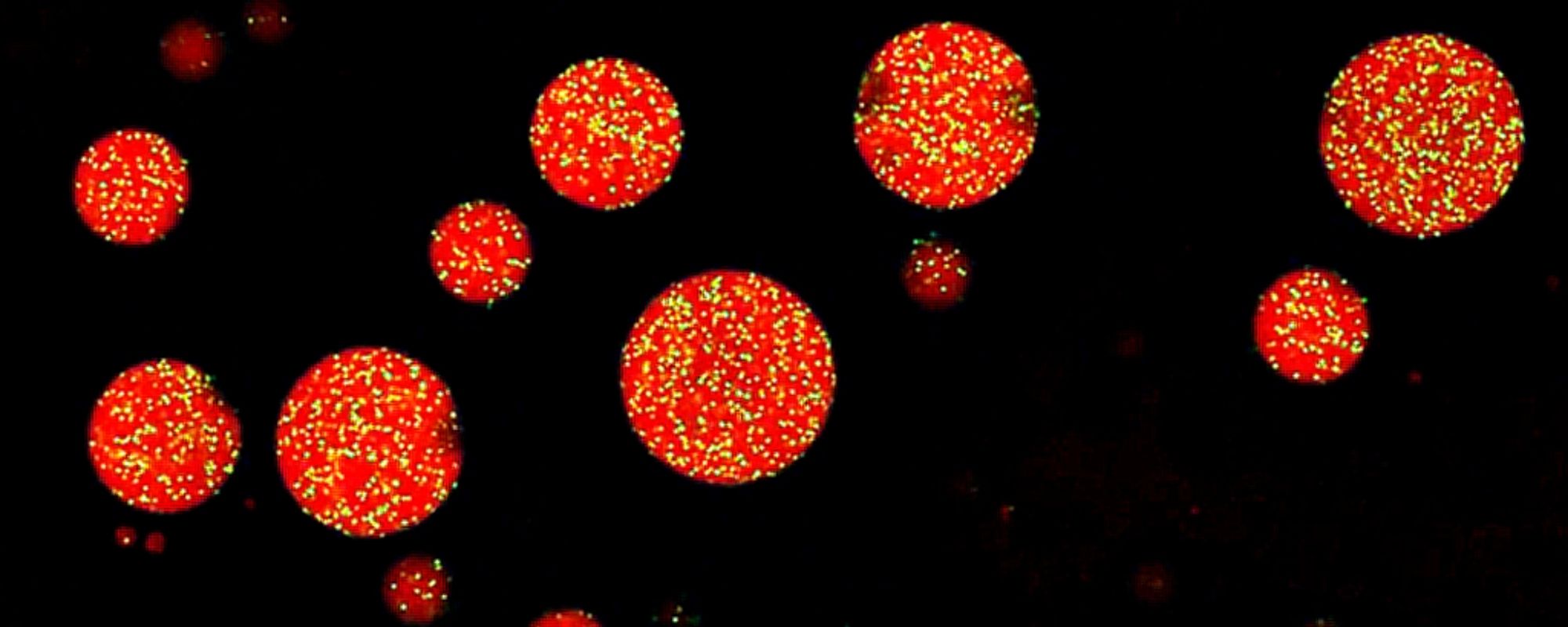
![Eric Dufresne Research image of Droplets]()
Bioinspired Materials and Systems
Bioinspired composites, engineered protein films for adhesion, lubrication and sensing applications, molecular tools for in-vitro and in-vivo imaging, and biomaterials for tissue engineering and drug delivery.
-
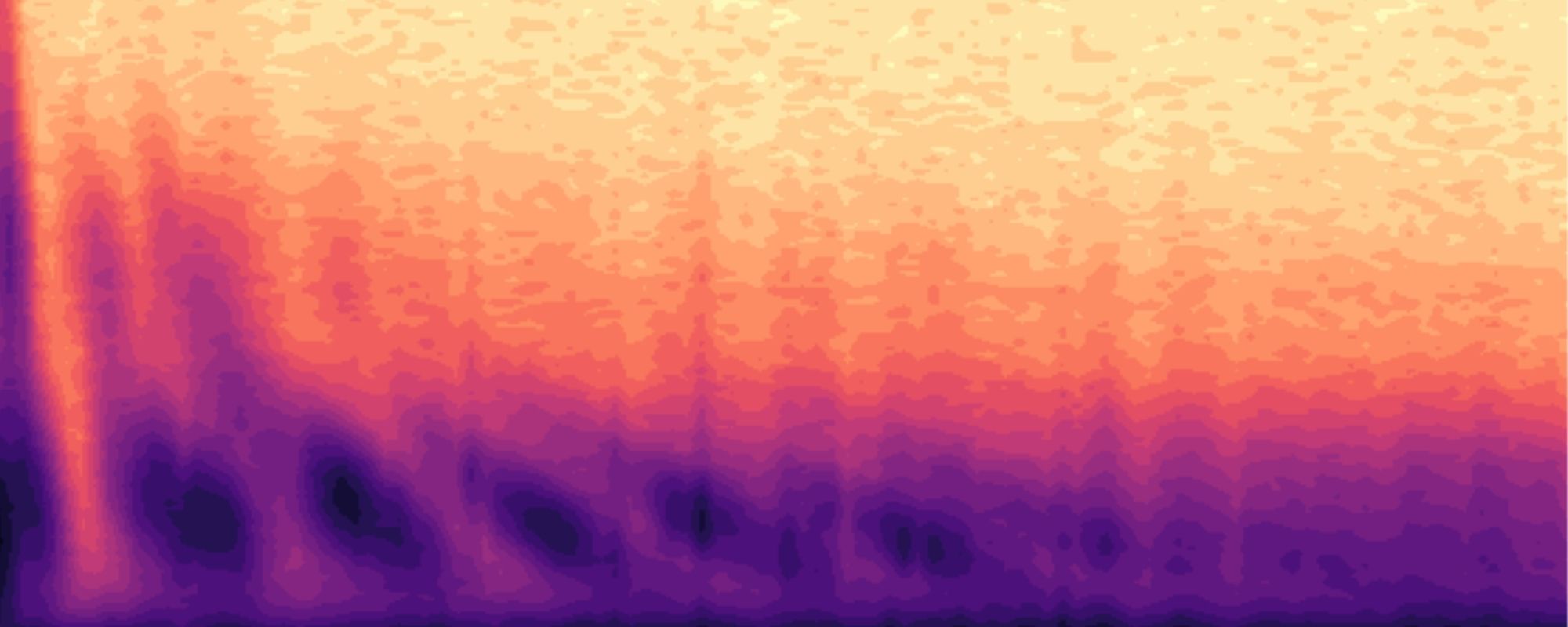
![Andrej Singer Research Image of bright spectrum of colors across a rectangle]()
Electronics and Photonics
Oxide semiconductors, 3D integration, materials beyond silicon, high K and low K dielectrics, plasmonics, spintronics and multiferroics.
-
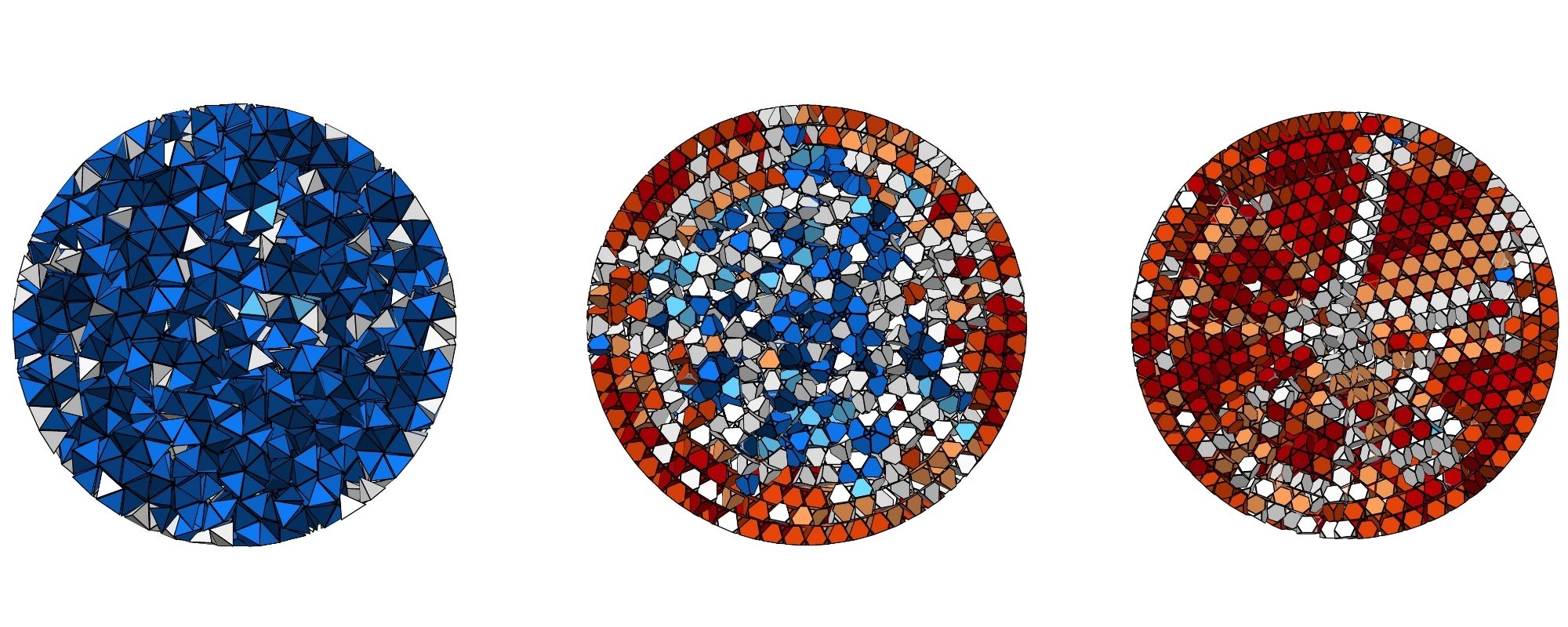
![Research Image from Julia Dshemuchadse's group]()
Energy Production and Storage
Photocatalysis, photovoltaics, thermoelectrics, phononics, batteries and supercapacitors.
-
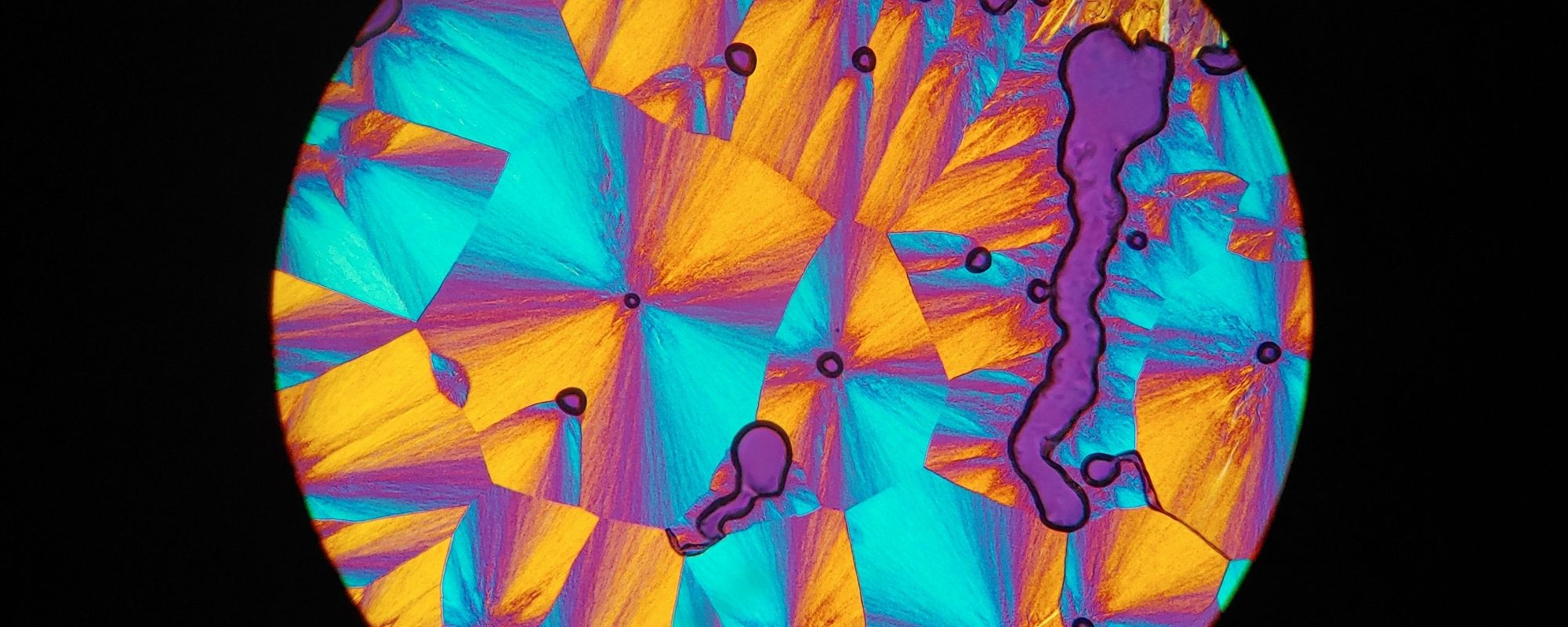
![Crosspolarized microscope image of cholesterol acetate crystals with added quarter waveplate]()
Green Technologies
We have targeted green composites and new systems for CO2 capture and conversion as areas of future growth.
News Highlights
-
![]()
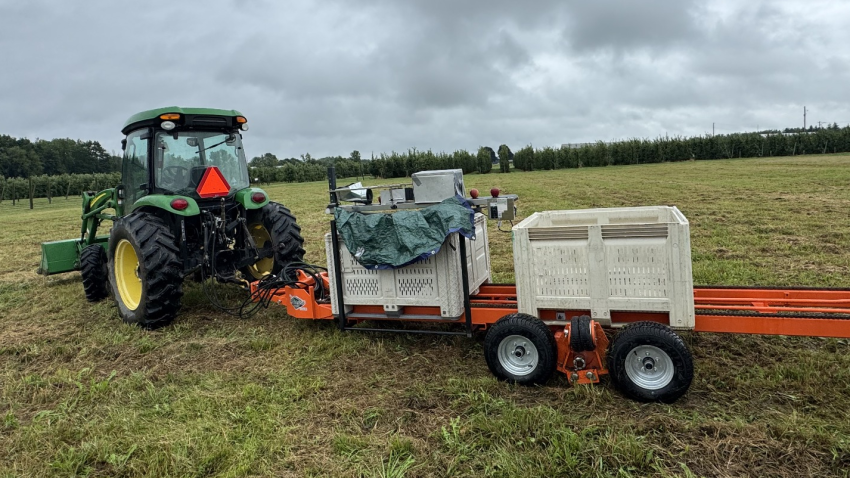
From farm to kitchen, Ficio is teaching robots about food
Ficio, a startup founded by Youhanna Meleka, M.Eng. ’26, is developing an AI platform for the food supply chain that can run on different machines and tackle very different jobs – from sorting apples in an orchard to turning potatoes into french fries.
-
EPICC Awards recognize commitment to Duffield Engineering’s core values
The Cornell Duffield College of Engineering celebrated its fifth annual EPICC Awards on Oct. 8 in Statler Auditorium, recognizing faculty and staff whose work exemplifies the college’s core values of excellence, purpose, innovation, community and collaboration.
-
Awards honor Duffield Engineering faculty for teaching, advising
The Cornell Duffield College of Engineering celebrated faculty commitment to education at its 2026 Fall Faculty Reception, honoring this year’s Teaching and Advising Award winners for their contributions to outstanding curriculum design, teaching methods, student mentoring and faculty development.
-
Data centers, drawing concerns over water and power, may have another surprise impact: Forever chemicals
-
Duffield Engineering announces first recipients of Breakthrough awards
Innovative projects to enhance quantum research, experiential learning, semiconductor workforce development, and AI utilization in the Cornell Duffield College of Engineering will receive the first-ever awards from the Duffield Engineering Breakthrough Fund.
Upcoming Events
-
![]()
Dr. Lei Tian Distinguished Lecture Series: Madhavan Swaminathan (Penn State)
The Future of Heterogeneous Integration from Materials to Systems There are three challenges emerging to enable future semiconductor systems for AI applications, namely, 1) Energy crises with the intr…
-
![]()
Dr. Lei Tian Distinguished Lecture Series: Zlatko Sitar (NC State)
AlN – The Extreme Bandgap Semiconductor AlN is an extreme bandgap material (Eg = 6.1 eV) with the potential to revolutionize not only UV and VUV optoelectronics but also high-power, high-frequen…