Materials Rules of Life: on the Form, Function, and Formation of Biological Structural and Functional Materials
Organisms from nature construct various biological materials for a variety of structural and functional purposes, such as protection, predation, body support, sensing, thermal regulation, and camouflage. Despite the fact that these materials are made from limited constituent materials with usually poor intrinsic mechanical properties, such as brittle minerals and soft biopolymers, biological materials are often able to achieve remarkable mechanical properties while offering additional functionalities simultaneously, such as low density, coloration, transparency, flexibility, visual sensitivity, etc. In this talk, I will present our work in elucidating the structure-property relationships in some natural structural and functional materials by focusing on their strategies for achieving damage tolerance, weight reduction, and multifunctionality. For example, I will present a unique damage-tolerant, dual-scale, single-crystalline, low-density microlattice we recently discovered in an echinoderm skeletal system. Our research combines quantitative multiscale 3D structural analysis, in-situ mechanical analysis, theoretical and computational modeling, and design and manufacturing of bio-inspired materials. I hope this talk will stimulate more discussions in research areas such as materials, mechanics, biomimetics, biology, and manufacturing.
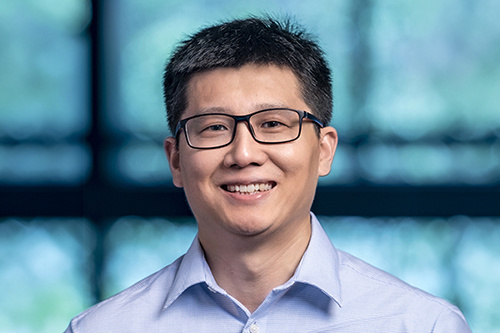
Bio: Ling Li is an associate professor in the Department of Materials Science and Engineering at the University of Pennsylvania, where he leads the Laboratory for Biological and Bio-inspired Materials. Li’s research aims to decipher “the Materials Rules of Life” by establishing the structure-formation-property relationships of biological materials and ultimately seeks to employ the learned principles to facilitate the design and processing of bio-inspired structural and multifunctional materials. Li has received numerous awards, including Rosalind Franklin Young Investigator Award (2016), AFOSR Young Investigator Award (2018), Outstanding Assistant Professor at Virginia Tech (2019), 3M Non-Tenure Faculty Award (2020), NSF CAREER Award (2020), JMBBM Early Career Research Award (2023), HFSP Research Grant Award (2023), TMS FMD Young Leaders Professional Development Award (2024), iCANX Young Scientist Award (2024), and the TMS Frontier of Materials Award (2025).