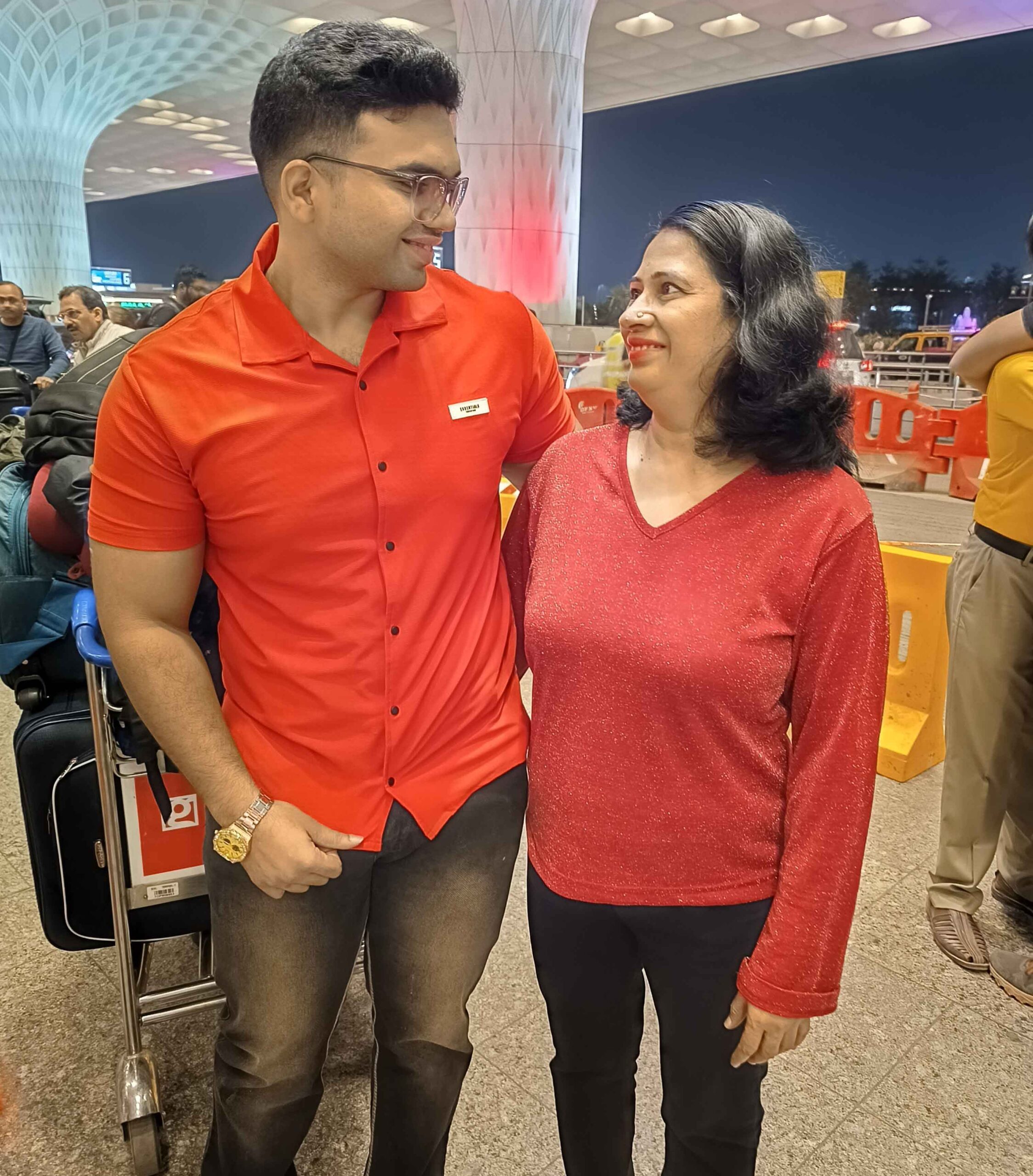
Inspired by his father’s career and his mother’s support, chemical engineering M.Eng. student Siddhant Sandeep Dhende is developing grid-scale battery storage solutions for real-world energy challenges. His work reflects a focus on systems-level engineering and the transition to more reliable, sustainable infrastructure.
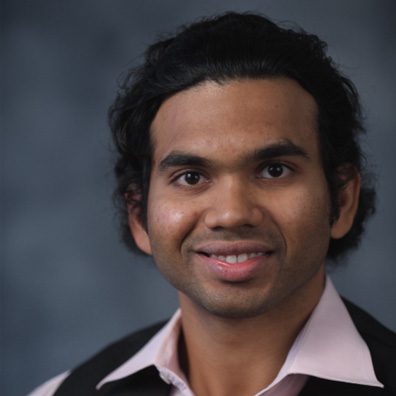
Siddhant Sandeep Dhende
-
Program
M.Eng. in chemical engineering
-
Hometown
Mumbai, Maharashtra, India.
-
Preferred pronouns
he/him/his
-
More
What’s your Cornell story?
Cornell was once an unfinished dream in my father’s heart, carried forward in my mother’s eyes, and ultimately brought to life through my journey. My path to the world’s largest Ivy League institution was filled with hard work, setbacks, growth, and resilience.
With a background in chemical engineering, I came to Cornell University to deepen my technical foundation while working on real-world energy and sustainability challenges. I wanted a program that combined rigorous engineering principles with systems-level thinking. Cornell stood out to me because of its strong research culture, collaborative environment, and its commitment to solving large-scale energy and climate problems.
What inspired you to pursue an M.Eng. in chemical engineering?
Pursuing this field is both a professional ambition and a deeply personal one. My late father was a chemical engineer, and carrying his legacy forward on a global platform became a defining motivation for me.
I was drawn to the M.Eng. program because it bridges theory and application. I wanted to move beyond textbook problem-solving and engage with open-ended, industry-relevant challenges. The program allows me to apply transport phenomena, thermodynamics, and systems modeling directly to energy systems and decarbonization efforts — aligning closely with my long-term goal of contributing to sustainable energy innovation.
What further stood out to me was the opportunity to learn under distinguished faculty whose work has shaped the field. I feel privileged to study under the guidance of professors such as Jefferson Tester, Tobias Hanrath, Vibha Kalra, Jeffrey Varner and Brian Bauer. Their depth of experience, mentorship, and commitment to advancing energy systems and process engineering have significantly enriched my academic journey and professional outlook.
What’s the focus of your M.Eng. project?
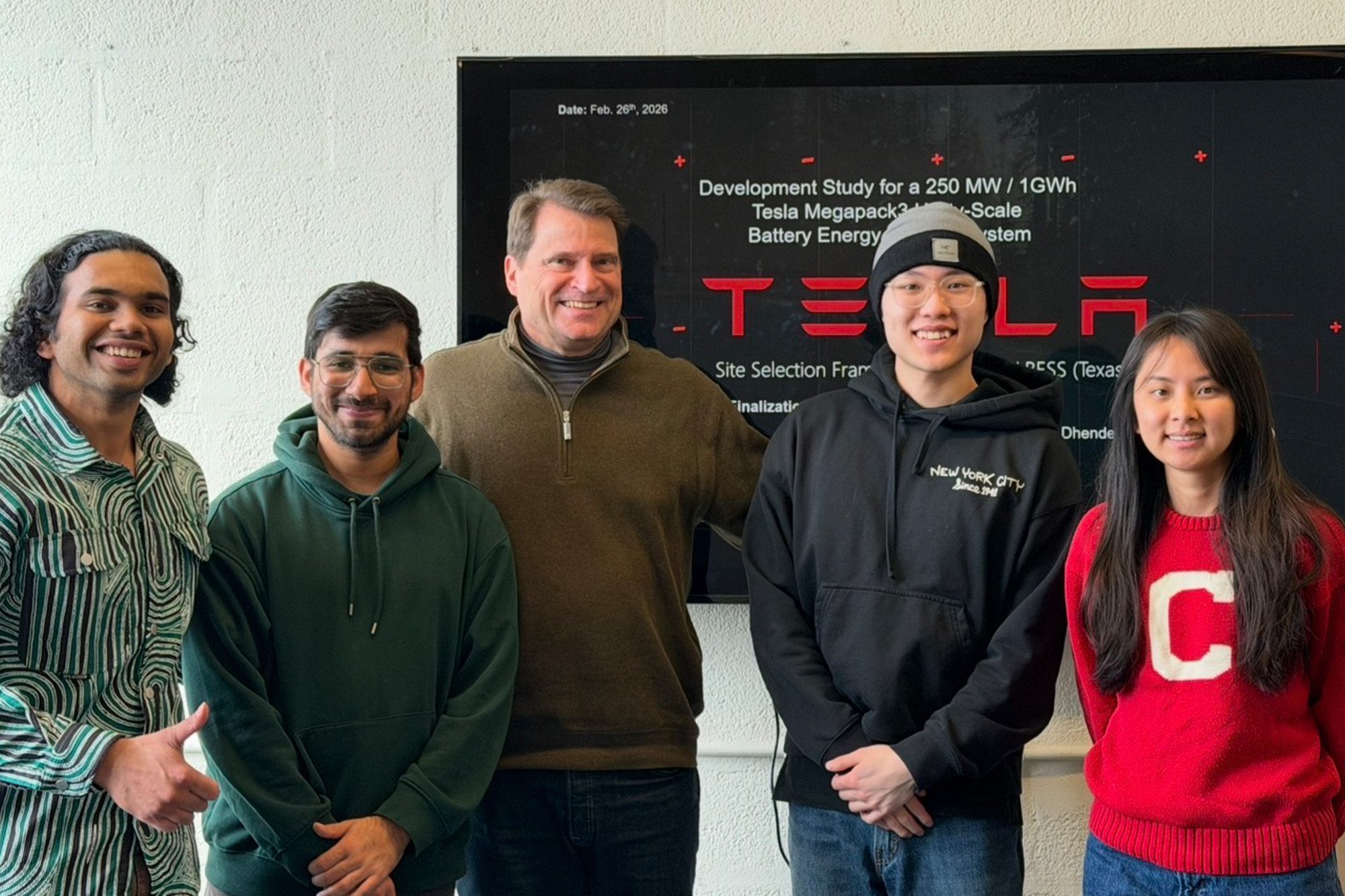
I was fortunate to be selected to work on a highly-competitive and demanding project supported by Tesla, Inc, focused on designing a large-scale, 250 MW utility-scale battery energy storage system for the U.S. power grid.
As renewable energy sources like solar and wind continue to grow, a key challenge is that electricity supply doesn’t always match demand. Battery storage helps address this by storing excess energy when it’s available and delivering it when it’s needed most.
My team and I are developing a complete end-to-end plan, from selecting the site and determining the optimal 250 MW system size, to analyzing costs, revenue potential and overall financial feasibility. Our goal is to design a storage facility that is reliable, economically viable, and capable of strengthening grid stability while accelerating the transition to cleaner energy.
What’s the most rewarding part of your M.Eng. experience so far?
I have really enjoyed the opportunity to apply classroom knowledge to real-world energy challenges. Courses such as energy systems and process modeling helped me see how fundamental chemical engineering concepts can directly shape solutions for large-scale infrastructure and sustainability.
What I found most rewarding was working on projects that connect engineering theory with real industry problems, particularly my battery energy storage project supported by Tesla, Inc. It has been exciting to see how technical analysis, economic modeling, and system design come together to influence decisions in the evolving energy landscape.
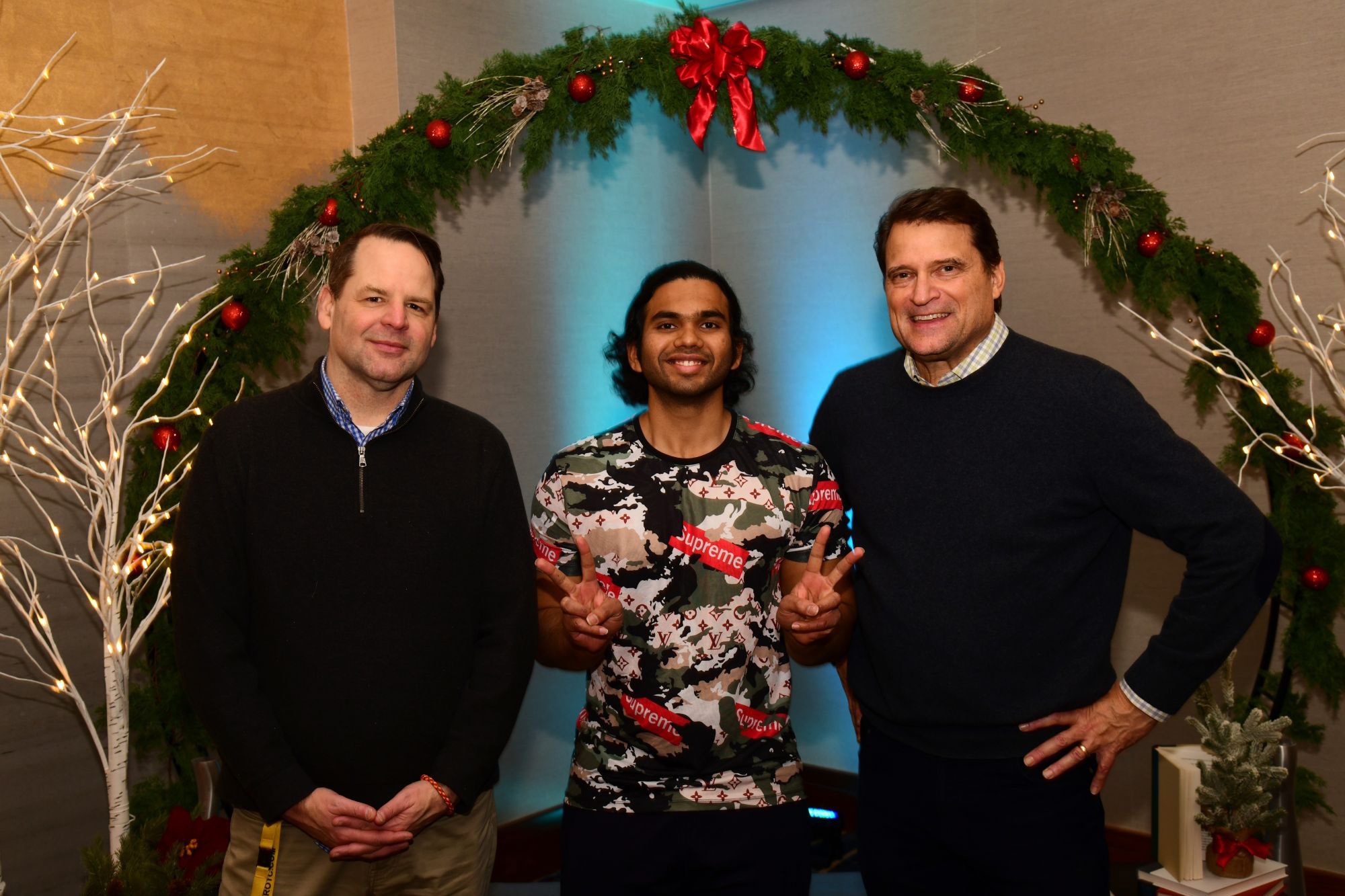
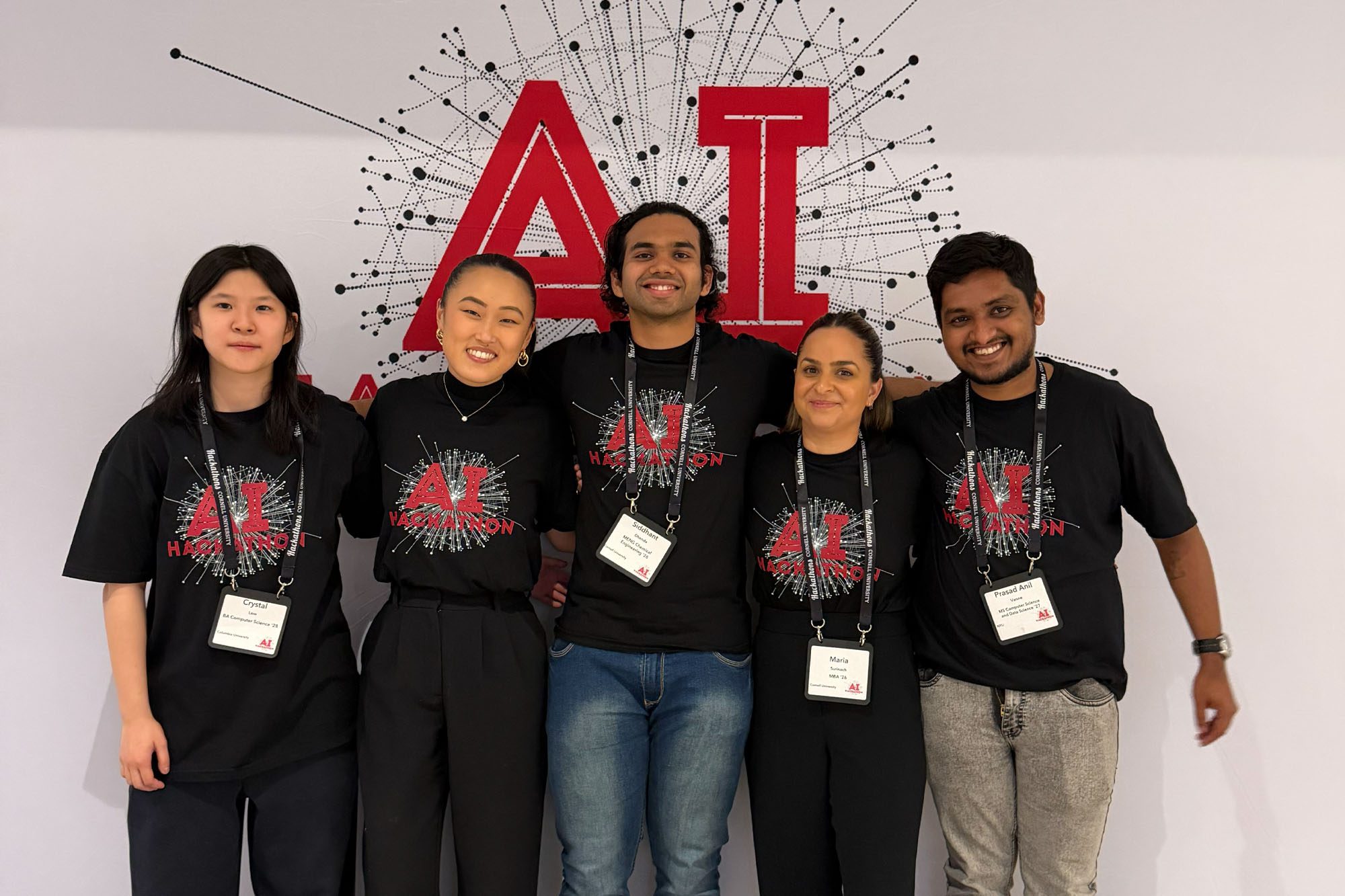
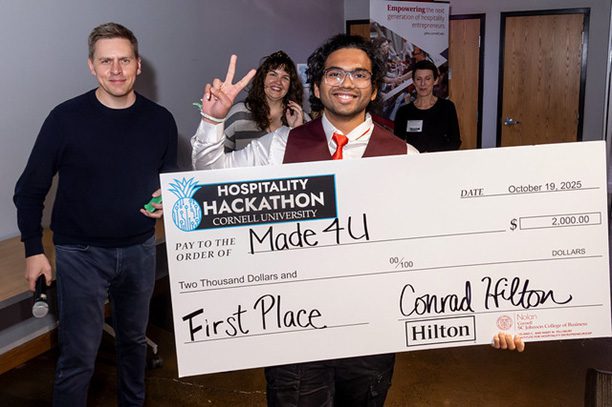
I’ve also enjoyed participating in several Hackathon competitions. At an AI Coding Hackathon in New York City. In just 36 hours my team and I won the “Most Novel Business Idea” award for our product MedSpace AI—an intelligent hospital space optimization platform that identifies underutilized rooms and converts them into operational capacity and revenue opportunities for hospitals. I was also a first place winner in the Hilton, Deloitte, Qualtrics Hospitality Hackathon competition.
The most challenging part has been balancing rigorous coursework with complex project work that requires both technical depth and practical thinking. At the same time, what surprised me most was how collaborative the Cornell environment is—students, faculty, and industry partners working closely together to tackle some of the most pressing energy challenges of our time.
What’s next for you?
My immediate goal is to begin my career as a process engineer in the energy sector, where I can apply the skills I gained from my previous industry experience and my M.Eng. at Cornell University to real-world energy systems in the U.S. market. I am particularly interested in working on technologies that support the transition toward cleaner and more reliable energy infrastructure.
At the same time, I have applied to several top Ivy graduate programs and have been fortunate to receive strong admits, which keeps open the possibility of continuing deeper research in energy systems and sustainability.
Ultimately, my long-term goal is to build meaningful collaborations with people across the world and contribute to impactful energy solutions. I believe engineering is not only about technology, but also about connecting with people, ideas, and opportunities that can help create lasting change.
What do you do outside of your scholarship?
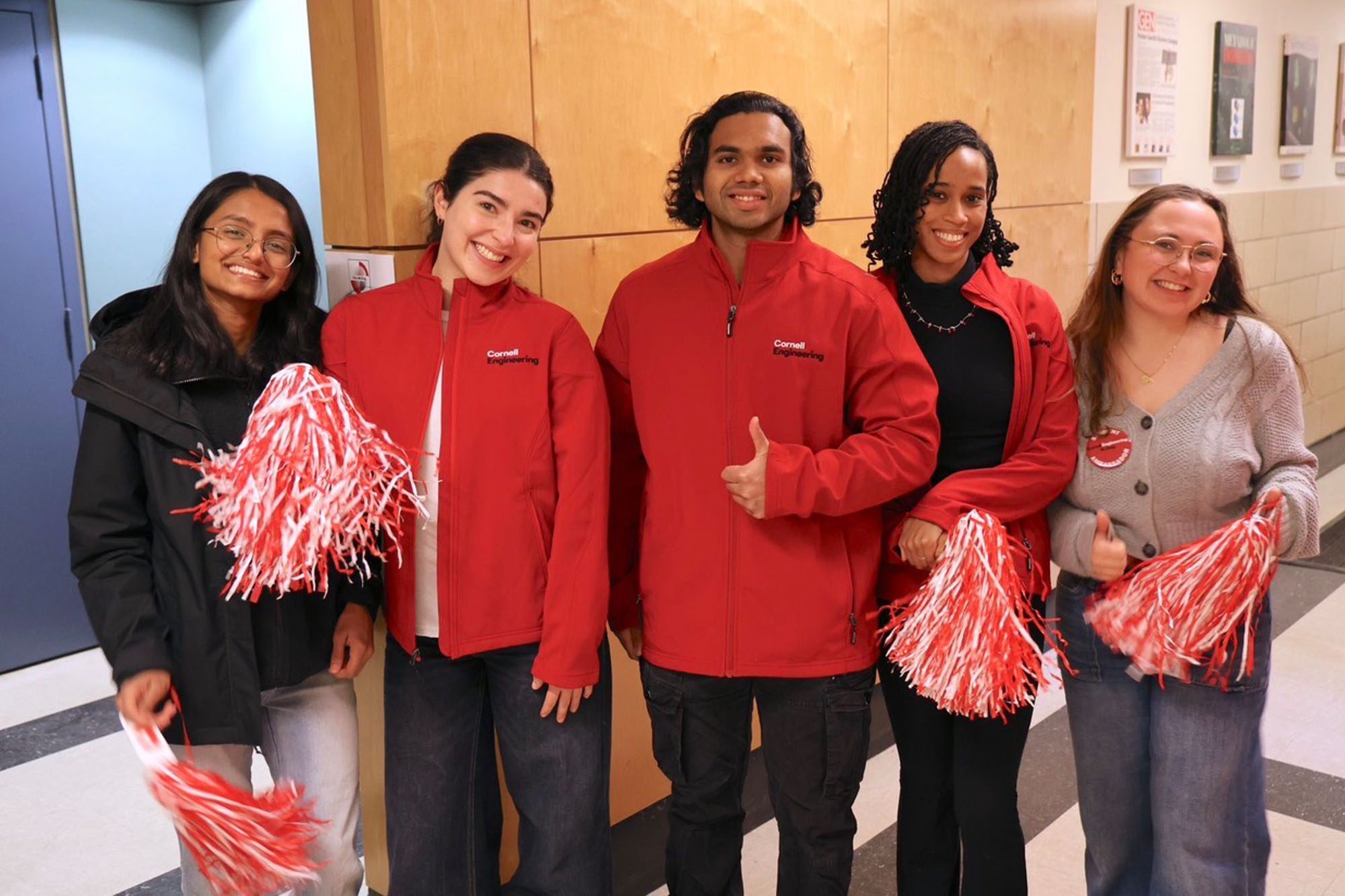
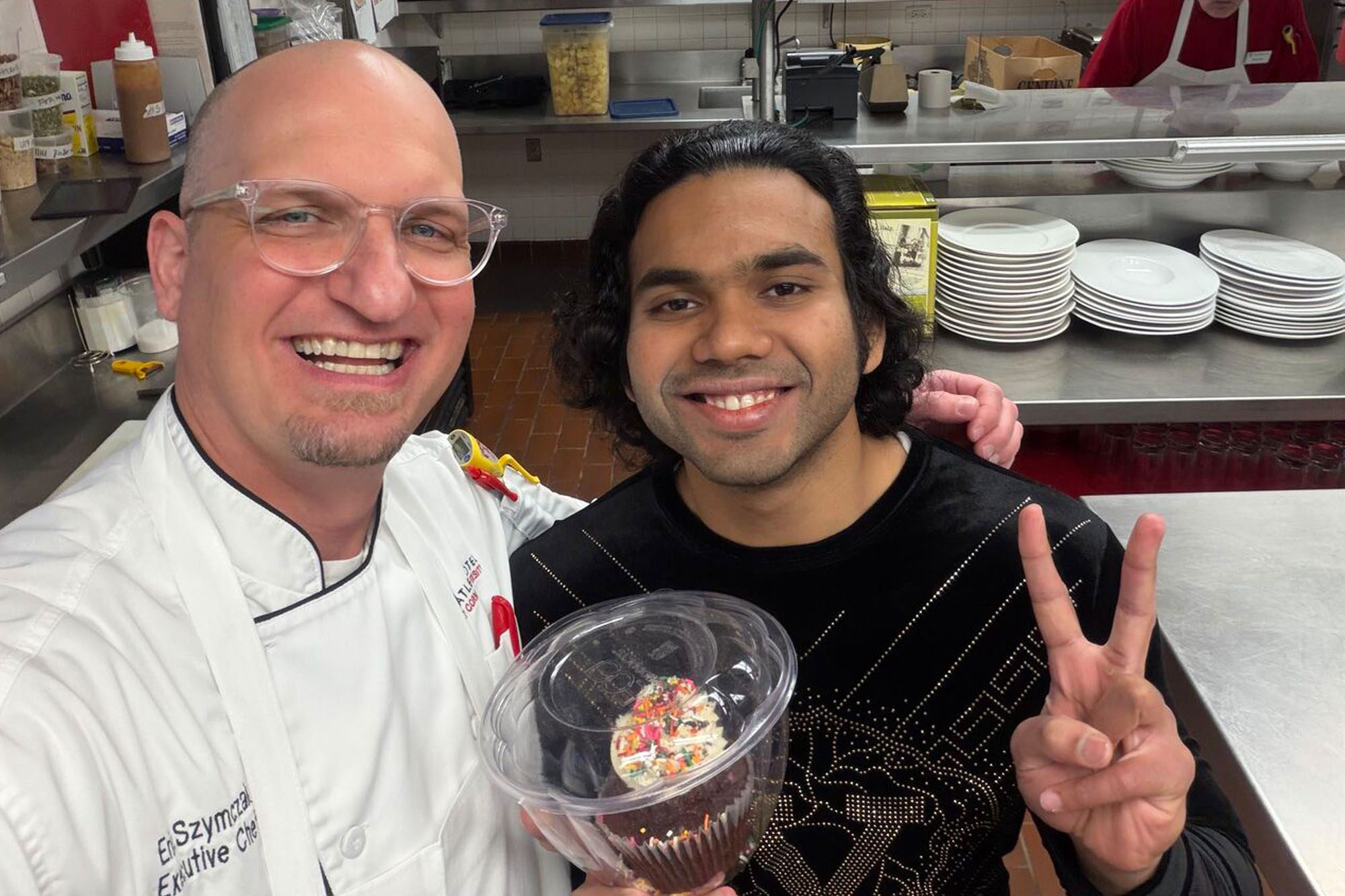
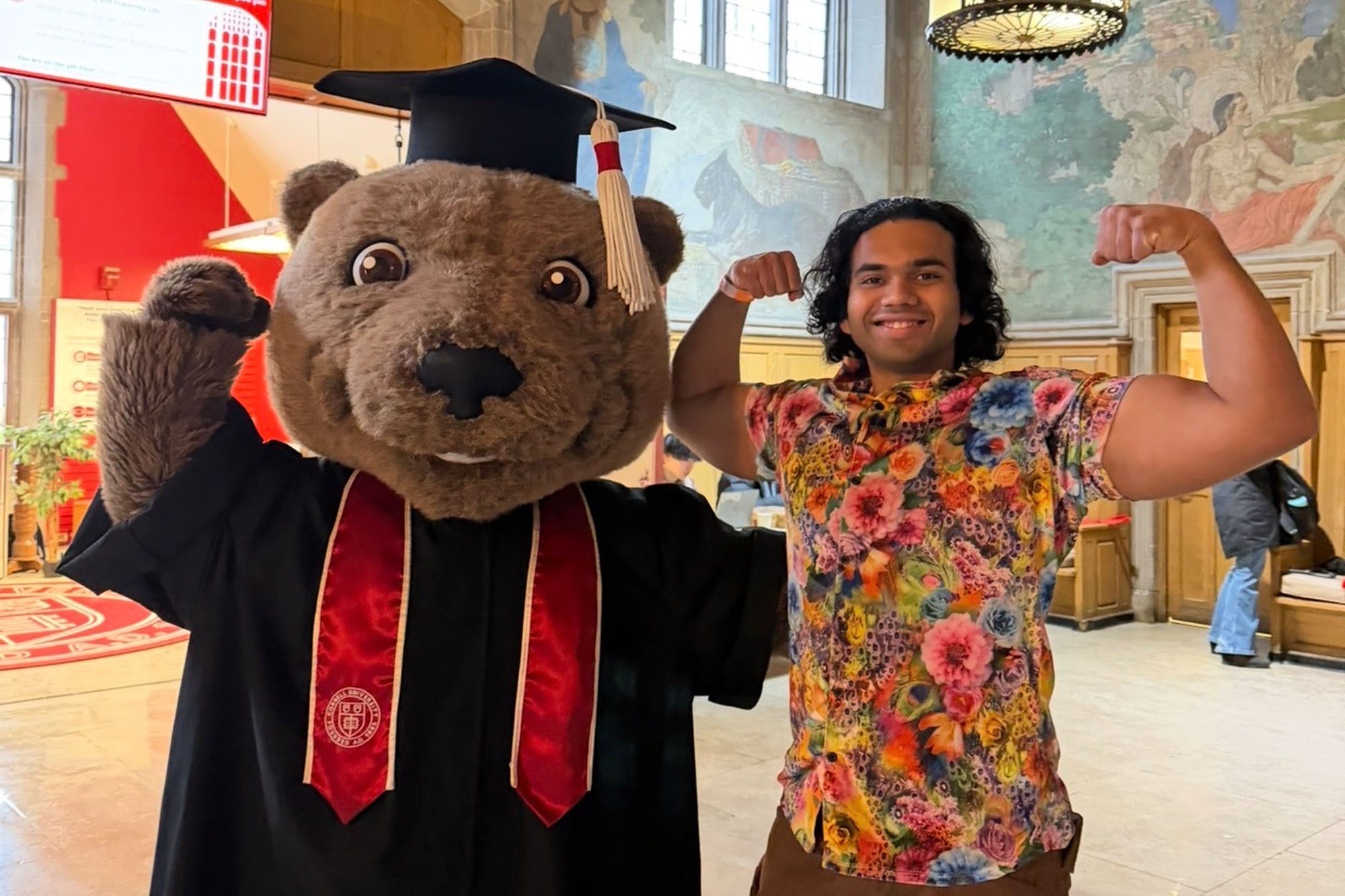
Outside of academics at Cornell University, I enjoy being actively involved across different parts of campus life. I have worked in several student roles including as a chef at Taverna Banfi at the Statler Hotel, a Student Dining Associate across Cornell Dining, and a Fitness Monitor in the Cornell Fitness Centers. I also serve as a Teaching Assistant for the Systems Engineering department, which allows me to support fellow students while reinforcing my own understanding of engineering concepts.
Beyond work, I am part of student communities such as Cornell’s Energy Transition Club, Barbell Club, and Matcha Club, where I get to connect with people who share interests in sustainability, fitness, and culture. I also enjoy volunteering in The Commons and staying active by lifting weights early in the morning — a routine that helps me stay disciplined and balanced throughout the semester.
Any advice for future students considering this degree?
Be fair and ethical in your work and always take ownership of what you do. In a program like this, it can sometimes be challenging to prove your abilities within a group setting, so don’t wait for opportunities or for people to approach you. Take the initiative to connect with classmates, collaborate, and show how your skills can contribute to the team.
Also, build honest and meaningful relationships with your professors. They play a significant role in shaping your academic journey and professional direction, and their mentorship can open doors you may not expect. Most importantly, stay curious, stay humble, and make the most of the opportunities around you.
Favorite Cornell or Olin Hall Memory?
One of my favorite memories at Cornell University was during Professor William Cleary’s Lean Engineering class in Olin Hall. We were given a fun but challenging task: build a Lego airplane in less than 60 seconds to understand the importance of efficiency, workflow, and quality in engineering systems.
At the beginning, our “production line” was completely chaotic—parts scattered everywhere and no clear process. But as we reorganized our steps and worked together as a team, we started building planes much faster and more smoothly. What started as confusion quickly turned into laughter, teamwork, and surprisingly efficient “manufacturing.”
It was a simple classroom exercise, but it perfectly demonstrated how engineering concepts like lean processes and system optimization work in practice. More importantly, it was a joyful and memorable experience that showed how much fun teamwork and problem-solving can be.
Anything else you’d like to share?
My journey to Cornell has been shaped by perseverance, gratitude, and the support of many people along the way. Coming from a different part of the world and studying here has been a deeply meaningful experience. Beyond academics, Cornell has helped me grow as a person and allowed me to connect with people from many different cultures and perspectives.
One special thing I will always cherish is earning the Ivy League tag through Cornell — something my mother and I will carry with pride for the rest of our lives.
Lastly, I would like to thank my mother. After we lost my father, she raised and shaped me with incredible strength and values so that I could carry forward his legacy. Today, I proudly take 0% credit and give her 100%, because whatever I am, wherever I am, and whoever I am today is only because of her.