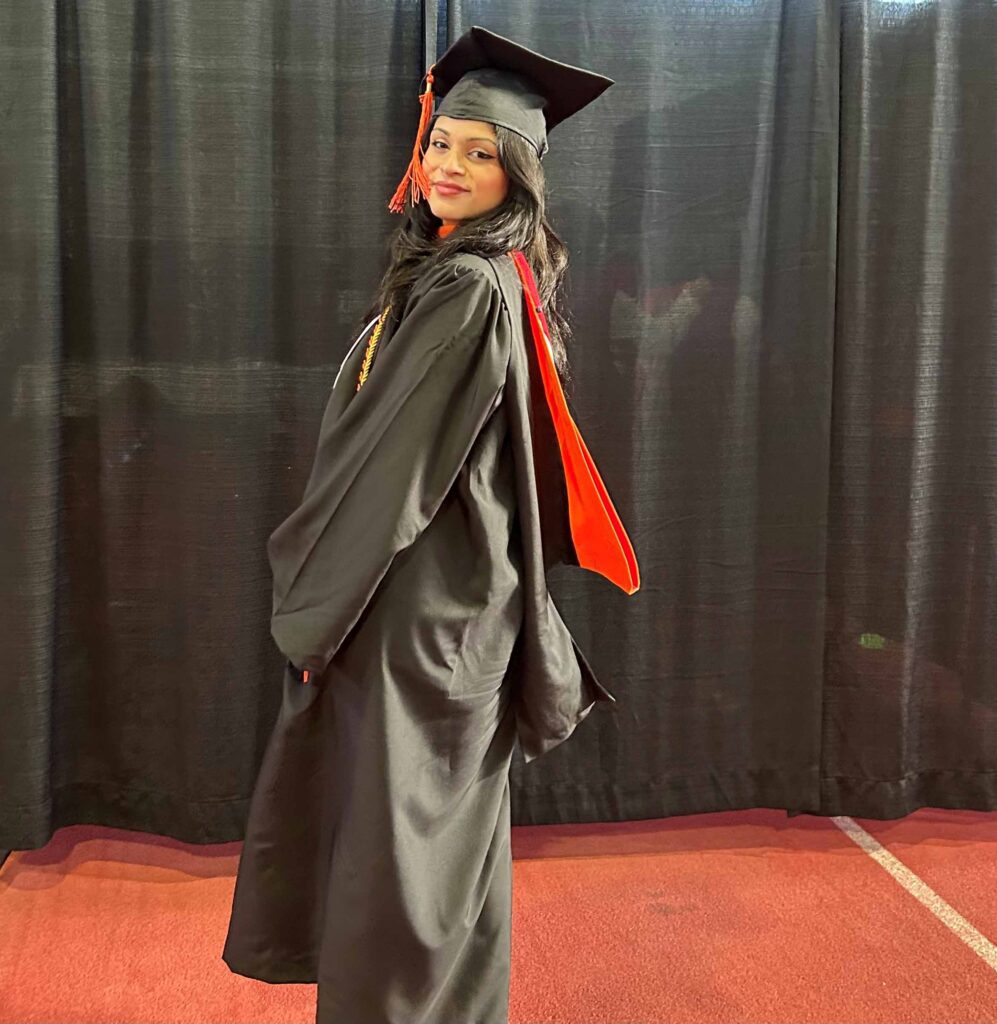
Cornell’s M.Eng. enabled Alina Chisti to push beyond traditional chemical engineering to apply machine learning to real-world biopharmaceutical challenges. Her design project used data-driven modeling to reduce risk in the manufacturing transfer of life-saving monoclonal antibody therapies—showcasing how she bridged engineering, AI, and healthcare to help speed the delivery of critical treatments to patients worldwide.
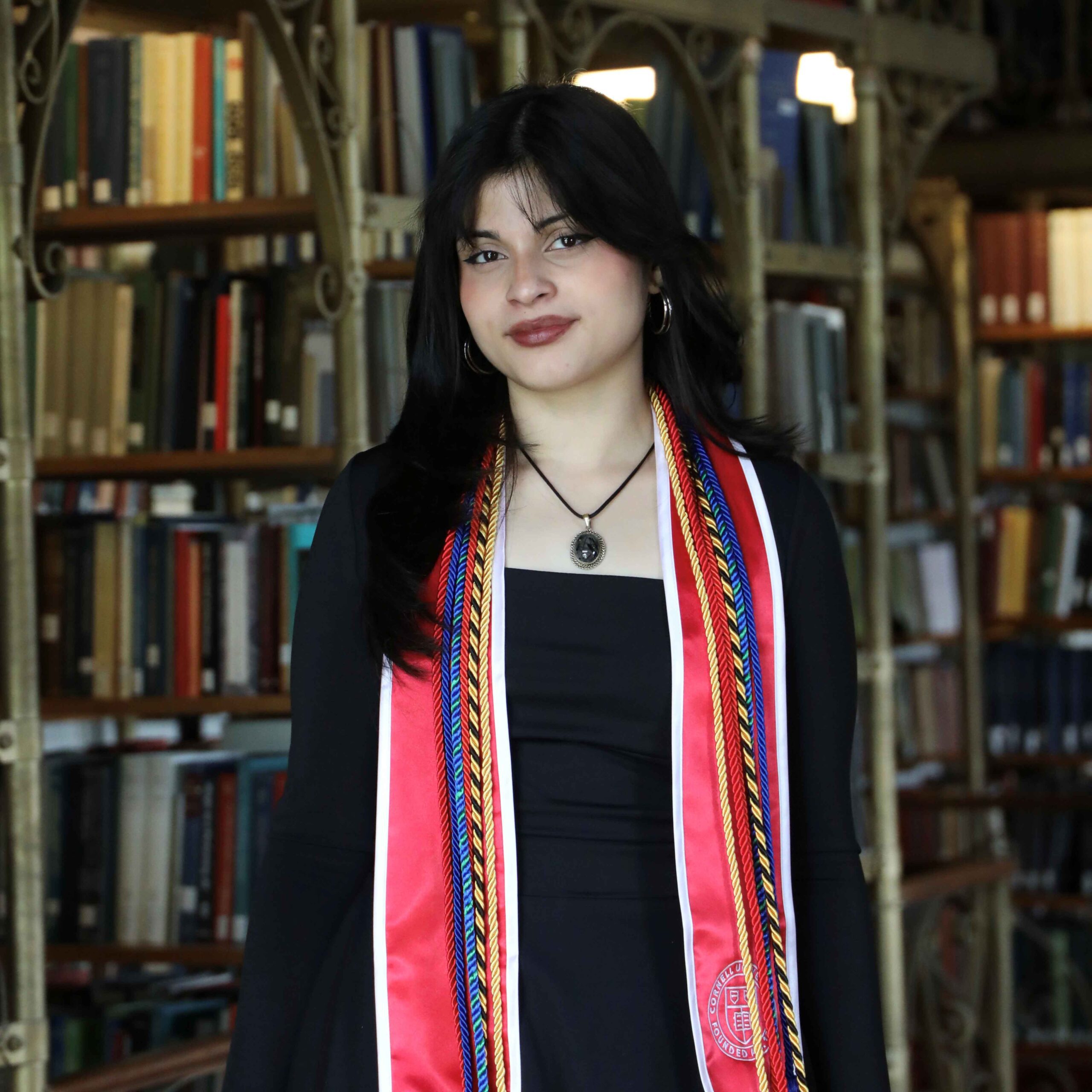
Alina Chisti
-
Program
M.Eng. in chemical engineering
-
Hometown
Phoenix, Arizona.
-
Preferred pronouns
she/her/hers
-
More
What’s your Cornell M.Eng. story?
What initially drew me to Cornell was its beautiful location, interdisciplinary approach and highly-involved faculty. I was excited by the opportunity to learn in an environment that values collaboration across disciplines and encourages students to tackle complex, real-world problems. Cornell’s strong engineering culture and supportive academic community made it the perfect place for me to grow both technically and personally. I was also drawn to Cornell’s location in the beautiful city of Ithaca, which felt like a perfect place to learn and connect with nature.
I was inspired to pursue a chemical engineering M.Eng. to build a deeper and more practical skill set that would make me a stronger engineer. I wanted to go beyond theory I learned in my undergraduate degree (also at Cornell) in chemical engineering and gain hands-on experience while also exploring new paths in the field, specifically specifically data science and artificial intelligence. Cornell Engineering’s early admit pathway to M.Eng. gave me the opportunity to deepen my technical foundation while learning modern tools that are increasingly shaping the future of engineering and making it more efficient. It overall felt like a great opportunity to add tools to my engineering toolbox, complete a project I’m proud of for my portfolio, and gain a competitive advantage when applying to jobs, all in only one extra semester!
Brief description of your M.Eng. Project?
My M.Eng. project focused on technology transfer in the biotechnology industry for international pharmaceutical company Kyowa Kirin, specifically for the manufacturing of monoclonal antibody (mAb) therapeutics. Monoclonal antibodies are widely used to treat and manage serious diseases, including cancer, autoimmune disorders, and infectious diseases. These drugs play a critical role in saving lives and improving quality of life for millions of patients worldwide, but they are also complex and sensitive to manufacture.
The goal of my project was to assess and reduce risk when transferring a therapeutic drug manufacturing process from one production site to another, a step that is often necessary when scaling up production to meet global demand. This kind of technology transfer currently relies heavily on extensive experimentation, expert judgment, and time-intensive trial-and-error approaches that can delay drug availability and increase costs.
For the project, my team conducted a comprehensive risk assessment across process parameters, equipment differences, and raw materials, and developed a predictive modeling tool using machine learning to estimate the likelihood of a successful tech transfer. By leveraging data-driven methods, the project aimed to improve efficiency, reduce costly experimental burden, and support better decision-making in biopharmaceutical manufacturing. Ultimately, this work helps enable faster, safer, and more reliable production of life-saving therapeutics so that effective treatments can be scaled up and delivered to patients around the world.
What’s been the most rewarding part of your M.Eng. experience so far?
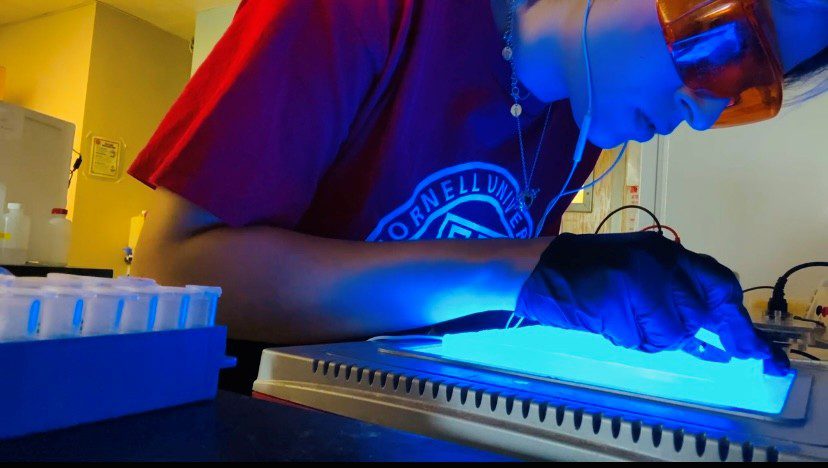
One of the most rewarding parts of my M.Eng. experience was stepping into a completely new and challenging space and pushing myself to navigate something complex and unfamiliar. Learning how to apply machine learning concepts in an engineering and healthcare context was especially fulfilling. I also deeply appreciated how supportive and involved the faculty and advisors were. I always felt that I could rely on them for guidance and encouragement. I think a really unique part of the M.Eng. experience is how invested your professors and advisors are in your success and how they get to know you on a personal and academic level! I’m very grateful to my master’s project advisors, Prof. Eda Celik and Prof. Brian Bauer, for taking the time to understand how I think and for providing guidance that was truly thoughtful and catered to my learning style.
Something you learned?
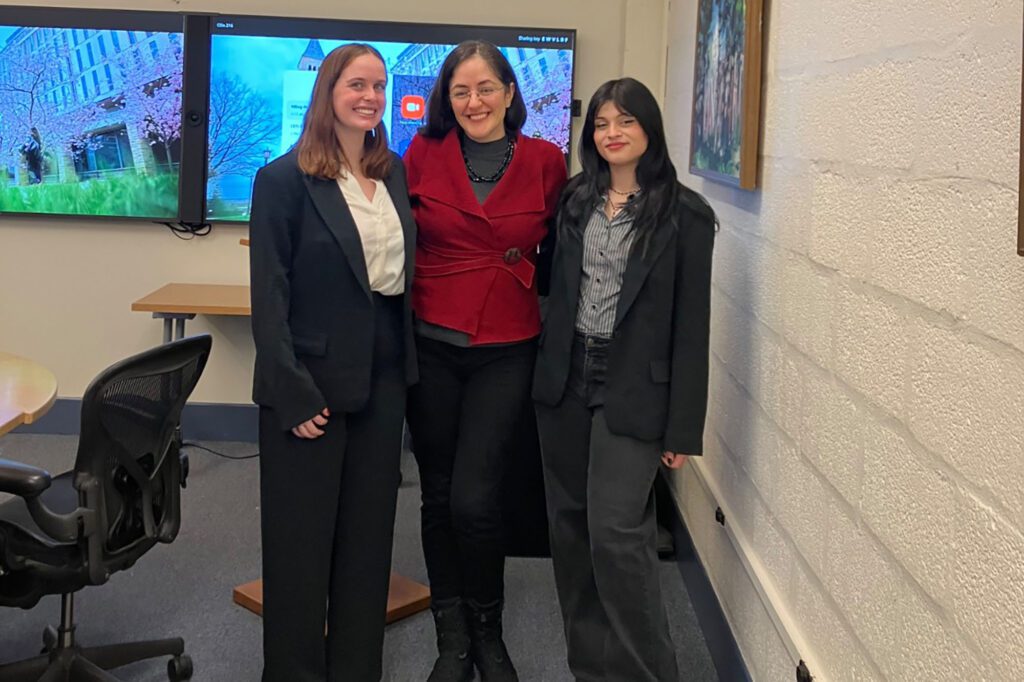
One of my favorite classes was CHEME 5610: Concepts of Chemical Engineering Product Design, which taught us not only how to develop a product using Design of Experiment (DOE) and assess its safety through failure analysis, but also how to evaluate the market for a new product and conduct customer discovery. Learning how to tune design parameters to achieve specific product qualities while also understanding what customers are looking for in a product guided me on how to balance the functional engineering characteristics for a product and the customer needs. These strategies were invaluable in my masters project, where I had to assess and translate the needs of our industry sponsor into concrete technical targets. I also learned how to apply machine learning and AI in the health industry through SYSEN 5650: Programming Essentials for Health AI and Data Science, where I was able to learn machine learning techniques to apply to the predictive modeling component of my M.Eng. project.
What’s next for you?
I plan to work in process engineering while continuing to pursue a role in the machine learning (ML) and AI space. I see ML and AI as part of the next industrial revolution, and I’m excited to be at the intersection of engineering, data, and innovation to develop more efficient and novel solutions.
Advice for future students?
Just do it. Your undergraduate engineering training has taught you all the analytical tools and resilience you need to be able to solve any kind of problem, no matter how unfamiliar. Don’t be afraid of navigating new territory—those unfamiliar spaces are where the most learning and growth happen. You don’t need to have everything figured out from the start; confidence, trust in yourself, curiosity, persistence, and openness to challenge will take you far.