Understanding the Past and Present to Guide the Future
To improve the quality of life for everyone on this planet, we must first understand the complexities of our natural systems and the impact of human behavior on the natural balance. The Department of Earth and Atmospheric Sciences at Cornell embraces this mission through exceptional teaching, world-class research, and committed service and outreach.
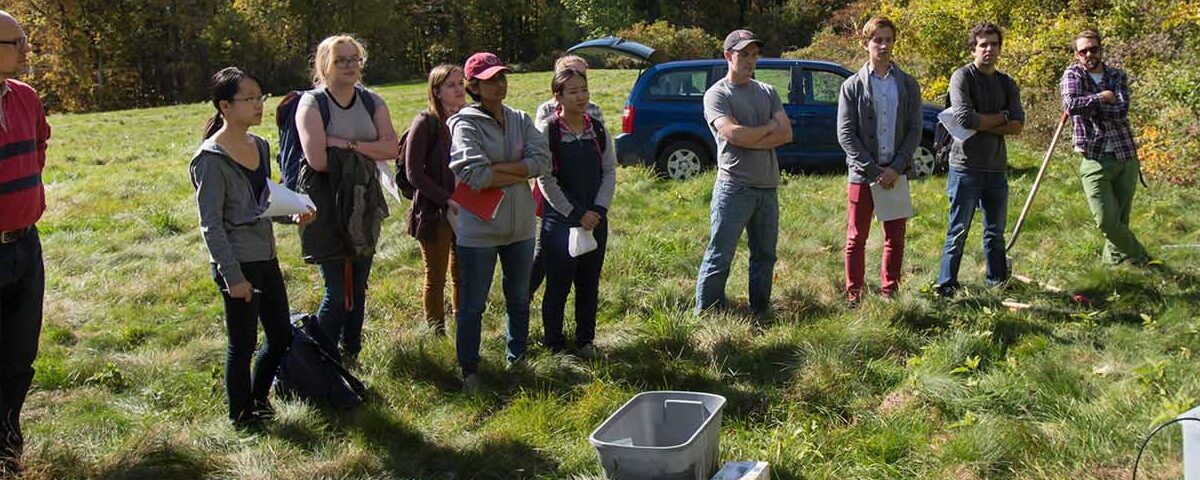
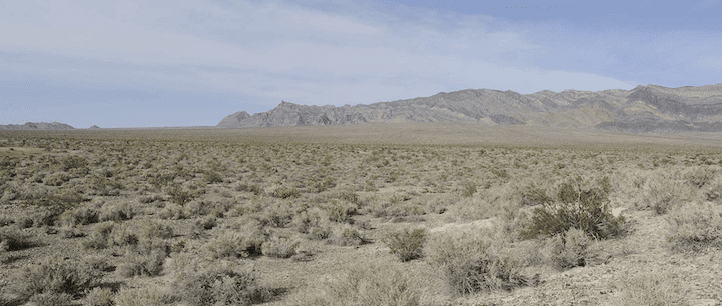
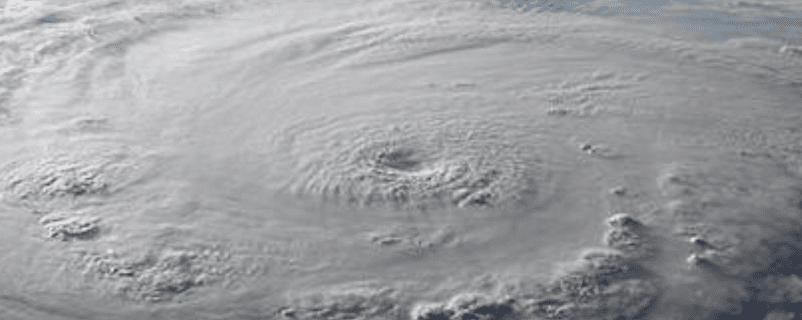
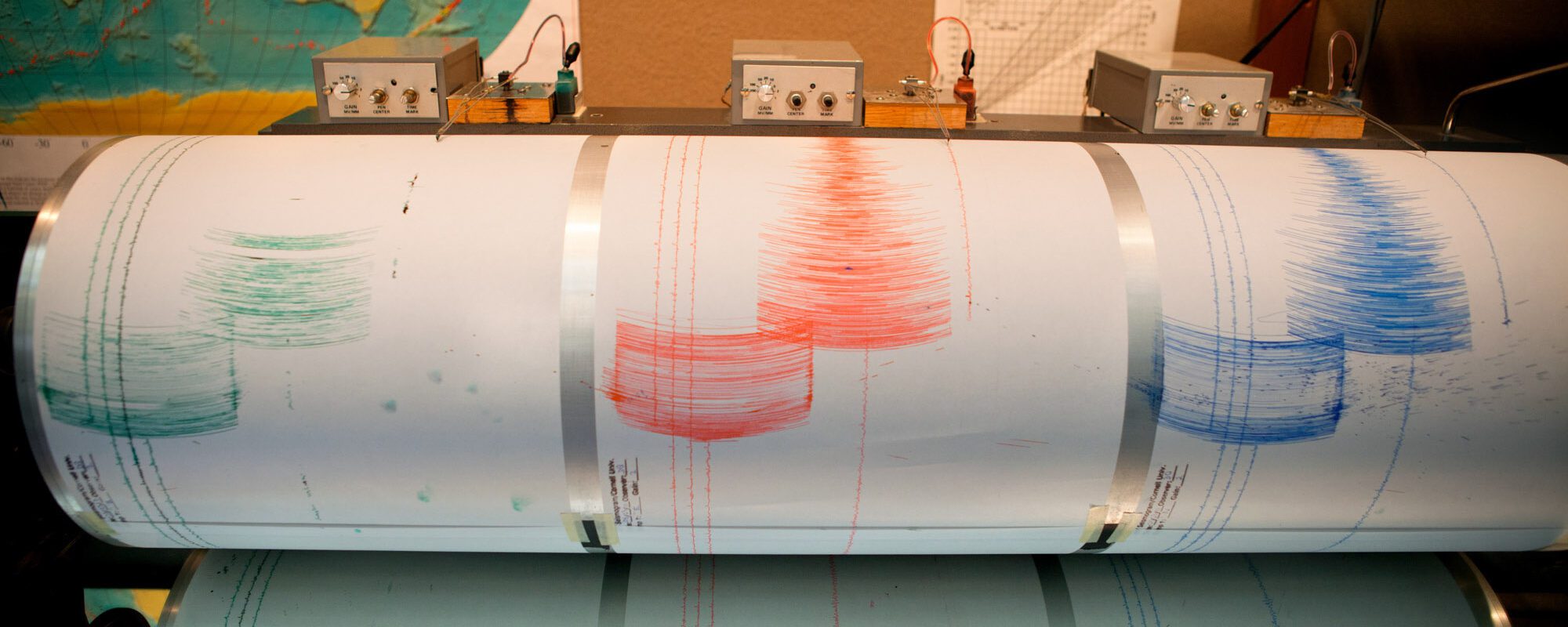
Our Programs

News Highlights
-
![]()
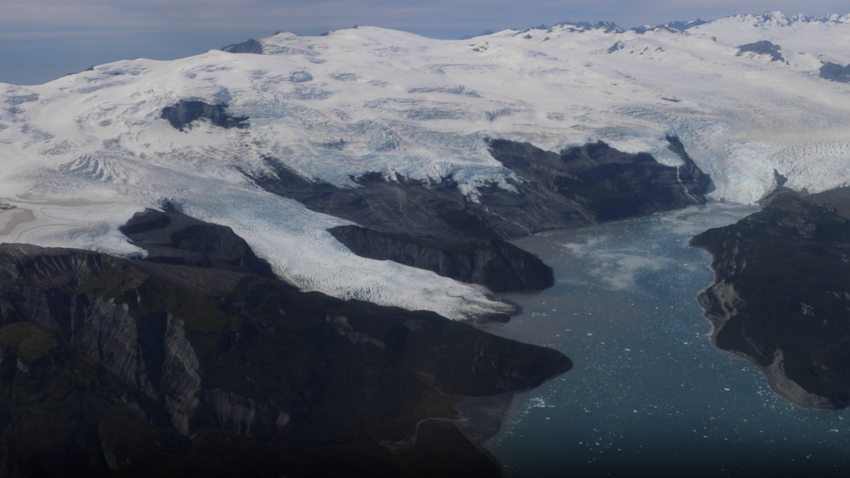
Culberg joins NASA effort to probe rapidly changing Arctic glaciers
Riley Culberg, assistant professor, is a member of the science team for Snow4Flow, a new NASA mission to study how much ice glaciers contain and how much new snow they receive.
-
![Bill White poses in his office with a globe in front of him.]()
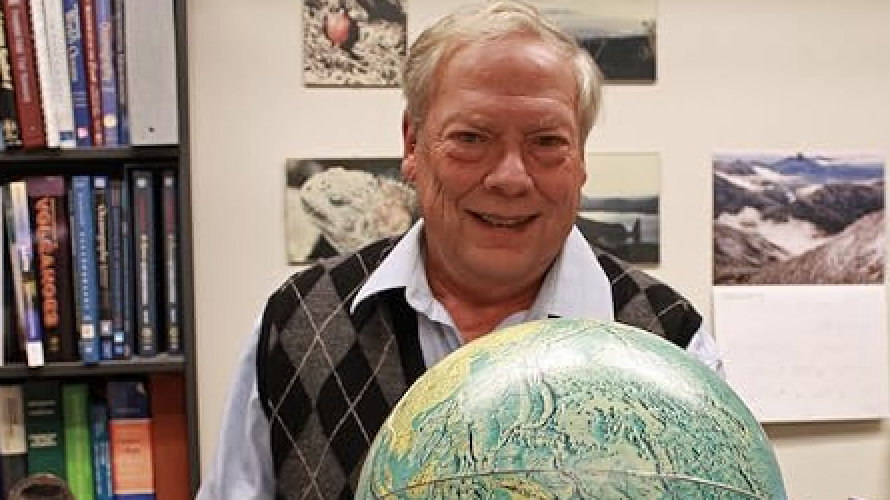
Bill White honored for investigations of Earth’s deep interior processes
William “Bill” White, professor emeritus in Cornell’s Department of Earth and Atmospheric Sciences, has been awarded the Harry H. Hess Medal by the American Geophysical Union (AGU), recognizing his contributions to understanding the chemical evolution and dynamics of the Earth.
-
![EAS Faculty member Geoff Abers on the deck of a research vessel as he prepares to deploy a bright yellow seismometer on the ocean floor near New Zealand.]()
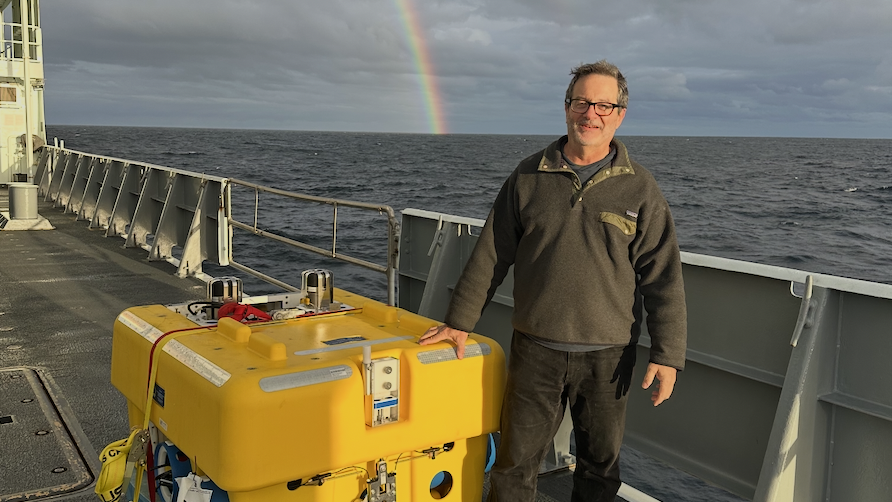
Abers selected for AGU’s 2026 Beno Gutenberg Lecture
Geoffrey Abers, the William and Katherine Snee Professor in Geological Sciences in Cornell’s Department of Earth and Atmospheric Sciences, has been selected by the American Geophysical Union (AGU) to deliver the 2026 Beno Gutenberg Lecture, an annual honor recognizing outstanding contributions to the field of seismology.
-
![]()
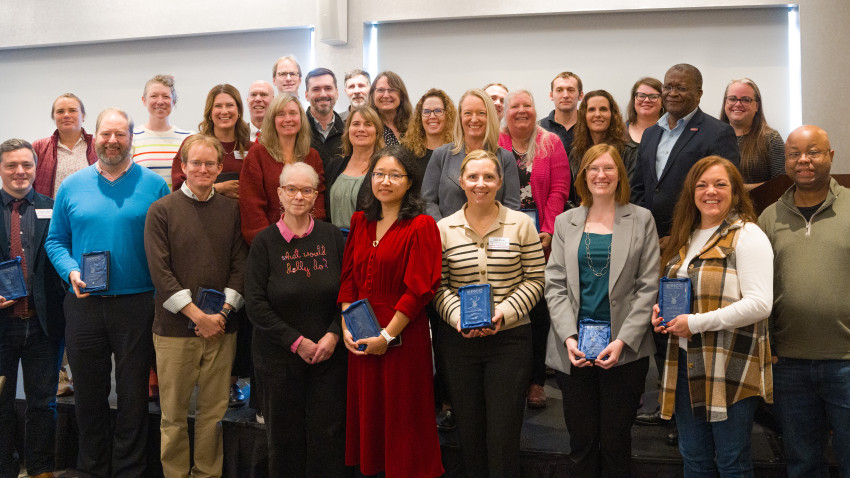
EPICC Awards recognize commitment to Duffield Engineering’s core values
The Cornell Duffield College of Engineering celebrated its fifth annual EPICC Awards on Oct. 8 in Statler Auditorium, recognizing faculty and staff whose work exemplifies the college’s core values of excellence, purpose, innovation, community and collaboration.
Latest Events
-
![]()
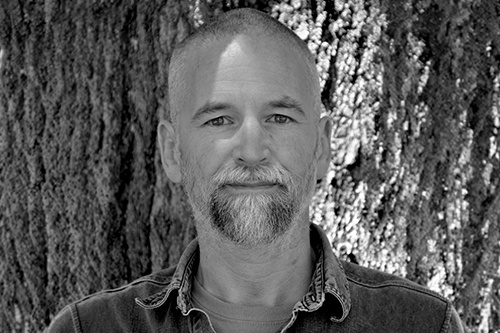
EAS Seminar: Bob Hawley (Dartmouth)
Check your work: Why models and remote-sensing measurements still need boots on the ground Large scale numerical models, informed by large remotely-sensed datasets, are at the forefront of predictive …
-
![]()
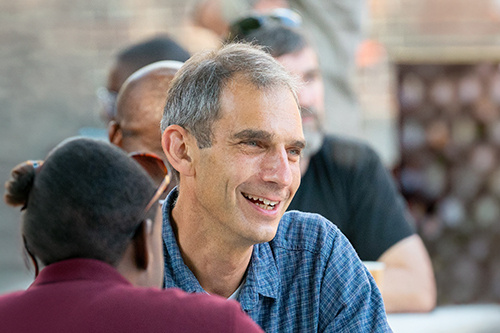
EAS Seminar: Daniel Kirk-Davidoff (EPRI)
Synthesizing accurate long-term wind gust timeseries using reanalysis and satellite data Accurate estimate of return levels of 3-second wind gust for a range of return periods is of great importance t…
Seminars
- EAS Seminar Series: Wednesdays, 3:35-4:25 in Snee Hall, Room 2146
- Atmospheric and Climate Seminar Series: Fridays, 2:30-3:20 in Snee Hall, Room 2146
- Earth Science Seminar Series: Fridays, 3:35-4:25 in Snee Hall, Room 2152
Fall 2026 Earth and Atmospheric Science Seminar Series
| Date | Topic | Speaker |
|---|---|---|
| August 26, 2026 | Departmental | Department Welcome Event |
| September 2, 2026 | Departmental | Faculty Lightning Talks |
| September 9, 2026 | AS/GS | Engaged Earth and Climate Observatory (EECO) |
| September 16, 2026 | AS/GS | Peter Washam |
| September 23, 2026 | GS | Nicolas Roberts |
| September 30, 2026 | AS | Patrick Webb |
| October 7, 2026 | AS/GS | Nikole Lewis |
| October 14, 2026 | GS | Matej Pec |
| October 21, 2026 | GS | Bob Hawley |
| October 28, 2026 | GS | Tolulope Olugboji |
| Novmber 4, 2026 | To Be Determined | To Be Determined |
| November 11, 2026 | AS | Fangqun Yu |
| November 18, 2026 | AS | David-Kirk Davidoff |
| November 25, 2026 | Thanksgiving | Thanksgiving |
| December 2, 2026 | AS | Jonah-Bloch Johnson |
| December 9, 2026 | American Geophysical Union | San Francisco |
Alumni Profiles
-
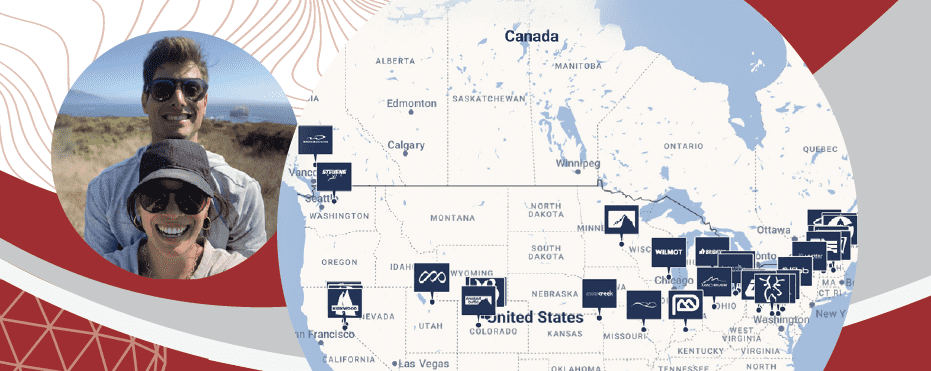
![Partial map of the United States with Vail Resort properties marked. Over the map is a circle with a picture of Jonathan Kimchi and a woman, smiling at the camera.]()
Finding creative solutions and protecting the environment – Jonathan Kimchi ’10
Eighteen years ago, Jonathan Kimchi ’10 was a first-year Cornell student who knew he wanted to make an impact on the environment by combining his passions for water resources and engineering. These days, he is realizing that goal as…
-
![EAS alumni Peter Fleming aboard a ship]()
A visceral sense of the land – Peter Flemings Ph.D. ’90
In the more than 30 years since Peter Flemings Ph.D. ’90 left Cornell with his Geology doctorate in hand, he has been engaged in research at some of the nation’s premier academic institutions, including the Lamont-Doherty Earth Observatory, MIT,…
-
![EAS alum Hannah Lang '10 and former EAS faculty member John Thompson]()
Alum is using data to improve mining practices – Hannah Lang ’18
Hannah Lang ’18 has never been a rock collector and would definitely not refer to herself as a “rock nerd,” (though some of her good friends are). Yet, she graduated from Cornell with a B.A. in the science of…
-
![Nicole Collins standing and posing for a photo on the set of the television station where she works as a meteorologist.]()
This Cornell alum is living the ‘weather nerd’ dream — Nicole Collins ’25
Atmospheric Science alumna Nicole Collins ’25 has gone from fearing thunderstorms to predicting them as a broadcast meteorologist for WSPA in Greenville, South Carolina.


Strategic Research Areas
-
![Desert location with four people in the foreground and mountains in the background.]()
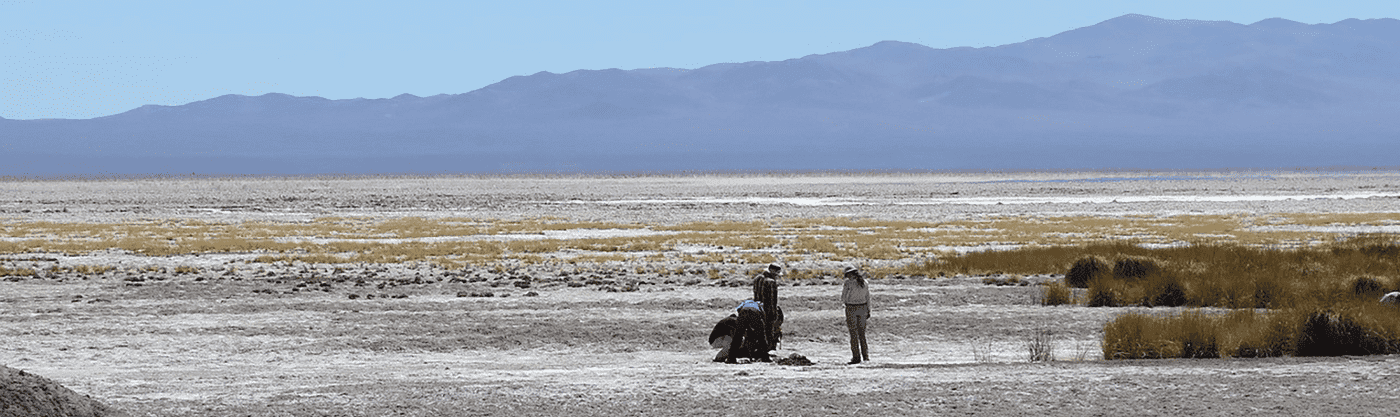
Climate and Paleoclimate
Study of Earth’s climate extends from investigation of past climate states, to investigation of the key underlying physical and chemical controls on modern climate balances, to prediction of the climate outcomes of ongoing anthropogenic and natural forcings.
-
![Earth as seen from space, with India centered.]()
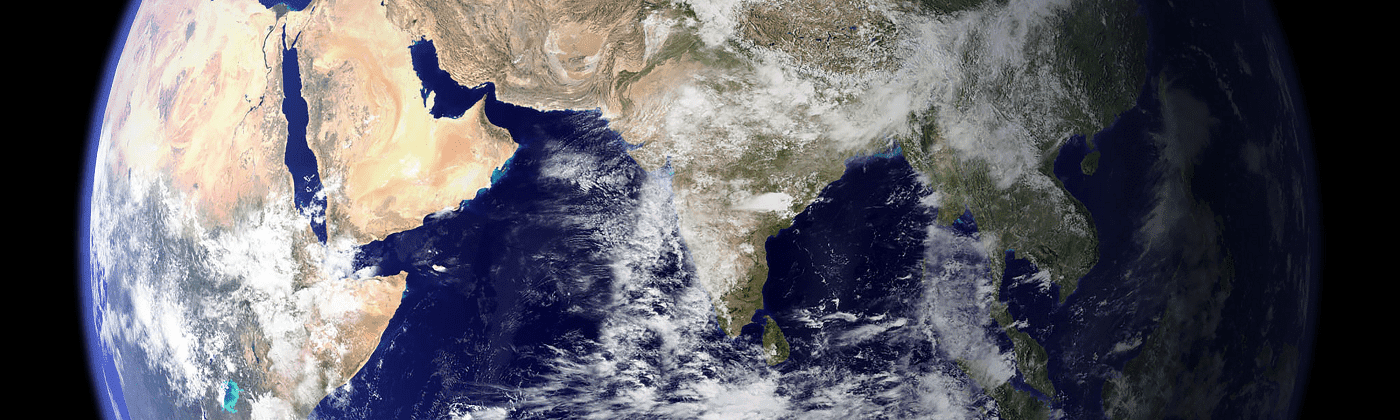
Earth System Science
Earth system science spans knowledge across the lithosphere, biosphere, atmosphere, cryosphere and hydrosphere. Earth system science is intellectually interesting, as it seeks to understand the world around us, as well as relevant for solving problems relating to energy, climate and pollution.
-
![Steaming thermal pool in New Zealand]()
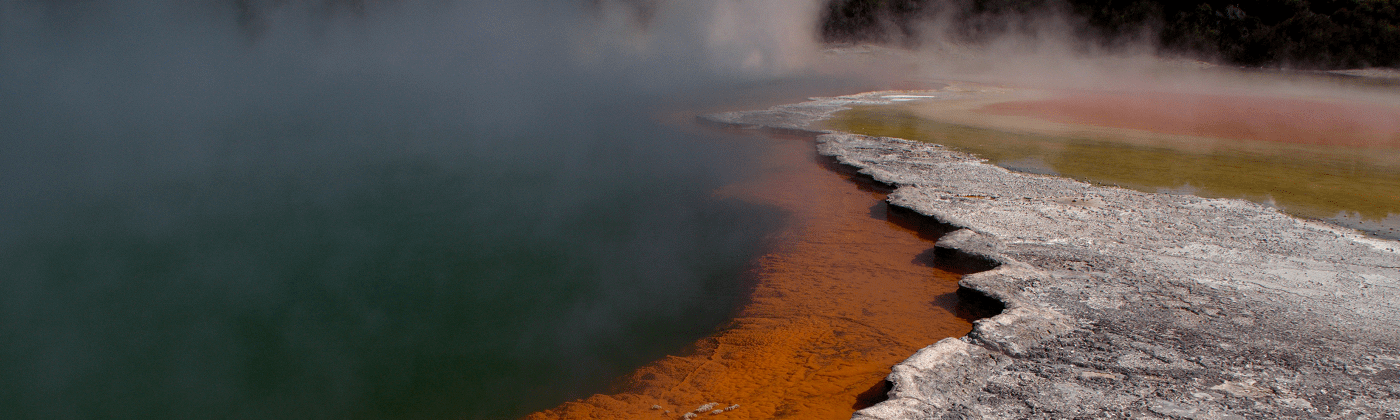
Energy, Mineral, and Water Resources
We make society aware of energy’s indirect role in our lives: for example, modern food production requires massive amounts of energy for fertilizer, harvest, and transportation to market.
-
![steaming top of a conical volcano]()
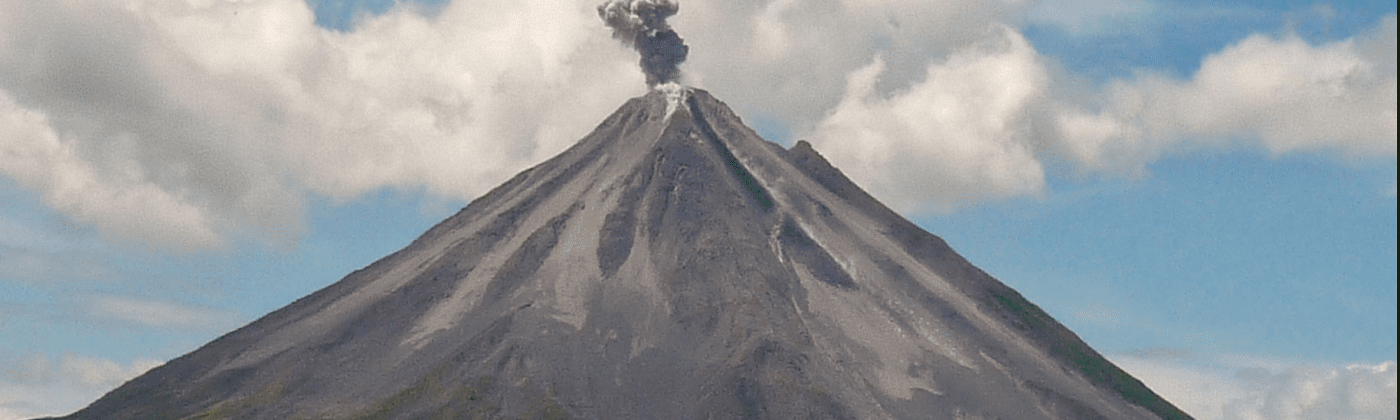
Geochemistry, Petrology, and Volcanology
This area of research focuses on the study of the chemical composition of the earth and its rocks and minerals.
-
![person sitting in a hole, wiring a seismic sensor.]()
Geophysics and Seismology
This area of research concerns itself with the physical processes and physical properties of the Earth and its surrounding space environment, and the use of quantitative methods for their analysis.
-
![climate map of part of the Northeastern United States]()
Meteorology and Applied Climatology
Established in 1983, the Northeast Regional Climate Center (NRCC) is located in the Department of Earth and Atmospheric Sciences at Cornell University.
-
![Overhead view of waves crashing on a sandy shore]()
Ocean Sciences
Research includes Marine Ecosystem Research in the North Atlantic (MERRCINA), Ocean Tracking Network (OTN) L, Near-Real-Time Modeling of Right Whale Foraging Areas in the Gulf of Maine and Interannual Variability of North Atlantic Spring Phytoplankton Blooms in the North Atlantic.
-
![satellite image of the North polar lakes and seas of Titan.]()
Space and Planetary Sciences
Research in space and planetary sciences spans many disciplines and four departments at Cornell, including the Department of Earth and Atmospheric Sciences.