Preparing the Next Generation of Engineering Leadership.
Our Master of Engineering in Engineering Management (MEM) Program gives students business skills while increasing their technical depth through coursework, team projects, and dynamic class discussions.
Engineering Management (MEM) Program Options
There are two equally engaging and robust ways to earn your MEM degree.
-
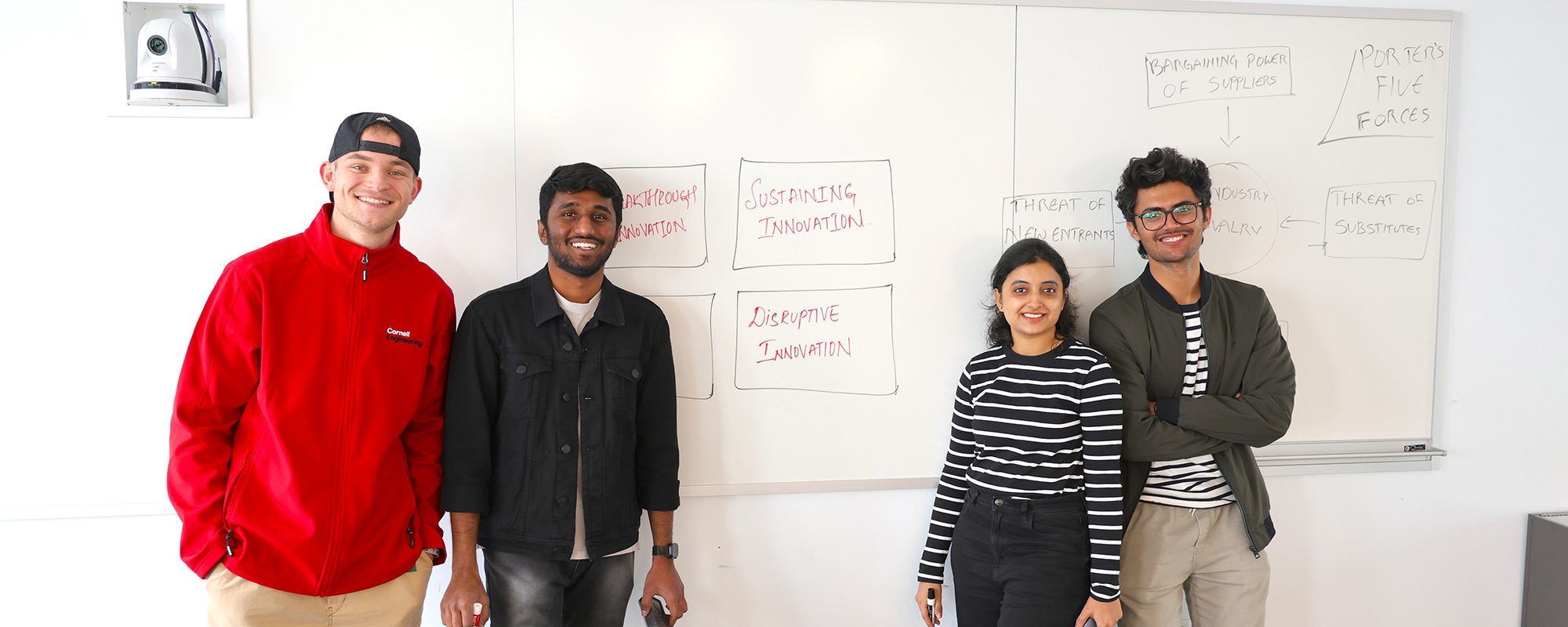
![Four students smiling in front of a white board with a project on it]()
MEM On-Campus (Ithaca) Program
You’ll learn to identify problems, analyze data, and interpret results for managerial action. Based in Ithaca, NY, this program combines engineering courses with business and labor relations courses from Cornell’s Johnson College of Business and the School of Industrial and Labor Relations.
-
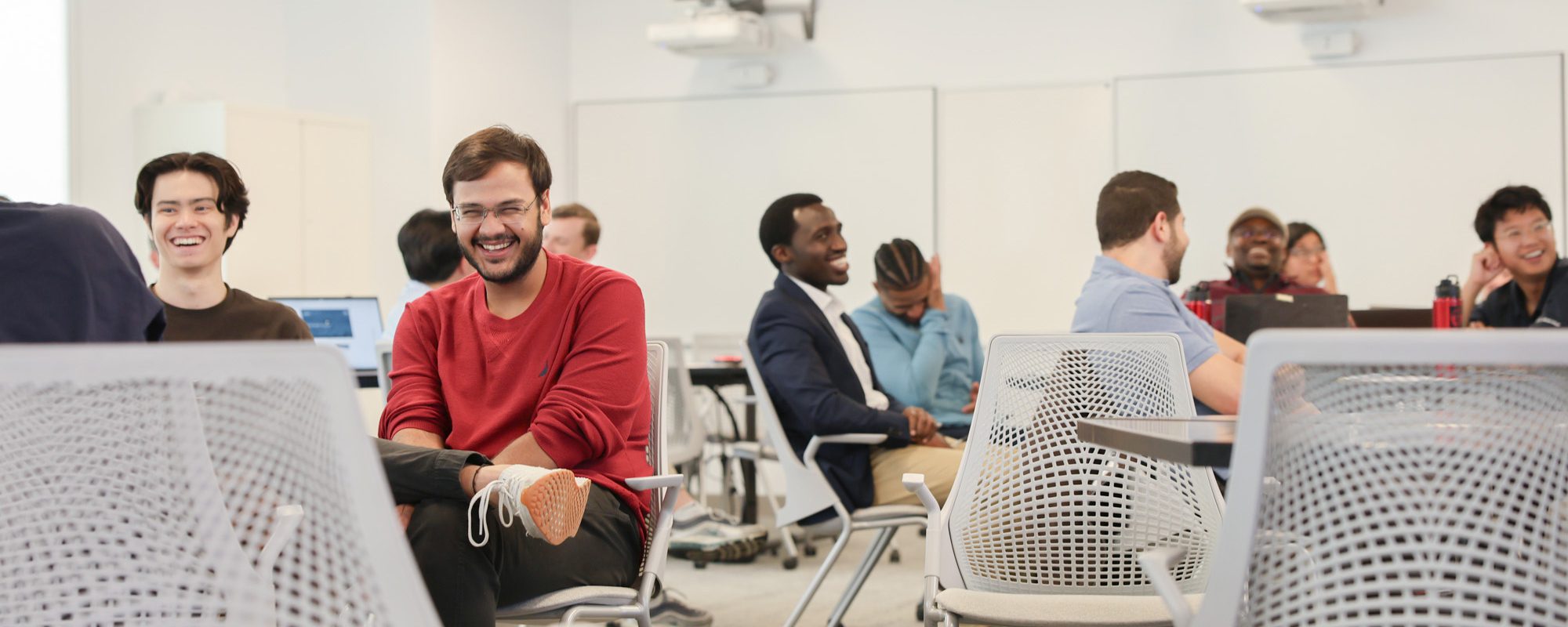
![Group of students in a class room laughing]()
MEM Distance Learning Program
Advance your career without pausing it. Designed for ambitious working professionals, our online, asynchronous Engineering Management M.Eng. program lets you build leadership skills while working full-time. Plus, immerse yourself in hands-on learning during a one-week intensive session on campus in Ithaca, NY each year.
“My M.Eng. at Cornell helped me bridge the gap between engineering and business, teaching me to think like both a builder and a strategist — to use data for product decisions, communicate insights to non-technical audiences, and turn complex problems into actionable plans. Through hands-on projects, I strengthened my skills in product analytics, stakeholder management, and structured problem-solving.”
Jahnavi Shah, M.Eng.’23 Engineering Management Product Deployment Strategist at Persona

Recent News
See all-
![]()
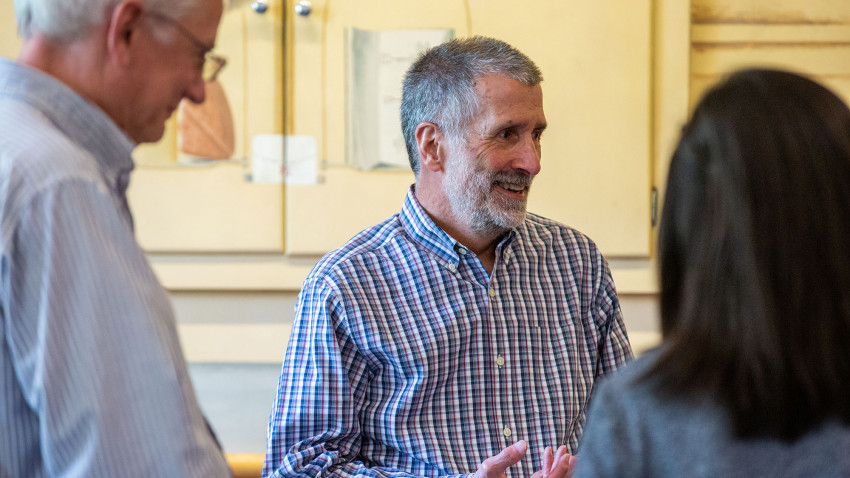
T. Michael Duncan leaves a legacy in the classroom
For 36 years at Cornell, Professor T. Michael Duncan approached teaching with the same rigor he brought to research. Now his school wants to honor his legacy with a new fellowship.
-
![]()
Grant aims to improve AI models of human choices in complex systems
A National Science Foundation grant will support Cornell research aimed at developing AI models that can better represent human decision-making in cyber-physical systems while remaining interpretable and explicit about uncertainty.
-
![]()
Air Force award supports research into resilient spacecraft coordination
Gregory Falco, assistant professor, has received a Young Investigator Program award from the Air Force Office of Scientific Research to investigate autonomous spacecraft that can maintain coordination while an adversary is trying to disrupt them.
-
![]()
Researchers outline priorities for robust U.S. climate assessments
Five Cornellians join 175 global experts to outline research priorities that can inform future national and regional climate assessments in a new special collection of the American Geophysical Union and the American Meteorological Society.



Upcoming Events
-
![]()
Engineering Management On-Campus M.Eng. Virtual Info Session – Oct 21
Register here to reserve your place. Considering graduate school to accelerate your career in engineering, technology, product management, consulting, or leadership? Join Cornell University’s M…
-
![]()
Engineering Management On-Campus M.Eng. Early Admission Info Session – Oct 23
Register Now Considering graduate study to build on your Cornell undergraduate experience and accelerate your career in technology, product management, consulting, or engineering leadership? Join us …
-
![]()
Lunch & Learn: Dirk Swart (Cornell MEM)
Register Now 10x Your Productivity with AI and Workflows Discover how artificial intelligence is reshaping the way professionals work. Join Dirk Swart for an interactive Lunch & Learn session ex…
-
![]()
Engineering Management Distance Learning M.Eng. Virtual Info Session – Nov 18
Register Now Join us for an upcoming Cornell Engineering Management Distance Learning Information Session. Whether you’re a working professional looking to elevate your leadership skills or an e…



Featured Faculty
-
![Ricardo Daziano]()
Ricardo Daziano
Director of Graduate Studies Professor
Engineering Management Program School of Civil and Environmental Engineering Systems Engineering Program
-
![H. Oliver Gao]()
H. Oliver Gao
Director, Systems Engineering Program Director, Center for Transportation, Environment, and Community Health Associate Director, Cornell Brooks Center for Infrastructure Howard Simpson 1942 Professor of Engineering
Engineering Management Program School of Civil and Environmental Engineering Systems Engineering Program
-
![Andrea Ippolito]()
Andrea Katherine Ippolito
Senior Lecturer
Engineering Management Program School of Civil and Environmental Engineering
-
![Linda K. Nozick]()
Linda K. Nozick
Associate Dean for Professional Programs Professor
Engineering Management Program School of Civil and Environmental Engineering
-
![Samitha Samaranayake]()
Samitha Samaranayake
Associate Professor
Engineering Management Program School of Civil and Environmental Engineering
-
![Donnell Walton]()
Donnell Walton
Adjunct Professor
Engineering Management Program School of Civil and Environmental Engineering






More from Our Students
-
![Shivani Chandrashekar Pattaparla Engineering Management On-Campus student]()
Continuous learning in the face of evolving challenges
I’ve gained insights into motivating and leading teams, as well as making strategic decisions that impact both the technical and business aspects of a project.
-
Distance learning offers flexibility while working full-time
I schedule classwork during the evenings, use Saturday as my backup day if necessary, and do no work on Sunday. I’ve also taken time off from the program – life, work, and school converged so much so that I took one semester off.
-
Mastering management through distance learning
Most classes are asynchronous. The flexibility and autonomy are very important for me as a working professional with family commitments.