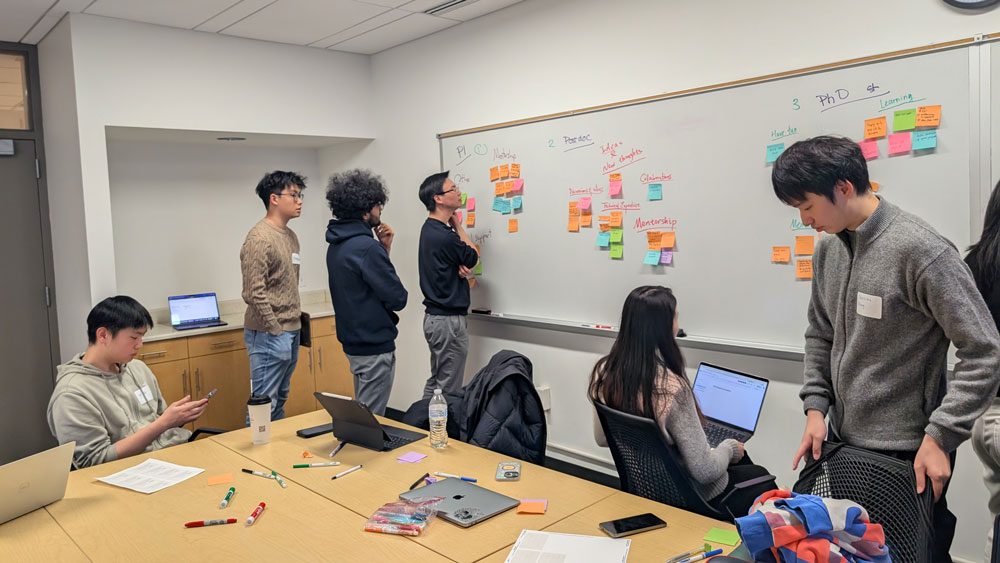
If you’re interested in innovation, product development, entrepreneurship, consulting, venture capital, or industry-focused engineering careers, these courses give you experience that stands out – and skills that will allow you to thrive in rapidly evolving industries and emerging markets.
-
ENGRG 4910/5910 – Fall – Innovation Collaborative 1
- Learn how to evaluate inventions and their market potential.
- Understand the value of different forms of IP in commercialization strategies.
- Work with real-world inventions and participate in team-based discussions.
- Build foundational skills that are the prerequisite for the Spring course.
-
ENGRG 4920/5920 – Spring – Innovation Collaborative 2
- Apply your Fall semester IP knowledge to explore and develop commercialization strategies.
- Work in small teams with industry mentors and experts to develop the most viable commercialization plan.
- Refine and present your plan to a panel of expert judges.
The Course Sequence Details
-
ENGRG 4910/5910 – Innovation Collaborative 1: Invention and Intellectual Property Management
In this 7-week course, you’ll work in a team to analyze a real invention and develop practical skills in understanding how intellectual property (IP) contributes to market value. You’ll explore how patenting supports innovation, encourages an entrepreneurial mindset, and enables successful commercialization.
To joint: enroll in ENGRG 4910 during Fall pre-enrollment. Spaces are limited, and this course is a required prerequisite for the Spring commercialization strategy course.
-
ENGRG 4920/5920 – Innovation Collaborative 2: Commercialization Strategy Development
In this hands-on, team-driven course, you’ll take an emerging technology from Duffield Engineering and analyze what it would take to turn it into an actual product, company, or commercial partnership.
You’ll learn how to evaluate markets, understand IP and competitive landscapes, define products, map business models, and develop a complete technology-to-commercialization strategy – the same process used inside startups, venture firms, and corporate R&D groups.
To ensure this is a true real-world experience, students work under a work-for-hire agreement, and each student receives $300 for their participation upon completion of course requirements.
Updates
-
![]()
Students pitch market potential for engineering inventions
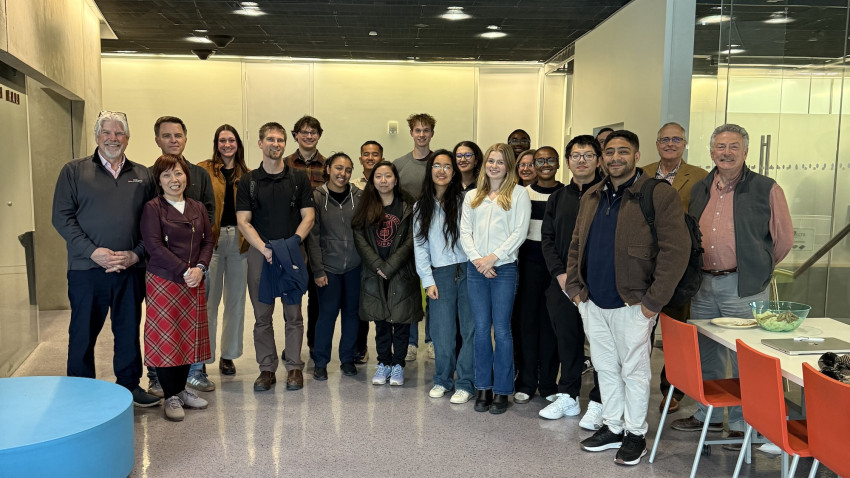
From advanced microscopes that peer deep into living tissue to software that maps transportation emissions, Cornell students presented commercialization strategies for technologies developed by engineering faculty during the Innovation Collaborative final presentations on May 1 in Gates Hall.
Contact
-
![Headshot of Emmanuel P. Giannelis]()
Associate Dean for Innovation Walter R. Read Professor of Engineering
- Kimball Hall, Room 176
- 607-255-9680
- epg2@cornell.edu