- Graduate Field Affiliations
- Electrical and Computer Engineering
- Materials Science and Engineering
- Physics
- School of Applied and Engineering Physics
Biography
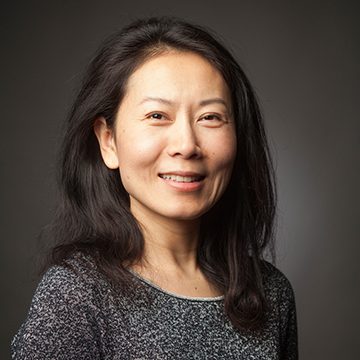
Huili (Grace) Xing is the William L. Quackenbush Professor of Electrical and Computer Engineering at Cornell University where she holds a 50/50 joint appointment in the School of Electrical and Computer Engineering and the Department of Materials Science and Engineering. Xing is currently the Director of SUPREME – a SRC JUMP2.0 research center. From 2004 to 2014 she was a faculty member at the University of Notre Dame. Xing joined Cornell in 2015, served as Director of Undergraduate Studies (DUS) for Materials Science & Engineering from 2016 to 2019 and Associate Dean for Research and Graduate Studies for the College of Engineering from 2020 to 2022.
She is a recipient of the AFOSR Young Investigator Award, NSF CAREER Award, ISCS Young Scientist Award, Intel Outstanding Researcher Award, the SIA/SRC University Researcher Award, the Cornell Engineering Research Excellence Award and Michael Tien’72 Teaching Award. She is a fellow of APS, IEEE & AAAS.
Research Interests
Her research focuses on development of III-V nitrides, oxide semiconductors, 2-D crystals, recently also superconducting and ferroics materials: growth, electronic and optoelectronic devices, especially the interplay between material properties and high-performance device development, including RF/THz devices, tunnel field effect transistors, power electronics, UV emitters and memories.
Together with her colleague Debdeep Jena, they were the first to demonstrate distributed polarization doping (DPD), especially the p-type DPD in nitride semiconductors. This doping scheme is fundamentally different from impurity doping and modulation doping, thus dubbed as the 3rd generation of doping science by Xing. Polarization doping is particularly powerful in polar ultrawide bandgap semiconductors since it might be the only known method to achieve both n-type and p-type in an UWBG semiconductor with doping properties akin to shallow impurity dopants.
- Advanced Materials
- Energy Systems
- Advanced Materials Processing
- Materials Synthesis and Processing
- Nanotechnology
- Nonlinear Dynamics
- Semiconductor Physics and Devices
- Sensors and Actuators
- Solid State, Electronics, Optoelectronics and MEMs
- Power Electronics
- Energy and the Environment
- Physical Electronics, Devices, and Plasma Science
- Circuits and Electronic Systems
Select Publications
-
High-mobility holes in gallium nitride and their quantum oscillations. Chuan FC Chang, Joseph E Dill, Zexuan Zhang, Jie-Cheng Chen, Naomi Pieczulewski, Samuel J Bader, Oscar E Ayala Valenzuela, Scott A Crooker, Fedor F Balakirev, Ross D McDonald, Jimy Encomendero, David A Muller, Feliciano Giustino, Debdeep Jena, Huili Grace Xing. Nature Electronics, 1-12, 2026.
-
XHEMTs on Ultrawide Bandgap Single‐Crystal AlN Substrates. Eungkyun Kim, Yu‐Hsin Chen, Naomi Pieczulewski, Jimy Encomendero, David Anthony Muller, Debdeep Jena, Huili Grace Xing. Advanced Electronic Materials, e00393, 2026.
-
Single and multi-fin normally-off Ga2O3 vertical transistors with a breakdown voltage over 2.6 kV. Wenshen Li, K. Nomoto, Z. Hu, Tohru Nakamura, D. Jena, Huili grace Xing. IEEE International Electron Devices Meeting (IEDM) 2019.
-
2D crystal semiconductors: Intimate contacts. Debdeep Jena, Kaustav Banerjee, Grace Huili Xing. Nature Materials.
-
Broadband graphene terahertz modulators enabled by intraband transitions. Sensale-Rodriguez, Berardi, Rusen Yan, Michelle Kelly, Tian Fang, Kristof Tahy, Wan Sik Hwang, Debdeep Jena, Lei Liu, Huili Xing. Nature Communications; Featured by NSF at LiveScience 3(780), 2012.
Select Awards and Honors
- Cornell Engineering Michael Tien’72 Teaching Award 2025
- SIA/SRC University Researcher Award 2025
- Cornell Engineering Research Excellence Award 2022
- Fellow, Institute of Electrical and Electronics Engineers (IEEE) 2022
- Intel Outstanding Researcher Award 2021
- Fellow, American Association for the Advancement of Science (AAAS) 2021
- Fellow, American Physical Society (APS) 2019
- Young Scientist Award, International Symposium on Compound Semiconductors (ISCS) 2014
- CAREER Award, National Science Foundation 2009
- Young Investigator Program Award, Air Force Office of Scientific Research 2008
Education
- B.S., Physics, Peking University 1996
- M.S., Material Science, Lehigh University 1998
- Ph.D., Electrical Engineering, University of California 2003
- Postdoc, Electrical Engineering, University of California 2003