Launch Your Career in Biomedical Innovation
The medical device industry doesn’t just need technical skills, it needs engineers who understand clinical needs, can navigate regulatory constraints, and know how to turn ideas into products that actually help patients.
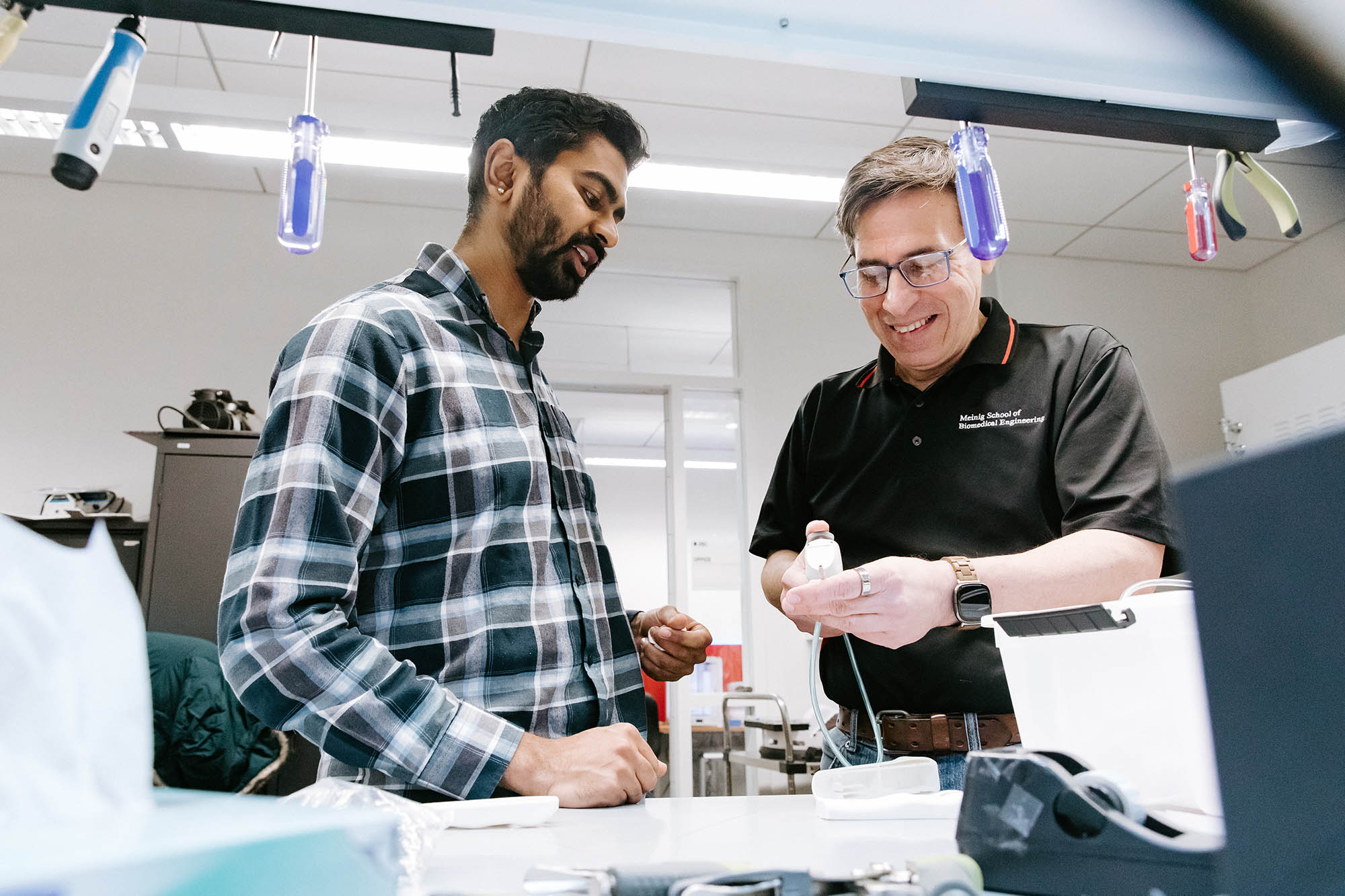
Traditional grad programs may focus on theory. Cornell’s Master of Engineering in Biomedical Engineering teaches you how to build, test, and deliver medical innovations in a simulated startup environment. You’ll work on real biomedical engineering challenges alongside faculty, clinicians and industry partners, gaining practical experience you can take straight into your career.
-
One Year Program
30 credits commonly completed over two semesters.
-
Design Project
Hands-on project replaces a traditional research thesis.
-
Prerequisites
One college-level biology course.
-
No GRE Required
The Duffield Engineering Difference
Hands-on design, clinical insight, and real-world impact.
-
Customize Your Experience
Tailor coursework and design work around your interests in medical devices, biotech, clinical systems, or translational innovation.
-
Solve Real Healthcare Problems
Engage in team-based design projects with industry, clinical, and academic partners in a simulated medical technology startup that mirrors the full product development process and grounds the engineering work in real-world patient needs and regulatory realities.
-
Access State-of-the-art Facilities
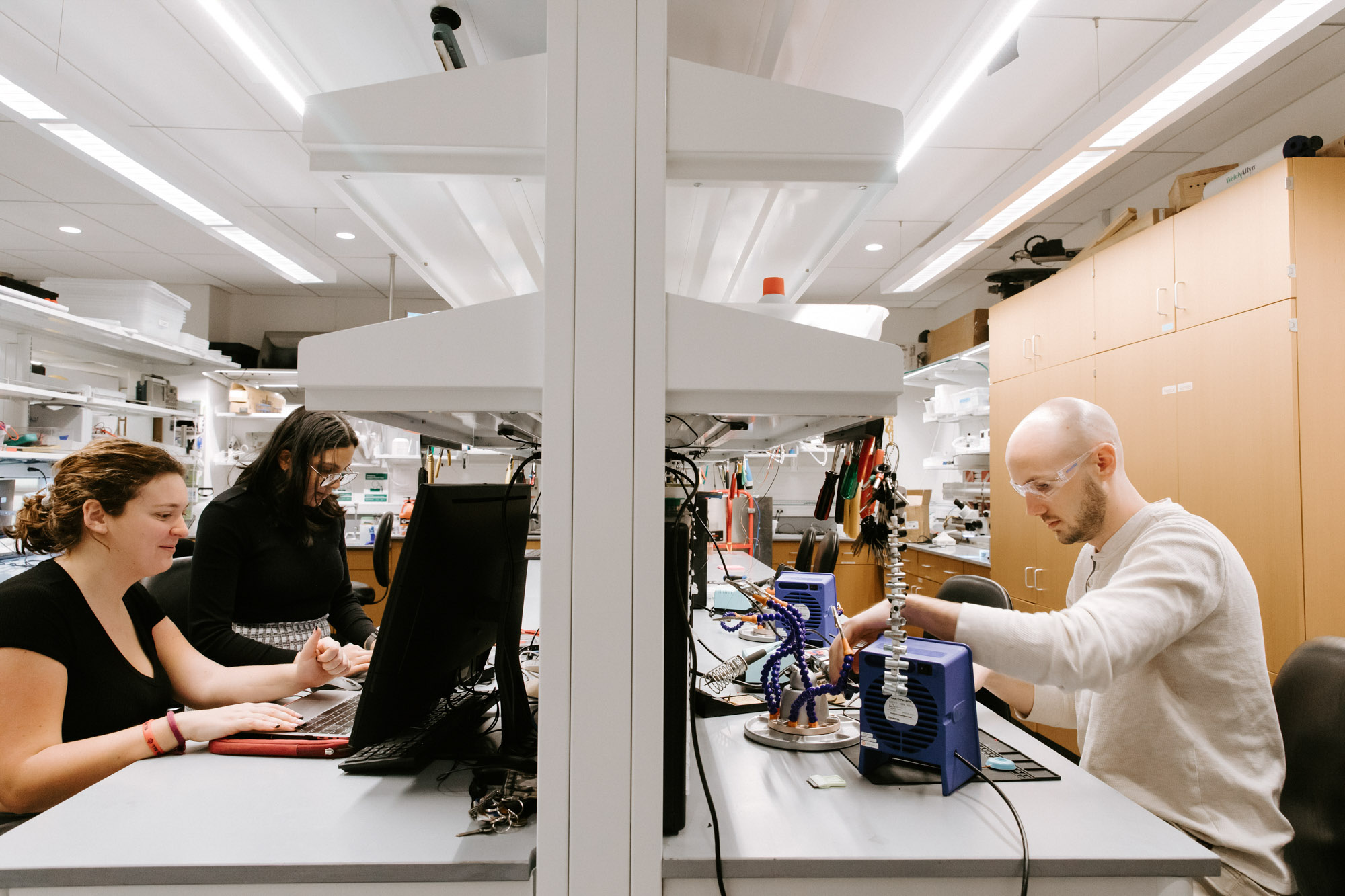
Our medical technology startup simulator includes engineering studios for ideation and design, prototyping and fabrication labs, testing and validation facilities and collaboration spaces to prepare you for a real-world industry role.
-
Develop Leadership Skills
Strengthen professional competencies through immersive design work, cross-disciplinary collaboration, and industry engagement for a well-rounded skill set.
-
Experience Clinical Immersion
Optional preceptorship opportunities give firsthand experience in clinical environments working alongside healthcare professionals.
-
Build Strategic Relationships
Connect with faculty, employers, and a global network of over 68,000 Cornell alumni.

“Most memorable to me is the feeling of pride, satisfaction, and accomplishment as I finished assembling my medical device capstone project, a robotic mobility device for toddlers. I spent over 300 hours designing, fabricating, and prototyping the device and seeing all of my hard work and effort finally come together into a beautiful, finished product is still one of my most cherished memories.”
James Bennett M.Eng. ‘21