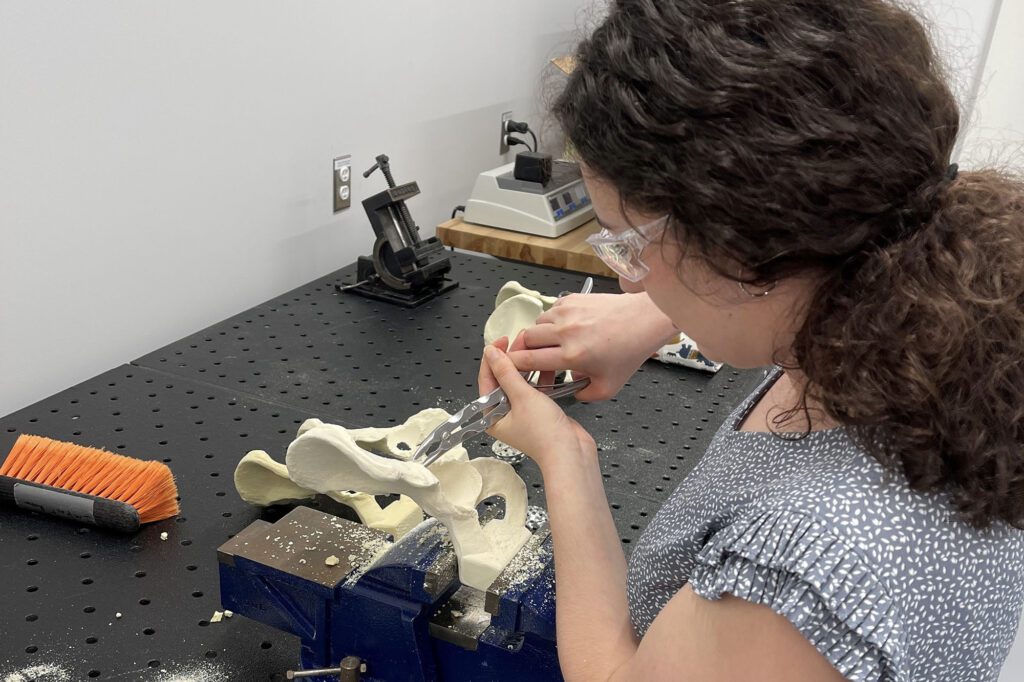
Undergraduate Emma Weiss’s passion for biomechanics, award-winning medical device design, and dedicated leadership in the biomedical community are all driven by a commitment to improving patient mobility and care.

Emma Weiss
-
Program
B.S. in biomedical engineering
-
Hometown
Succasunna, New Jersey
-
Concentration
Biomechanics and mechanobiology
-
Faculty Lab Affiliation
-
Preferred pronouns
she/her
-
More
Why Cornell?
In high school, I was equally fascinated by biology and physics and often wondered how the two disciplines could connect. When my mom fractured her femur and required titanium plate fixation, and my dad got a spinal cord stimulator to ease chronic nerve pain, I became curious about how mechanical principles enable these devices to restore physiological function. Discovering the biomechanics and mechanobiology (BMMB) concentration in Cornell’s biomedical engineering program, I knew it would be a perfect fit. Through classes like BME 4640: Orthopedic Tissue Mechanics and BME 3410: Systems Mechanobiology, I’ve been able to explore how working at this intersection motivates medical device innovation.
I was also drawn to Cornell Engineering’s robust collaborative culture, strengthened through project teams and hands-on coursework. Working on many medical device design projects with my peers, all focused on improving clinical and patient outcomes, has reinforced why I chose to major in biomedical engineering.
What stands out to you about your Meinig School experience so far and why?
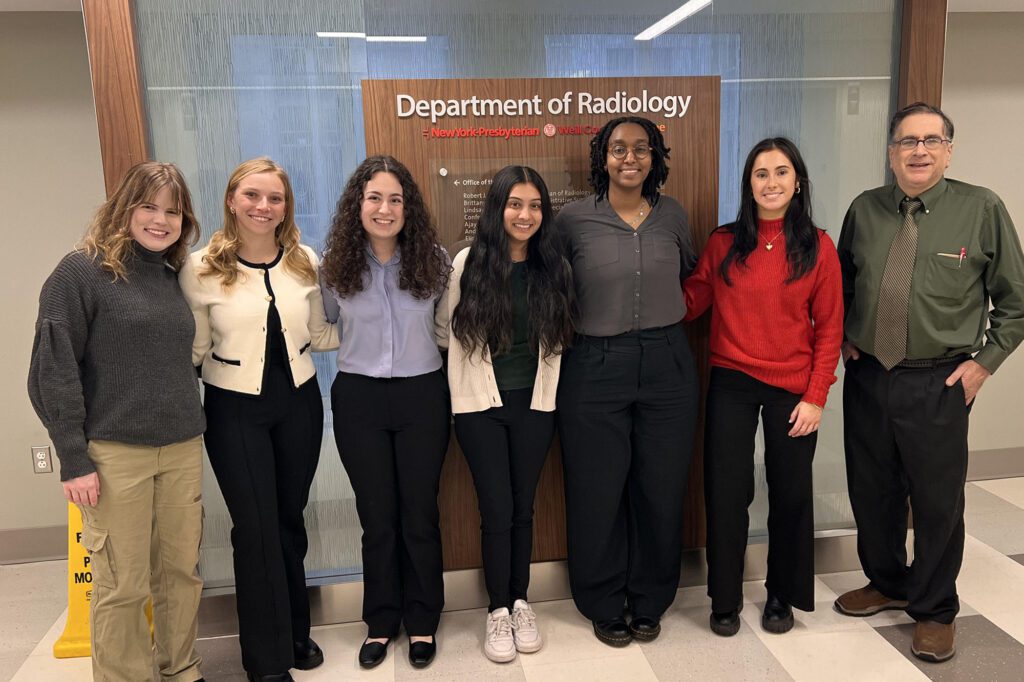
Cornell and the Meinig School offer countless ways to get involved outside the classroom, supplementing in-class learning. Throughout my undergraduate program, I have participated in several biomedical engineering extracurricular activities, including the undergraduate clinical immersion program, Cornell’s Design by Biomedical Undergraduate Teams (DEBUT) project team, van der Meulen osteoarthritis research lab, and Cornell’s undergraduate chapter of the Biomedical Engineering Society (BMES).
The clinical immersion program was a particularly unique opportunity. I shadowed physicians at Weill Cornell Medicine to directly identify clinical needs that could be addressed through engineering innovation.
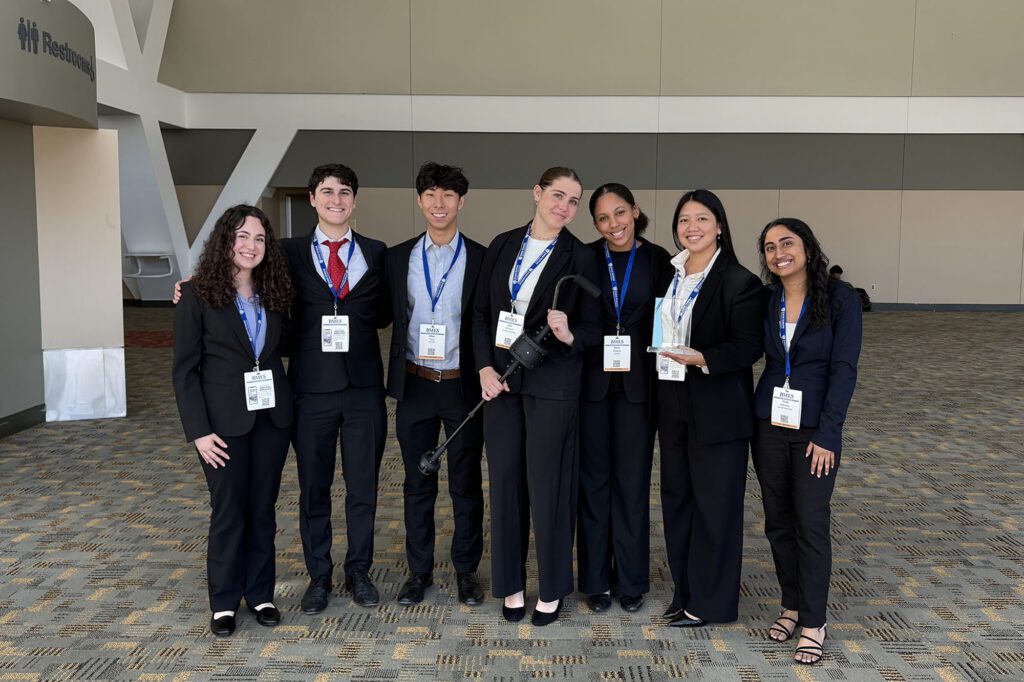
Cornell DEBUT gave me experience with the full medical device development lifecycle, confirming my interest in the field. My team developed SteadyStride, a tremor-dampening cane that improves mobility for Parkinson’s disease patients. Our device earned $2,500 and first place in the mechanical/electrical category of the Medtronic/BMES student design competition for product innovation, feasibility, and clinical impact.
Any interests outside your scholarship?
Serving as president of Cornell’s undergraduate chapter of BMES has been one of my most rewarding experiences. Through technical workshops, professional development opportunities, and mentorship initiatives, we’ve worked to create a better-informed and connected biomedical community at Cornell.
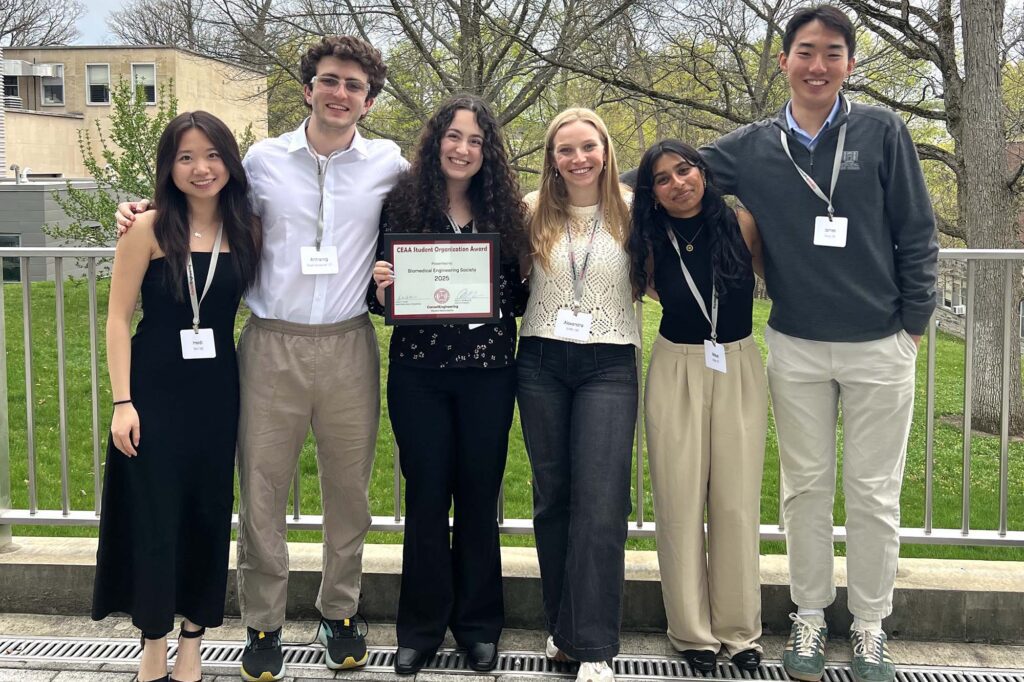
Last spring, our efforts were recognized with the Cornell Engineering Alumni Association’s 2025 Student Organization Award and a $1,000 prize. I am extremely proud of how the organization has grown over the past few years. I remember being a freshman in the organization, looking up to upperclassmen for support. The opportunity to run the organization and give back to the biomedical engineering community has been a full-circle experience.
Growing up, music was a huge part of my life. I’ve always felt at home while performing on stage. Wanting to keep that passion alive in college, I joined Less Than Three A Cappella, where I’ve served as both the music director and choreographer. Rehearsals and performances allow me to momentarily take a break from my engineering coursework, helping me unwind and stay connected to music.

What’s the next step for you?
After I complete my undergraduate degree in biomedical engineering, I plan to pursue a master of engineering (M.Eng.) in mechanical engineering at Cornell. My biomedical engineering background has given me a strong foundation in biomechanics and the human body as a system. Through recognizing normal versus abnormal biomechanical environments, I can ideate technological solutions that restore the body’s function. Building on this, the mechanical engineering degree will strengthen my product design skill set and better equip me to bring medical device ideas to life.
Last summer, I completed an internship in hip product development at Stryker, where I discovered my passion for developing joint replacements. Stryker’s mission to “make healthcare better” really resonated with me. This experience, in combination with my coursework and biomedical engineering extracurriculars, has solidified my commitment to the medical device industry. I look forward to making contributions to the field throughout my future career!